What it means when she stops using exclamation points
Her shift to formal typing often signals withdrawal or cooling interest. Learn what's really happening and how to respond.
When someone switches from casual, warm punctuation to formal, measured text, it's usually a mood change, not a typo pattern. Exclamation points carry energy and openness. Their absence, especially if sudden, suggests she's pulling back emotionally, stressed, busy in a way that makes texting feel like a task, or reconsidering the connection.
This isn't always bad news. Sometimes it means she's overwhelmed at work. Sometimes she's annoyed about something specific. Sometimes it means she's lost the spark. The reply matters because it either matches her new energy (which can feel like agreement that things have cooled) or gently reintroduces warmth without pretending nothing changed.
A good reply acknowledges the shift without making it weird, keeps the door open, and gives her space to come back if she wants to.
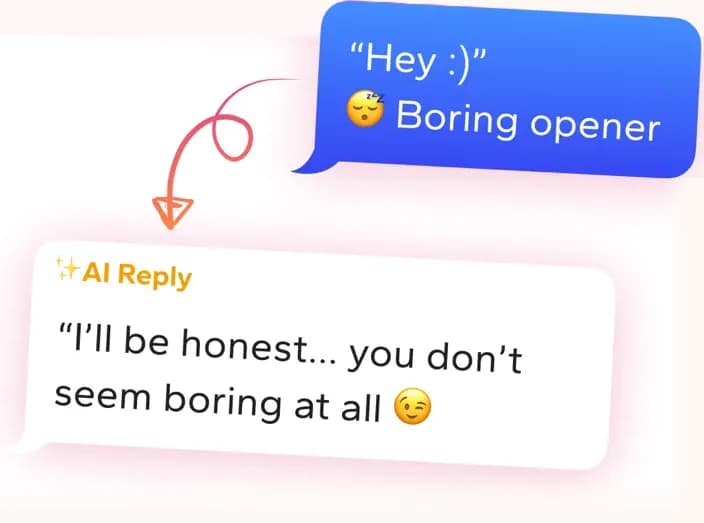
Get replies that sound like you
Screenshot the conversation in WingAI. It reads the vibe and gives you natural replies for this exact situation.
Try for freeFormal typing usually means emotional distance, not logistics
The punctuation shift is a temperature drop. It happens when someone's interest fades, when they're overwhelmed and don't have emotional bandwidth for texting, when they're frustrated with you about something, or when they've decided to be guarded. Sometimes it's just a mood at 9pm on a Tuesday. The point is she's no longer texting the way she did when things felt lighter.
Pay attention to the context around it. Did something happen between the last warm message and this formal one? Did you say something that landed wrong? Or did she just get slammed with work? The cause matters because it shapes what your reply should do. But either way, the formality is real information.
Keep it warm but don't pretend nothing shifted
Your reply has two jobs. First, stay human. Don't mirror the coldness back at her by becoming robotic too. That confirms the distance. Second, give her an exit ramp if she needs one, without making it obvious. A good reply is brief, friendly in tone without forcing it, and practical. It says 'I'm still here and I'm easy to talk to' without demanding she suddenly become warm again or without acting like her shift never happened.
Don't get clever or try to re-ignite chemistry in this message. That's pushing. Just be warm, competent, and straightforward. If she needs space, this reply gives it. If she's just tired or stressed, it's an invitation to reconnect without pressure.
Wait three days before deciding this is over
Send your reply and then give it real space. One formal message from her doesn't mean the connection is dead. People have seasons. She could come back warm in her next message, or she might stay reserved for a while. Either way, one reply isn't the moment to change your approach fundamentally.
If she goes quiet after your response, don't chase. If she stays formal through a second or third exchange, then you're dealing with something real. At that point, you can ask directly but gently: 'Feel like things shifted a bit. Everything good on your end?' After that, accept whatever comes. If she doesn't warm up and doesn't explain, she's telling you something. Move on.
Why these replies fail
“ok cool sounds good”
You're matching her formality, which signals agreement that the vibe has died.
“hey is everything okay? feel like you're different lately”
Calling out the change puts her in a position to defend herself or makes her feel watched, which pushes her further away.
“thursday works! what time? so excited to see you :) :) :) :) let me know!! so pumped”
Over-compensating with forced enthusiasm makes you look insecure and ignores the signal she's sending.
Common mistakes
- Matching her formal tone exactly, which cements the distance instead of bridging it
- Asking 'is everything ok?' or pointing out the change directly, which puts her on the defensive
- Flooding her with multiple long messages, which adds pressure when she's already pulling back
- Going radio silent yourself, hoping she'll notice and chase you back
- Staying overly casual and cheerful, which ignores what she's communicating
Questions people ask
- Does formal typing always mean she's losing interest?
- Not always. Stress, tiredness, work crunch, or being distracted can flatten anyone's texting style. But combined with other signs (fewer replies, shorter messages, less initiation), it points toward fading interest. Look at the full pattern, not just punctuation.
- Should I ask her if something is wrong?
- Not immediately. Give it one or two more exchanges first. If the formality persists and you've sent warm, easy replies, then a gentle check-in can work. Make it low-pressure: 'seems like maybe things are busier on your end?' rather than accusatory.
- What if she never warms back up in tone?
- After two to three formal exchanges, you have your answer. She's either not interested anymore or she's moved you into a lower priority. At that point, stop trying to heat it up. Either she'll shift back or the connection will fade naturally. Don't keep pushing warmth into a cold space.
- Can I bring the energy back with a really good message?
- Not with one message, no. Interest is her job, and reconnecting emotionally is hers too. You can keep your replies warm and open, but if she's decided to pull back, one clever or charming text won't flip the switch. What matters is consistency over time.
What people say after using WingAI
“I overthink every text. Having three options and picking the one that sounds like me cut that spiral short.”
Sam R.
“I was skeptical at first. Then I tried it on a dry chat and the replies actually sounded like me, not a chatbot.”
Mazoonx
“Didn't think it would be this good. The funny options actually get responses, which is wild.”
Nico_dang
Get replies that sound like you
Screenshot the conversation in WingAI. It reads the vibe and gives you natural replies for this exact situation.
Try for free