What 'all good' means in text and how to reply
Decode 'all good' in dating texts. Learn if it's dismissal, reassurance, or just ease, and how to respond without overthinking.
When someone texts 'all good', they're doing one of a few things. They might be reassuring you that something minor is fine. They might be signaling that a small tension or mistake doesn't bother them. Or they're wrapping up a conversation with casual ease. The exact meaning depends on context. It could follow an apology, a cancellation, a scheduling conflict, or just lighten an awkward moment.
The phrase itself is low-temperature. It's not enthusiastic. It's not cold either. It sits somewhere neutral-to-warm, and that's actually the point. When someone says 'all good', they're saying the thing doesn't need more energy or discussion. A good reply reads that signal correctly and either honors the ease they're creating or gently adds something that matters without dragging the moment down.
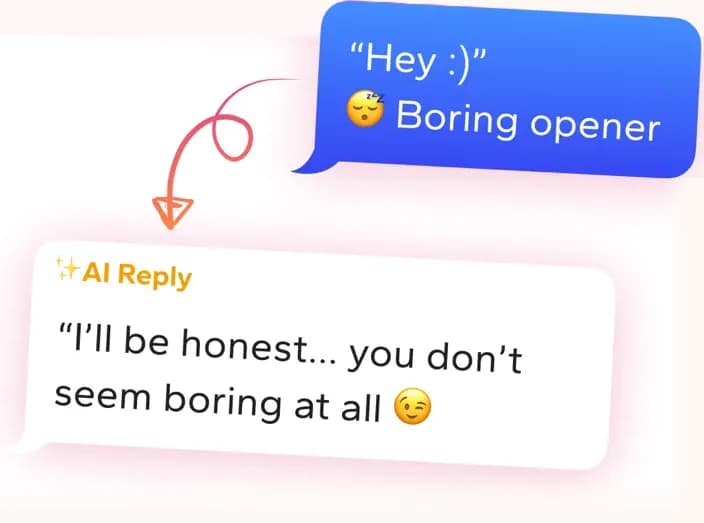
Get replies that sound like you
Screenshot the conversation in WingAI. It reads the vibe and gives you natural replies for this exact situation.
Try for freeRizz AI Screenshot the chat and get the next message for this person.
All good usually means she's closing a small loop
Someone says 'all good' because they want to stop talking about the thing that just happened. Maybe you were late, maybe you made a joke that landed wrong, maybe plans fell through. She's saying it doesn't matter to me, and I don't need you to keep addressing it.
The trap is thinking it means she's upset or distant. It's the opposite. If she was actually bothered, she'd probably say nothing, or give you real feedback. 'All good' is her green light. She's telling you the moment has passed and you can both move forward.
Your reply should simply acknowledge and shift
A good reply does two things at once. It shows you heard her permission, and it keeps the conversation moving. You're not supposed to add more apology or explanation. You're also not supposed to act like nothing happened. The move is light acknowledgment followed by something forward-facing.
This might mean thanking her for being flexible, making a small self-deprecating comment if appropriate, or just moving straight into the next thing you wanted to talk about. Keep it brief. One or two sentences max. Anything longer looks like you didn't believe her when she said it was fine.
Send it within your normal pace after her text
There's no special timing rule here. Respond when you normally would. If she texts you 'all good' and you vanish for two hours, it can read like you're still upset or avoiding her, even though she wasn't upset. Respond at your regular speed, keep it light, and move on.
If you don't respond at all, it can also feel awkward, like you're sulking. A single short reply is the cleanest move. Don't reopen the topic later in conversation unless she brings it up again. Once she says 'all good', treat it as resolved.
Why these replies fail
“No worries at all, I totally understand! Things come up. Seriously, don't even think about it. You're good.”
You're reassuring her when she already reassured you, which makes it look like you didn't trust her 'all good' and need her to confirm again.
“OK sorry again for being late. I had traffic and then my phone died and I should have texted sooner.”
She closed the loop and you reopened it with more explanation, signaling you didn't believe her or want her forgiveness on better terms.
“...”
Silence after 'all good' can feel passive-aggressive or like you're still upset, even when she wasn't.
Common mistakes
- Over-apologizing after she says all good, which turns a closed door into an open one and looks needy
- Misreading 'all good' as coldness when it's actually permission to move forward
- Replying with your own reassurance ('You're fine, don't worry') when she's already given it
- Continuing to explain or justify after she's said all good, which signals you didn't trust her
- Treating it as end-of-conversation when it's just end-of-topic
Questions people ask
- Does 'all good' mean she likes me?
- Not necessarily. It just means she's not bothered by whatever just happened. It's a neutral-to-positive signal about that specific moment, not a measure of her feelings for you overall. Treat it as permission to keep talking, not a confession.
- Should I say 'all good' back to her?
- Only if it actually fits. If she apologizes for something and it doesn't bother you, yes. If you're just copying her phrase to match her energy, it can sound flat. Respond naturally with whatever feels true.
- What if she says 'all good' but seems distant after?
- Watch her behavior over the next few days, not the single text. One text doesn't define the whole picture. If she stops initiating and takes forever to reply, that's different from 'all good' followed by normal texting patterns. Trust the bigger pattern.
- Can 'all good' be sarcastic?
- Rarely in early dating, but it depends on your dynamic. If you've established playful teasing, maybe. If you're still figuring each other out, it's almost always sincere. When in doubt, treat it at face value and watch what she does next.
What people say after using WingAI
“I overthink every text. Having three options and picking the one that sounds like me cut that spiral short.”
Sam R.
“I was skeptical at first. Then I tried it on a dry chat and the replies actually sounded like me, not a chatbot.”
Mazoonx
“She went cold mid-week and I had no idea what to say. The reply I sent felt natural and she picked the chat back up.”
Marcus T.
Get replies that sound like you
Screenshot the conversation in WingAI. It reads the vibe and gives you natural replies for this exact situation.
Try for free