Tinder reply when she says she's burned out and needs a vacation
How to reply when she says she's burned out at work and needs a vacation. Read what she's signalling and respond without fixing her life.
When a match tells you she's burned out at her job and needs a vacation, she is usually doing two things at once. She's sharing something real about her week, and she's checking whether you'll treat it as a heavy topic or a normal one. Most people answer the first part and miss the second. They either jump into problem-solving, pile on sympathy, or swing to a joke that makes her feel her tiredness is being brushed off.
A good reply does three things. It acknowledges the feeling in a way that sounds like you heard her, it keeps the conversation light enough that she has room to say more or move on, and it gives her a reason to keep talking to you rather than talking about work. The bar is low. You are not trying to be her therapist or her travel agent. You're trying to be someone who makes the conversation feel easier.
The vacation part is a gift. People who say they need a break often want to talk about where they'd go or what they'd do. That is a natural bridge to something fun, and it lets you show interest in her as a person rather than as a stressed employee.
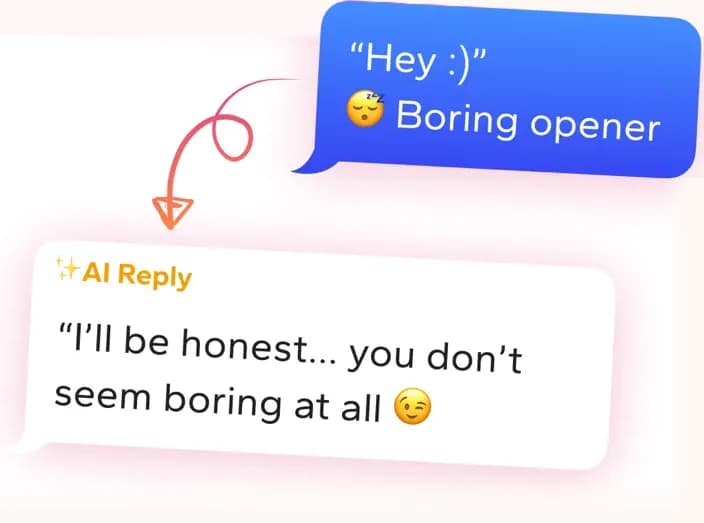
Get replies that sound like you
Screenshot the conversation in WingAI. It reads the vibe and gives you natural replies for this exact situation.
Try for freeTinder AI Screenshot the photos and get an opener for that match.
Burnout as an opening, not a confession
On a dating app, "burned out" is usually a throwaway line. She is describing her week the way people describe the weather. The Lisbon detail matters more than the job, because it tells you she is thinking about something she would enjoy. Read the message for what she's inviting you into. The job stress is the backdrop, the trip is the foreground. If you answer the backdrop with heavy language, you pull the conversation somewhere she didn't ask it to go.
Look at the energy in the message. Lowercase, a laugh at the end, a specific detail about flights. That tone says she wants a light exchange with some honesty in it. If she had written something like "I can't keep doing this, I'm miserable," the weight would be different and so would the reply. Here she's just sharing a feeling and a daydream, so match that scale.
Where the reply should go next
A good reply does three things. It shows you registered the tiredness without making it a crisis. It moves toward the vacation, since that is where she has energy. And it leaves a question or a light hook open, so the next move is easy for her.
Keep your attention on the trip. Ask what she'd want from it, whether she'd go alone or with someone, what she'd do first. Those are easy questions for a tired person to answer, and they give her something pleasant to picture. Don't offer an opinion about her job, don't say you know how she feels unless you do, and don't make a joke at her expense. Use one clear beat of acknowledgement, then let the conversation be about the thing she is excited about.
The week of silence matters more than the text
Send your reply in the same part of the day she's been active, not at 2am when you've had a couple of drinks and want to be witty. If she answers within a few hours, keep the rhythm going with a short follow-up question about Lisbon or whatever she said. If she replies with a single word or a shrug emoji, let it be. She's telling you she's done for now.
If you don't hear back, wait at least a day before sending anything else. A second message should not repeat the burnout point or ask whether she's okay. Find a new small thing, like a link to a neighborhood she mentioned or a question about her favourite airline, and see if she bites. If she doesn't respond to two attempts across a few days, stop. The conversation has ended, and pushing it will make you look like you're chasing rather than curious.
Why these replies fail
“Oh no, burnout is so serious. Have you talked to your manager about taking time off? Your health matters more than any job.”
It turns a light, daydreamy message into a medical and HR conversation she didn't ask for.
“Lol same, I've been dying at my job too. Honestly I'd just quit and move to Lisbon tbh.”
It makes the conversation about your own frustration and offers a dramatic fantasy that pulls focus away from her.
“Sorry to hear that. Anyway, what are you up to this weekend?”
It acknowledges her feeling in one flat line and then drops the topic completely, leaving her with nothing to pick up on.
Common mistakes
- Jumping straight to advice about how to fix her job or manage stress.
- Making it about your own work stress to show you understand.
- Sending a long empathetic paragraph that turns a casual message into a heavy one.
- Ignoring the vacation detail and only responding to the burnout.
- Replying with a single word like "sorry" and nothing to continue the thread.
Questions people ask
- Should I say sorry she's burned out?
- A brief acknowledgement is fine, but don't lead with sorry and don't stop there. A line like that's a rough place to be works better because it sounds like you heard her. Then move toward the trip or something else she's excited about. Sorry on its own can make the exchange feel heavier than she intended.
- Is it okay to ask what her job is?
- Probably not yet, unless she brings it up again. Asking about her job right after she's described burnout can keep the focus on work. Let her decide how much she wants to share. The Lisbon detail is a better thread to pull on because it's a choice she's making, not a source of stress.
- What if she says she's too tired to talk?
- Take it at face value. Reply with something short and warm, like hope you get some rest, and leave the thread open. Don't send a follow-up the same night. If she writes again later, pick up with a light question about the trip or the weekend, and keep your message easy to answer.
- Should I suggest a vacation spot or give travel tips?
- Only if she asks or clearly invites it. Unsolicited tips can read as showing off or as telling her what she should do. A better move is to ask what she's most excited about, where she'd stay, or what she'd do first. That gives her room to talk about her own plans rather than receive yours.
What people say after using WingAI
“She went cold mid-week and I had no idea what to say. The reply I sent felt natural and she picked the chat back up.”
Marcus T.
“I overthink every text. Having three options and picking the one that sounds like me cut that spiral short.”
Sam R.
“I was skeptical at first. Then I tried it on a dry chat and the replies actually sounded like me, not a chatbot.”
Mazoonx
Get replies that sound like you
Screenshot the conversation in WingAI. It reads the vibe and gives you natural replies for this exact situation.
Try for free