How to text when they reply but show no real interest
When someone replies but never asks about you, their engagement is surface-level. Here's how to tell and what to do.
When someone replies consistently but never asks you questions or steers toward getting to know you, they're not actually curious. They might be polite, bored, or keeping you as a backup option. The pattern matters more than any single message. One-word replies, answering your question then stopping, or only responding when you write first are all signals.
A good reply here does two things at once. It makes something interesting about you actually worth asking about, and it stops rewarding one-sided effort. You're testing whether they'll lean in or fade out when you stop carrying the conversation.
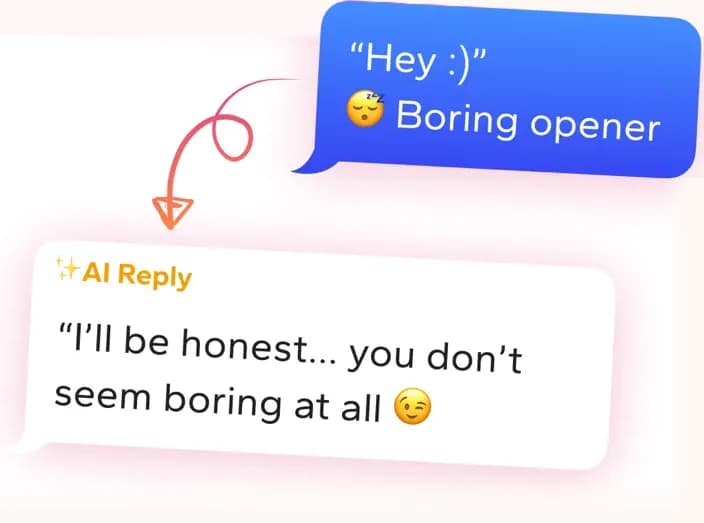
Get replies that sound like you
Screenshot the conversation in WingAI. It reads the vibe and gives you natural replies for this exact situation.
Try for freeTexting AI Screenshot the thread on your phone and get the next text.
The difference between replying and being interested
Someone can reply to every message and still not care about you. Replying is easy. Being curious means asking follow-up questions, remembering details you mentioned, steering the conversation toward learning more about you, or finding reasons to text first.
If they reply to your questions but never ask any back, they are not curious. If they answer what you ask and then wait for your next message, they are letting you drive. That's not disinterest, exactly. It's just low investment. Over a week or two of texting, you should see them ask you things unprompted. If that's not happening, the pattern is set.
Your reply needs to stop subsidizing their effort
When someone shows no real curiosity, your next message should contain something that naturally prompts a question from anyone paying attention. Share a small thought, opinion, or plan that invites them in. Then stop doing the work. Don't ask them three questions. Don't fill silences. Don't offer information they didn't ask for.
The move here is to shift the burden. If they want to know you, they have an opening. If they don't take it, you have your answer faster. This isn't punishment. It's just clarity. You're making it obvious that a real conversation goes two ways.
Know when to stop texting someone who won't ask
If you send a message with something worth asking about and they respond but still don't, that's the moment. You've given them the opening. They didn't take it. One more attempt is fair. After that, stop initiating.
Don't wait weeks hoping they'll suddenly start asking about you. That pattern doesn't flip. If you're doing all the reaching out after three or four exchanges with no real questions back, move on. A real connection has two people pulling toward each other. If you're the only one pulling, you already know.
Why these replies fail
“Oh nice! Do you do that a lot? What got you into it? What else do you like to do in your free time?”
Asking three questions in a row rewards them for one-word replies and makes you look like you're interviewing them instead of connecting.
“Cool. I actually love that too. I've been really into it lately because I find it relaxing. Have you always been into it or is it newer for you?”
Offering extra details about yourself without them asking keeps the conversation one-sided and lets them coast on minimal effort.
“Got it. I'll let you be. Let me know if you want to grab coffee sometime”
Withdrawing too fast and asking them to make the next move gives them an easy out without testing whether they're actually interested.
Common mistakes
- Asking more questions to draw them out. This rewards their passivity and pushes you further into the role of interviewer.
- Sending longer messages or more detail about yourself. They already know how to ask if they wanted to know.
- Waiting longer between replies to seem less eager. This just delays the diagnosis.
- Trying to find the right topic that will finally make them curious. The topic isn't the problem.
- Continuing to text after three exchanges where they haven't asked you anything real.
Questions people ask
- Should I just ask them directly if they're interested?
- No. You already know the answer. Someone interested will ask you things. Asking them to explain their low investment usually leads to excuses or awkward backtracking. Your actions will get you clarity faster than their words.
- What if they're just bad at texting?
- Bad texters still ask questions. They might take longer to reply or write shorter messages, but if they're curious, that curiosity shows. Being slow and being uninterested are different problems. If they never ask about you, texting speed is not the issue.
- How long should I wait before I decide they're not curious?
- A week of regular texting is enough data. If they've replied five or six times and never asked you a real question, you know. Give them one more message with an opening. If they still don't bite, they're not worth your time.
- What if I stop texting and they come back later?
- If they reach out unprompted after you've quieted down, that's a good sign they were just coasting. If they ask you something real when they do, it might be worth another shot. But don't count on it. Usually, silence is the answer.
What people say after using WingAI
“I was skeptical at first. Then I tried it on a dry chat and the replies actually sounded like me, not a chatbot.”
Mazoonx
“I overthink every text. Having three options and picking the one that sounds like me cut that spiral short.”
Sam R.
“She went cold mid-week and I had no idea what to say. The reply I sent felt natural and she picked the chat back up.”
Marcus T.
Get replies that sound like you
Screenshot the conversation in WingAI. It reads the vibe and gives you natural replies for this exact situation.
Try for free