Signs she's losing interest when her texts get shorter
Her texts used to run long and now they barely register. Here is how to tell a real pull back from a bad week, and how to respond without chasing her.
When a woman who used to send full paragraphs starts answering in a few words, the first thing to understand is that she probably isn't plotting anything. Pulling back is usually quiet and a little cowardly. She isn't sure what she wants, so she spends less. Shorter texts cost her almost nothing, they avoid a hard conversation, and they leave the door technically open. That's why the change shows up in length before it shows up in anything else.
Your aim here is information, not a rescue. You want to find out whether the drop in effort is about the channel, the timing, or you. Those have different fixes, and only one of them means you should step back. Trying to win her back at full volume tends to confirm whatever doubts she already has, because enthusiasm that outruns hers reads as pressure. Calm curiosity gives her room to show you what's real.
Text is a strange medium for this. A short reply can mean she's walking between meetings, or it can mean she's holding you at arm's length, and the screen looks identical either way. Timing helps sort it out. Replies that are brief but arrive fast, with a question or a callback to something you said, often point to a busy person who still wants the thread. Replies that are brief, late, and closed off, with nothing for you to pick up, point somewhere else. Notice also whether she ever starts the conversation or only answers it.
What backfires is any move that makes her explain herself. Confronting the change, sending a long emotional message, or piling on three texts in a row all hand her a problem to manage. Someone already wavering will pick the path of least resistance, and that path is often silence. Sarcasm and passive aggression fail the same way, because they turn her lukewarm drift into a conflict she never agreed to have.
Reading what comes back is simpler than it feels. Look for movement, not perfection. A reply that's longer than her recent ones, a question aimed at you, a joke, or a suggestion for a call all mean she's still invested. A repeat of the same clipped answer, or a gap of a day or more with nothing offered, is an answer too. One longer message after weeks of thin ones deserves a measured response, not a victory lap. Watch the next exchange before you decide anything.
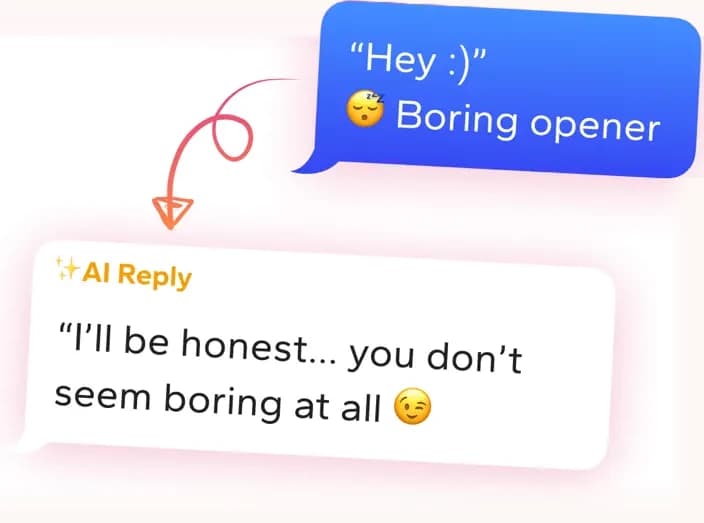
Get replies that sound like you
Screenshot the conversation in WingAI. It reads the vibe and gives you natural replies for this exact situation.
Try for freeSeparate a trend from one bad day
Scroll back through the last two weeks and compare. Count how many words she sent on day three versus day twelve. Check whether she used to ask you things and now only answers. Notice if the jokes dried up, if she stopped mentioning her own plans, if her replies now land hours later than they used to. One cold afternoon means little. A steady slide across several conversations means more. Also check what changed on your side. If you've been sending longer messages than ever, your volume may be crowding her out, and her brevity could be a response to that rather than a verdict on you.
Change the setting, not the pressure
A short thread is hard to rescue by writing more into it. Better to shift where the conversation lives. A quick voice note, a call proposal tied to something she's already mentioned, or a specific low stakes plan gives her an easy way to re-engage that doesn't require composing paragraphs. Keep the ask small and concrete. If she lit up about a certain band or a project at work, reference it and attach a plan. Avoid anything that sounds like a request for reassurance. You're offering a reason to talk, not asking her to confirm how she feels.
Decide your exit before you need it
Set your own limit now, while you're calm. Pick a window, say a few days for one re-engagement attempt, then a quiet stretch where you don't initiate at all. During that stretch, resist checking whether she's online or rereading old messages for clues. If she reaches out, respond warmly at her pace. If nothing arrives, let the thread rest and put your attention on your own week. Deciding in advance protects you from the common spiral of sending small, increasingly anxious nudges that make a graceful ending impossible and teach her to expect your patience without limit.
People also ask
- Is one day of short replies enough to worry about?
- No. One clipped day usually means she's tired, distracted, or in a rush. Look at a stretch of a week or more across several conversations. If tomorrow she's chatty again, you were overreading. If the brevity sticks and her questions to you disappear, that pattern deserves attention.
- Should I ask her directly why her texts got shorter?
- Avoid it. Pointing out the change makes her feel watched and cornered, and the usual results are a vague denial or silence. You'll learn more from how she responds to a low pressure invitation than from asking her to explain her own texting habits.
- What if she's just not a big texter?
- Then you'd have seen brief replies from the beginning, and that's simply her style. The concern is a change from her own baseline. If she once wrote warmly and at length and now doesn't, that shift matters. If she was always concise, judge her by calls, plans, and effort instead.
- How long should I wait before giving up?
- Send one well judged re-engagement, then give it two days. If the reply is still thin or absent, stop initiating for a full week. If she hasn't reached out by then, treat it as over. Stretching it past that mostly costs you time and confidence.
Why these don't work
“oh okay... if you don't wanna talk to me anymore you can just say so”
It turns her gradual cooling into an accusation, so she has to defend herself or disappear instead of simply showing you where she stands.
“Hey! So I was thinking we could grab coffee sometime soon? Would love to hear what's been going on with you lately!”
An open ended, eager invitation asks for a big answer from someone who has been giving small ones, and the cheerful pressure makes retreating easier for her.
“k”
Mirroring her one word replies reads as either a sulk or a surrender, and it hands her a clean reason to let the thread die without ever choosing to.
Pitfalls to avoid
- Sending several messages in a row after a thin reply, which turns a quiet pause into visible anxiety and gives her something to retreat from.
- Writing longer and longer texts to compensate for her short ones, so the imbalance grows and your effort starts to feel like pressure.
- Reading every late or brief answer as proof she's done, instead of comparing against her own earlier pattern and giving the trend time to show itself.
It doesn't sound like a bot
“I overthink every text. Having three options and picking the one that sounds like me cut that spiral short.”
Sam R.
“I was skeptical at first. Then I tried it on a dry chat and the replies actually sounded like me, not a chatbot.”
Mazoonx
“She went cold mid-week and I had no idea what to say. The reply I sent felt natural and she picked the chat back up.”
Marcus T.
“Didn't think it would be this good. The funny options actually get responses, which is wild.”
Nico_dang
Get replies that sound like you
Screenshot the conversation in WingAI. It reads the vibe and gives you natural replies for this exact situation.
Try for free