Signs he is not sorry for hurting you
How to tell when an apology is really a way to end the conversation, what his behavior after you speak up reveals, and how to respond without chasing him.
When someone hurts you and then offers something that sounds like an apology, you are left doing a strange kind of arithmetic. The words are there, but they don't add up to anything. What usually sits underneath is discomfort with being seen as the person who caused harm. Some people grab for context, some for humor, some for a quick "my bad" that is meant to close the topic rather than open it. None of that proves what he feels inside, and you don't need it to. What you can judge is the pattern in front of you: what he named, what he skipped, and what he did afterward.
Your aim here is probably not to win an argument or extract a perfect speech. It is to find out whether this person will treat your hurt as real information. That is a smaller, steadier goal, and it protects you from spending weeks decoding tone. If you are asking whether he regrets it, replace that with a question you can observe: has anything about his behavior changed since you told him it hurt?
Text changes the picture in a few ways. A message can be drafted, softened, and sent at a time that suits him, so a polished apology over text tells you less than a clumsy one made face to face. Slow replies, a sudden burst of warmth after days of nothing, or a joke dropped into the middle of a serious thread all carry information, but only when they repeat. One late reply means little. A habit of surfacing only when the tension has cooled means something.
Several instincts tend to backfire. Explaining your hurt in longer and longer messages usually gives him more material to dispute, and it trains the exchange to revolve around whether your reaction was reasonable. Asking him point blank if he is sorry invites a yes that costs him nothing. Going quiet as a punishment, rather than as a boundary, tends to read as a tactic and gives him something to be wounded about. And accepting a half apology to keep the peace teaches both of you that this version is enough.
Reading his response comes down to specifics. Does he repeat back what happened in plain terms, without recasting it as a misunderstanding? Does he stay with your reaction rather than rushing to shrink it? Does he ask what would help, then follow through without being reminded? Or does he reach for context, reassurance-seeking, or a change of subject? Give his behavior time to show a trend. Someone who is sorry tends to look different over days, not just in one message.
Excuses dressed up as apologies
Listen for where the sentence puts its weight. If the first thing out of his mouth is how busy, tired, or overwhelmed he was, the apology is organized around his state, not your experience. Context can be a real part of an honest apology, but it comes after the harm is named, and it is offered as explanation, not as a defense. Notice too whether the hurt gets described in vague terms like "what happened" or "the other night" instead of the thing he actually did. Vagueness lets him say sorry without agreeing to any particular facts. Pay attention to whether the apology keeps getting shorter each time you raise it. That shrinking is a quiet way of asking you to drop it.
What texting does to apologies
Over text, an apology can be rehearsed, edited, and timed. That makes the words cheap and the follow through expensive, which is where your attention belongs. Look at the gaps. How long did he wait before saying anything? Did he apologize only after you pulled back or mentioned leaving? Does the tone swing from heavy to breezy within the same thread? A joke or a meme sent right after a serious exchange can be nervous habit, but if it keeps showing up whenever the subject returns, it is functioning as a way out. Also notice whether he prefers to handle it by message when you have asked to talk in person or by voice.
Setting a boundary he can't debate
A boundary works best when it describes what you will do, not what he must feel. Saying you will step back from plans or private conversations until you see a change gives him nothing to argue with, because it asks for no confession. Keep it short, state it once, and avoid attaching a deadline you won't honor. Then watch how he handles the limit itself. Someone who respects you may feel awkward or stung but will adjust. Someone who is mostly protecting his image may negotiate, test the edges, or make your boundary into the problem. How he treats the limit often shows more than anything he says about the original hurt.
Get replies that sound like you
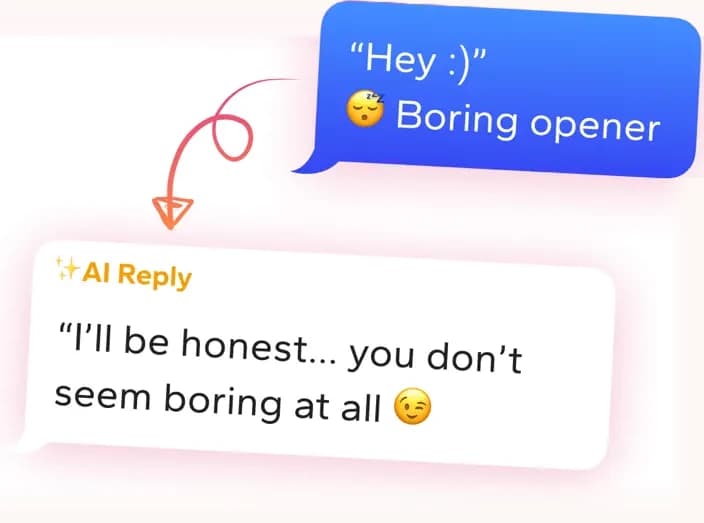
Screenshot the conversation in WingAI. It reads the vibe and gives you natural replies for this exact situation.
Try for freeWhat not to send
“I know you've been swamped at work, so I'm not mad, I just wish you'd been a little more careful with how you said it.”
It adopts his stress as the explanation and shrinks your reaction to a mild wish, so he never has to address what he actually did.
“Can you just tell me honestly whether you feel bad about it? I need to know if you care.”
Asking for a verdict on his feelings invites an easy yes over text, which you then have no way to check against his behavior.
“Fine, whatever, apology accepted. Let's just not bring it up again.”
It closes the topic before you have seen any change, so a vague sorry gets treated as a finished repair.
Frequently asked
- What are the signs he is not sorry for hurting you over text?
- Look for apologies that lead with his stress, vague wording instead of naming what he did, jokes dropped into serious threads, and silence until things cool down. Any single message can be clumsy. A repeated pattern, especially with no change in how he treats you afterward, is what tells you something.
- Does he regret hurting me if he keeps texting?
- Not necessarily. Frequent messages can come from guilt, boredom, habit, or wanting the tension gone. Regret shows up in what he names and what he changes. If he contacts you but steers around the hurt, the contact itself tells you little about whether he understands what happened.
- Do men feel bad when they hurt a woman?
- Some people do and some don't, and gender doesn't predict it. Remorse varies by person, situation, and how much they value the relationship. Rather than guessing at his inner state, watch whether he can describe what he did, tolerate your reaction, and change his behavior afterward.
- How long should I wait for a real apology?
- A few days after you state a clear boundary is enough to see whether he is reflecting or avoiding. If he returns with specifics and different behavior, that counts. If he stays quiet, repeats the same excuse, or acts as though nothing happened, you have your answer and can stop waiting.
Mistakes to avoid
- Sending long messages that explain your hurt in more detail each time, which hands him more points to dispute and turns the thread into a debate about whether you are overreacting.
- Reading a late, polished apology as proof of remorse, when text lets him edit and time his words and the only reliable evidence is what he does in the following days.
- Using silence as punishment instead of as a boundary, which lets him recast the conflict as your cold shoulder rather than his behavior.
Real user feedback
“I overthink every text. Having three options and picking the one that sounds like me cut that spiral short.”
Sam R.
“I was skeptical at first. Then I tried it on a dry chat and the replies actually sounded like me, not a chatbot.”
Mazoonx
Get replies that sound like you
Screenshot the conversation in WingAI. It reads the vibe and gives you natural replies for this exact situation.
Try for free