Signs he feels bad for hurting you and how to reply
Read the real signals he's guilty. Know what your reply should accomplish and when to send it.
When someone hurts you, guilt shows up in specific ways. He might over-apologize, bring it up unprompted, ask how you're doing more than usual, or go quiet because he's processing what he did. Real remorse and surface-level sorry matter for what you do next.
Your reply has two jobs. It needs to show whether you're actually hurt or fine. It needs to tell him what happens now. Vague acceptance keeps him guessing. Clear responses let you both move forward or end things.
Timing is everything here. Send too fast and you seem fine with it. Wait too long and he thinks you've moved on or written him off. The right window is usually a few hours to a day after his message lands.
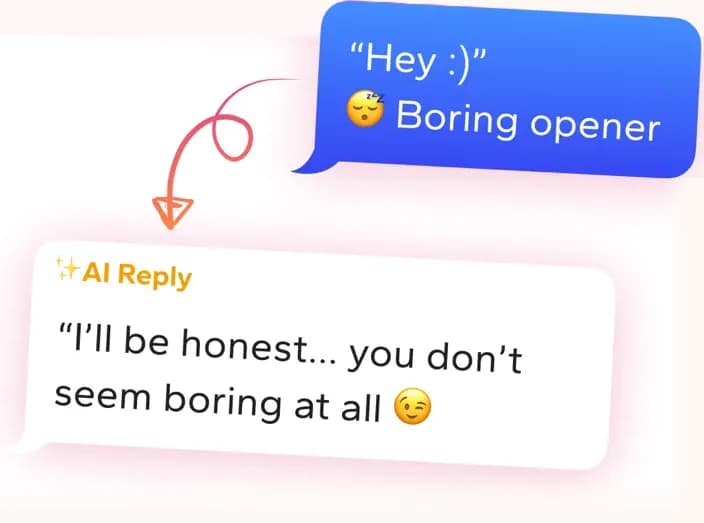
Get replies that sound like you
Screenshot the conversation in WingAI. It reads the vibe and gives you natural replies for this exact situation.
Try for freeRizz AI Screenshot the chat and get the next message for this person.
What guilt actually looks like in his texts
Real guilt doesn't sound smooth. He mentions what he did specifically, not just 'I'm sorry.' He might say it twice in one message, or bring it up without you mentioning it first. He asks what you need or how you're doing, not just apologizing and moving on.
Watch for timing shifts too. If he usually takes hours to reply and suddenly responds in minutes after hurting you, that's guilt. If he's normally casual and suddenly gets formal or overly detailed, he's processing something.
The tricky part is that guilt and manipulation can look similar at first. The difference shows up in follow-through. Guilt leads to changed behavior over time. Manipulation is just words and then nothing changes.
Your reply needs to name the actual hurt and set a boundary
Don't just accept his apology like it's a transaction. Your reply should acknowledge what he did wrong in one sentence. This forces clarity and stops him from guessing whether you actually understood the impact.
Then state what you need going forward. Is it different behavior? Space? An explanation? Be specific. 'Don't do that again' is too vague. 'Don't make plans and cancel without texting me' is something he can actually follow.
Keep it short. One or two sentences maximum on the hurt, one on the boundary. A wall of text makes it about his forgiveness, not about his actions changing.
Send within 24 hours, then watch what he does next
Responding the same day shows you're not punishing him with silence, but waiting a few hours prevents looking like you were sitting by the phone. If his message lands at 9pm, reply the next morning. If it's midday, reply that afternoon or the next morning.
After you send your reply, stop texting. His next move matters more than anything you say. Does he follow the boundary you set, or does he keep doing the thing? Does he ask follow-up questions or does he disappear? Give him three to five days to show you whether he meant it.
If he doesn't follow through, you have your answer. If he does, you can actually trust the apology was real.
Why these replies fail
“Don't worry about it, I know you didn't mean it. We're good!”
This absolves him immediately and signals you don't actually care about the hurt, so he learns nothing.
“I appreciate the apology, but I'm hurt. I've been hurt before in my past relationships too, and I'm just tired of it happening.”
Turning it into your emotional history makes the conversation about your trauma, not about his action and what changes now.
“It's fine. Just don't do it again.”
Vague and dismissive. He doesn't know what specifically he's changing or whether you're actually upset.
Common mistakes
- Matching his apology length with an equally long one of your own, which flips the conversation to making him feel better
- Saying 'it's fine' when it's not, which erases the hurt and gives him no reason to change
- Bringing up past incidents he already apologized for, which feels like punishment rather than acceptance
- Asking 'do you feel bad?' instead of responding to the actual hurt
- Going silent to 'teach him a lesson', which leaves him stuck and doesn't resolve anything
Questions people ask
- How long should I wait before replying to his apology?
- A few hours to a day depending on when it lands. Same-day afternoon reply if he texted in the morning. Next-morning reply if it was late. You want to show you're not punishing him with silence but also not that you were waiting all day.
- What if he apologizes but doesn't actually explain what he's sorry for?
- Ask him. Vague apologies often mean he doesn't understand the impact. Your reply can be 'I need you to tell me what you're apologizing for specifically.' This forces him to name it, and you'll know if he actually gets what he did.
- Is it okay to bring up his past behavior in my reply?
- Not in this message. Address only this incident. Bringing up old stuff feels like punishment and derails the conversation. If there's a pattern, that's a separate conversation after he's had time to follow through on this boundary.
- What if he doesn't respond after I set my boundary?
- That's your answer. Silence after you state what you need means he's not willing to change or accept the boundary. Wait a week, then move on. Chasing him after he ghosted your reply just trains him that he can do it again.
What people say after using WingAI
“I was skeptical at first. Then I tried it on a dry chat and the replies actually sounded like me, not a chatbot.”
Mazoonx
“I overthink every text. Having three options and picking the one that sounds like me cut that spiral short.”
Sam R.
“She went cold mid-week and I had no idea what to say. The reply I sent felt natural and she picked the chat back up.”
Marcus T.
Get replies that sound like you
Screenshot the conversation in WingAI. It reads the vibe and gives you natural replies for this exact situation.
Try for free