Should you correct someone you're just starting to date
When to gently correct a mistake, when to stay quiet, and how to do it without killing the vibe.
Early dating is fragile. You're both still performing a little, still figuring each other out. When someone says something wrong, misspells a word, or gets a fact backwards, you have to decide fast: does this matter enough to mention it? And if it does, can you bring it up without making them feel stupid or watched?
The instinct to correct comes from a good place usually. You want them to know the right thing, or you're nervous about dating someone who believes something false. But correcting too early or too harshly signals that you're keeping score, judging, or more interested in being right than in them.
A good reply to this moment does two things at once: it gives them the right information without embarrassment, and it keeps the conversation warm. You're not their teacher. You're someone they like who happens to know something they don't.
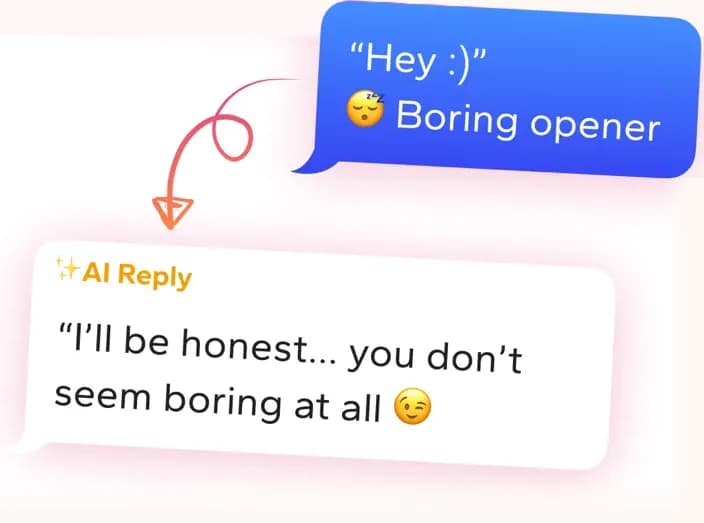
Get replies that sound like you
Screenshot the conversation in WingAI. It reads the vibe and gives you natural replies for this exact situation.
Try for freeRizz AI Screenshot the chat and get the next message for this person.
The difference between a detail and a dealbreaker
Not every wrong thing needs a correction. If they say something factually off by a little bit, or they're not sure about something, or they misspell a word in a text, that's not your job to fix. Your job is to like them, not audit them.
But if they believe something that would actually matter to how you two get along, or they're going to feel dumb later when they realize they got it wrong, or it's something you'll hear them say to other people, then it's worth a gentle mention. The test is simple: will they be grateful later that you told them, or will they feel embarrassed you noticed?
Slipping it in without stopping the flow
The move is to correct so lightly they barely notice it happened. You do this by stating the thing you know casually, as part of your own response, not as a fact aimed at them. You're not fact-checking them. You're just contributing what you know to the conversation.
Don't make it about the mistake. Make it about what you're saying. Say it once, keep it short, and move on immediately. The moment you dwell on it or explain too much, you've made it weird. They'll feel the weight of it.
Send it early, don't wait for a better moment
The longer you sit on a correction, the weirder it gets. Correcting them in the same conversation, same exchange, feels natural. Coming back to it days later sounds like you've been thinking about their mistake, which makes them defensive.
If you're not going to mention it right then, don't mention it at all. Let it go. The only exception is if it's something that comes up again naturally in a future conversation. Then you can bring your knowledge into that moment without it seeming like you've been holding onto this.
Why these replies fail
“Actually, winter has way more than 3 hours of daylight. Depending on latitude, it's usually around 8-10 hours. Maybe you're just in a really far north location?”
Correcting with 'actually' and then explaining at length makes them feel stupid and like you're keeping a file on their mistakes.
“lol that's not how that works”
Dismissive and vague. They don't know what you're questioning, and it feels mean.
“Hmm, I'm pretty sure the days are longer than that in most places. Just something to think about!”
The passive-aggressive tone and 'just something to think about' makes it condescending instead of helpful.
Common mistakes
- Correcting publicly or in front of others, making them feel called out
- Leading with 'actually' or 'I think you mean', which sounds condescending
- Overcorrecting small things that don't matter to the relationship
- Waiting too long to mention it, then bringing it up randomly later
- Explaining the correction in detail like you're teaching a class
Questions people ask
- What if they get defensive when I correct them?
- You went too hard or they're sensitive about being wrong. Either way, don't push. Say something like 'I could be off too' and move the conversation forward. If they're this touchy about small mistakes, that's useful information about them, not a reflection on how you brought it up.
- Should I correct them over text or in person?
- In person is better if you have the chance. Tone gets lost in text, so corrections can land harsher than you mean them to. Over text, make it extra casual and brief. In person, you can smile while you say it, which changes everything.
- Is it okay to correct spelling or grammar mistakes?
- No. Not in early dating. They know how to spell. They're texting fast. Pointing out typos or grammar reads as petty and makes them feel watched. Let it go unless it's so garbled you can't understand them.
- What if it's something that actually matters, like a political belief I disagree with?
- That's different from a factual mistake. A belief difference is a compatibility question, not a correction. Save that conversation for later when you know each other better. Correcting someone's politics this early just starts a fight.
What people say after using WingAI
“I always freeze on the first sentence. This gets me past that blank box so I actually hit send.”
joejoe4567
“I was skeptical at first. Then I tried it on a dry chat and the replies actually sounded like me, not a chatbot.”
Mazoonx
“Used it for a couple hours and set up a date the same night. Not even kidding.”
Nikola2214
Get replies that sound like you
Screenshot the conversation in WingAI. It reads the vibe and gives you natural replies for this exact situation.
Try for free