Should you send another message after someone ghosts you
When to follow up after ghosting and when to accept it's over. Know the difference between a real delay and being ignored.
Ghosting is when someone stops responding with no explanation. The person went from talking to you to radio silence. You're wondering if one more message might work, or if that's just wasting your time.
The hard truth: if they've ghosted, another message rarely changes anything. But there's a difference between ghosting and just slow replies. If they've been gone for days or weeks with zero response to your last message, sending another one usually signals that you haven't accepted the outcome. A follow-up message only makes sense in specific situations, and even then, it needs a specific job to do beyond hoping they'll suddenly reply.
A good follow-up doesn't beg for attention or apologize for existing. It either gives them a clear, low-pressure exit ramp, or it resets the conversation in a way that doesn't depend on them fixing their behavior first.
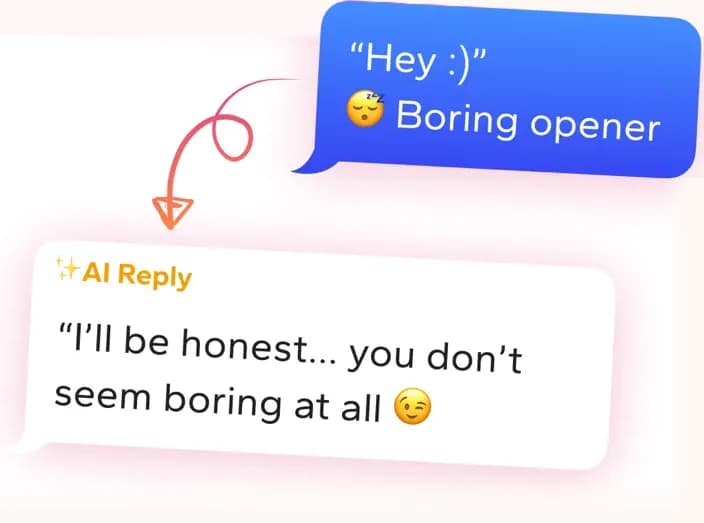
Get replies that sound like you
Screenshot the conversation in WingAI. It reads the vibe and gives you natural replies for this exact situation.
Try for freeRizz AI Screenshot the chat and get the next message for this person.
The silence itself is already an answer
When someone ghosts, they've made a choice. They saw your message and decided not to respond. Or they didn't see it and didn't care enough to check. Either way, the outcome is the same. Radio silence. After three to five days of no reply to a normal message, you're not dealing with someone busy. You're dealing with someone who isn't interested enough to text back.
The question isn't whether they saw it. It's whether they want to reply. A follow-up message assumes they need another chance or more information to say yes. They don't. They need to want to talk to you. A second message can't create that want.
When a follow-up actually has a purpose
A follow-up only works if it does something real. First, it can give them an easy way out that doesn't involve more ghosting. Something that breaks the pattern and lets both of you move on without awkwardness. This takes the pressure off them to respond with excuses.
Second, it can reset to zero instead of building on the old silence. This means changing the frame entirely, not referencing the gap or asking them to explain why they disappeared. It's a new conversation, not a callback to the one they avoided. But even this only works if you're truly ready to hear nothing back and move on without resentment.
Send it early in the day, then stop checking
If you're going to send a follow-up, do it on a weekday morning or early afternoon when people check messages. Not late at night when you're frustrated. Not on a weekend when the timing feels random.
Set a hard rule before you hit send. You will check your phone normally for replies, but you will not refresh the conversation, reread it, or assume anything based on read receipts. Wait at least a week. If there's nothing after seven days, you're done. Don't send a third message. Don't check one more time to see if they unblocked you. You made your move. Now you accept the result.
Why these replies fail
“Hey, not sure if you got my last message? Just wanted to check in and see if coffee is still something you'd be interested in.”
This assumes they didn't see it or forgot, which is unlikely. It also begs them to respond to a direct question instead of giving them space.
“Look, I know you're probably not interested, but I'd really appreciate if you could at least tell me what I did wrong. Communication goes both ways.”
This calls out the ghosting directly and asks for explanation. It puts the burden on them to manage your feelings instead of just moving on.
“I've been thinking about you a lot and I really think we had something special. I'd love to hear from you, even if it's just to say you're not interested.”
This is emotional and tries to make them feel bad for ghosting, which just reinforces that they made the right choice by not responding.
Common mistakes
- Sending a message that asks for an explanation or calls out the ghosting directly.
- Following up multiple times in a row, which turns one ghost into a pattern of you chasing.
- Waiting longer than a week to follow up, which just extends the awkwardness.
- Writing something that tries to win them back or prove you're worth replying to.
- Sending a follow-up that's longer or more emotional than the original message.
Questions people ask
- How long should I wait before sending a follow-up after no response?
- Wait at least five to seven days after your last message got no reply. If it's been less than three days, they might actually just be busy. After a week, the silence is clear enough. Any follow-up after that point should be your last attempt.
- What's the difference between being ghosted and someone just being slow to reply?
- Slow replies usually have gaps, but there's still occasional contact. They respond once every few days. Ghosting is complete radio silence. They were engaging, then they stopped entirely. If you haven't heard back in five days after a message that didn't require deep thought, treat it as a ghost.
- Is it ever okay to send multiple follow-up messages?
- No. One follow-up is the absolute maximum, and only if you think it has a real purpose. Sending two or three messages in a row just confirms that you're chasing. After one unanswered follow-up, you stop.
- Should I bring up the ghosting directly or just pretend it didn't happen?
- Don't bring it up directly. Calling out ghosting puts them on the defensive and guarantees they won't reply. If you send a follow-up at all, treat it as a new conversation, not a callback to their silence.
What people say after using WingAI
“I overthink every text. Having three options and picking the one that sounds like me cut that spiral short.”
Sam R.
“I was skeptical at first. Then I tried it on a dry chat and the replies actually sounded like me, not a chatbot.”
Mazoonx
“She went cold mid-week and I had no idea what to say. The reply I sent felt natural and she picked the chat back up.”
Marcus T.
Get replies that sound like you
Screenshot the conversation in WingAI. It reads the vibe and gives you natural replies for this exact situation.
Try for free