Should you follow up after someone stops replying to texts
When to follow up after radio silence, how to read what's actually happening, and when to move on instead.
When someone stops replying mid-conversation, your instinct is usually to try again. But a second message without a response signals something specific to them, and most of the time it makes things worse, not better.
The hard truth: if someone wanted to talk to you, they would. A day or two of silence might just be life. But silence that stretches past that is a decision, not an accident. Following up rarely changes that decision. It usually just confirms you're more interested than they are, which changes how they see you.
A good follow-up message does one specific thing: it gives them a legitimate reason to reply without making you look desperate. It acknowledges the silence (or doesn't) and pivots to something new that requires an actual answer. But even a perfect follow-up only works if their silence was circumstantial, not intentional.
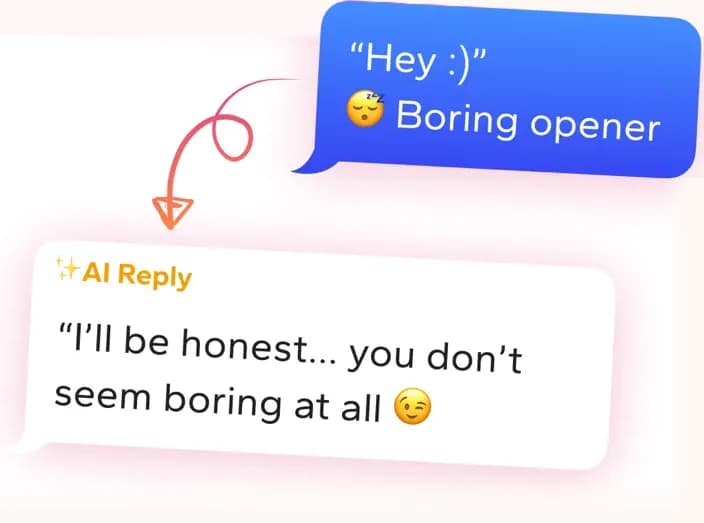
Get replies that sound like you
Screenshot the conversation in WingAI. It reads the vibe and gives you natural replies for this exact situation.
Try for freeRizz AI Screenshot the chat and get the next message for this person.
What a gap in replies actually means
A few hours is nothing. People have work, sleep, and lives outside their phone. A full day could still be normal depending on how new the conversation is. But 2-3 days of silence from someone who was texting quickly before is a signal. It usually means they lost interest, got busy with someone else, or decided you weren't worth the mental real estate.
Sometimes it's logistics. Someone dies, someone's phone breaks, someone's in a place with no service. Those are real. But you can't plan around them. What you can plan for is the 80 percent of cases where silence means they're done or cooling off. Reading it that way keeps you from chasing someone who has already left.
How a follow-up message has to work differently
A follow-up isn't a prompt. It's a restart. Your first message asked them to keep a conversation going. They didn't. A follow-up message needs to do something different: it needs to introduce a new reason to reply that has nothing to do with continuing what died.
The move is to either ask something specific that requires a real answer (not just yes or no), or share something that lands differently than a question. Something concrete. A reference to a conversation you had. A question about their world, not your connection. The goal is to feel like you're offering something new, not begging for a response to the old thing.
When to stop waiting and move on
Wait 2-3 days before you follow up. If they don't respond to that, wait another 2-3 days before deciding to stop. That's it. You get one follow-up message, maybe two if you're the patient type. Any more than that and you're the person doing the chasing, and chasers don't win.
If they go silent after your follow-up, stop. Don't send apologies. Don't send angry messages. Don't send jokes trying to break the tension. They've told you twice now that they're not interested in texting you. Believe them. Move your energy to people who text back.
Why these replies fail
“Hey, you there? Lol”
It's too casual and sounds needy. It puts the burden on them to explain their absence instead of giving them a reason to actually engage.
“I guess you're not interested. My bad.”
This tries to manipulate them into responding by making them feel guilty or bad. It makes you look insecure and often just confirms their decision to stop.
“Miss talking to you. Hope you're doing well.”
It's about your feelings, not something they can reply to. There's no question, no new information, and no reason for them to write back.
Common mistakes
- Sending a follow-up that's just a repeat of your last message or a variation on it
- Following up more than once without a reply between attempts
- Waiting too long to follow up and then acting like no time has passed
- Writing a follow-up that demands an explanation for their silence instead of offering a way forward
- Sending a follow-up when you're frustrated or angry about being ignored
Questions people ask
- How long should I wait before I follow up?
- Wait 2-3 days. If they're busy, that's enough time. If they're ignoring you, an earlier follow-up just shows you're checking your phone constantly. A couple days shows you're fine moving on if they don't respond.
- What if they're just really busy?
- Truly busy people still send quick replies or at least say 'swamped, catch you later.' A person who goes silent for days without explanation isn't prioritizing you. Busy is just what everyone says. Actions matter more.
- Should I acknowledge the silence in my follow-up?
- Only if you do it lightly and move fast past it. 'Haven't heard from you, but...' works. Long explanations about the silence make it weird. Keep it short and pivot to something new they can actually respond to.
- What if I follow up and still get nothing?
- That's your answer. Stop. Don't send another message. They've now ignored you twice. Sending a third just makes you look desperate. Accept it and move to someone who wants to talk to you.
What people say after using WingAI
“She went cold mid-week and I had no idea what to say. The reply I sent felt natural and she picked the chat back up.”
Marcus T.
“I was skeptical at first. Then I tried it on a dry chat and the replies actually sounded like me, not a chatbot.”
Mazoonx
“I overthink every text. Having three options and picking the one that sounds like me cut that spiral short.”
Sam R.
Get replies that sound like you
Screenshot the conversation in WingAI. It reads the vibe and gives you natural replies for this exact situation.
Try for free