Should you address her annoyed reaction to your political opinion
How to tell if she's actually bothered or just pausing, and whether to circle back or move on.
If she went quiet or gave a short reply after you shared a political take, you're probably wondering if you killed the vibe. The instinct to fix it fast is real. But addressing it wrong can make the awkwardness bigger.
Good replies here do two things: they either smoothly move past it without pretending nothing happened, or they acknowledge the shift in a way that feels natural and doesn't put pressure on her to forgive you. Either move works. What doesn't work is over-apologizing, getting defensive, or bringing up politics again to prove your point.
The timing matters too. Rushing to fix it in the next message reads as anxious. Waiting too long makes the weird feeling stick around. You want to give her space to cool down if she's actually annoyed, but not so much that the thread goes cold.
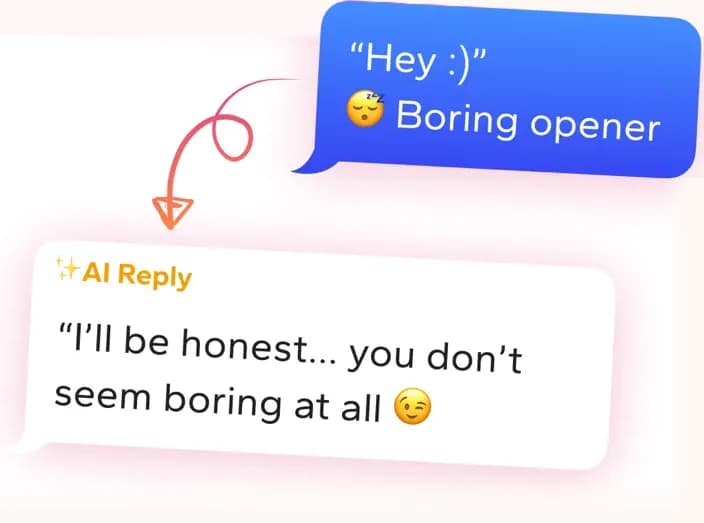
Get replies that sound like you
Screenshot the conversation in WingAI. It reads the vibe and gives you natural replies for this exact situation.
Try for freeRizz AI Screenshot the chat and get the next message for this person.
The difference between annoyed and done
Annoyed is a moment. She disagreed, felt a little put off, and now she's testing whether you can handle pushback. If she keeps texting after the awkward exchange, she's annoyed but not gone. Short replies or silence doesn't always mean anger either. She might be collecting her thoughts, or she might just think the conversation stalled.
Done looks different. She'd ignore your next few messages entirely, or she'd make a point to change the subject hard. One terse reply after a political moment is not done. It's just a pause. If she's annoyed, a light acknowledgment keeps things open. If she's actually done, any reply that keeps litigating politics will confirm it.
Acknowledge without inviting debate
A good move here is to show you noticed the shift without forcing her to rehash the disagreement. This can sound like recognizing that you two landed on different sides of something, or simply moving the energy elsewhere. The goal is to signal that you can handle disagreement without needing her to agree with you or needing to win.
Do not bring up the topic again unless she does. Do not ask her why she disagreed. Do not explain your position better. Those all say 'I need you to change your mind.' Instead, show her that the disagreement doesn't bother you, which actually makes her feel safer around you.
Reply the next day, not the next minute
Sending a response right after she went quiet looks like you're spinning on it. Give her at least several hours, ideally until the next day. That gap lets any real annoyance cool down and shows you're not anxious about the moment. When you do reply, keep it short and easy. You're not trying to patch things up dramatically. You're just unsticking the conversation.
If she doesn't reply to your next message after a day or two, don't follow up again. She either moved past it and is busy, or the moment stuck with her more than you realized. Pressing harder makes it worse. Let her come back to you.
Why these replies fail
“I'm sorry if that came off wrong. I didn't mean to upset you. I just have strong feelings about it but obviously you do too and that's totally valid.”
Over-apologizing for a normal disagreement signals insecurity and makes the moment feel bigger than it was.
“Actually, I think you misunderstood what I was saying. Here's what I meant...”
This doubles down and turns the awkward moment into a debate you're trying to win, which pushes her further away.
“Anyway, so I was thinking we could grab coffee sometime?”
Hard pivoting without any acknowledgment makes it feel like you're pretending the moment didn't happen, which keeps the weird feeling alive.
Common mistakes
- Sending a long apology that treats a small disagreement like a breakup moment
- Doubling down on your political point to convince her you were right
- Pretending the exchange never happened and jumping to an unrelated topic
- Asking 'Are you mad at me.' which puts her in a position to comfort you
- Waiting more than a day to reply, which makes the awkwardness feel heavier than it was
Questions people ask
- What if she brings up politics again later? Should I avoid it completely?
- No need to avoid it forever. If she raises something political, she's signaling she's past the awkwardness. You can engage then, just stay curious instead of preachy. Ask what she thinks instead of telling her what to think.
- Is one terse reply enough reason to worry I messed things up?
- Not necessarily. People respond tersely for lots of reasons that have nothing to do with you, and they often come back around. Wait to see if the next few exchanges feel normal before deciding the moment actually hurt things.
- Should I explicitly say I don't judge her for disagreeing?
- Only if it feels natural. Most of the time, showing it through your actions works better than saying it. Just move past it easily and keep engaging her on other things, and she'll get the message.
- What if she's actually not interested after this and ghosts?
- Some people bail over a political difference, and that's real. But that usually only happens if you were defensive or pushy about it, not just from having a different view. If she disappears despite you handling it well, she probably wasn't a great fit anyway.
What people say after using WingAI
“I was skeptical at first. Then I tried it on a dry chat and the replies actually sounded like me, not a chatbot.”
Mazoonx
“I overthink every text. Having three options and picking the one that sounds like me cut that spiral short.”
Sam R.
“Didn't think it would be this good. The funny options actually get responses, which is wild.”
Nico_dang
Get replies that sound like you
Screenshot the conversation in WingAI. It reads the vibe and gives you natural replies for this exact situation.
Try for free