She stopped sending long voice notes and now just uses thumbs up
She used to send long voice notes and now just sends a thumbs up. Here is what that shift can mean, how to reply, and when to step back without pressure.
A thumbs up is a different kind of message from a voice note, and the gap between them is wide. A voice note takes a quiet moment, a decent mood, and a willingness to talk out loud for a minute or two. A thumbs up takes a thumb. The drop from one to the other tells you her bandwidth or her interest changed, but it does not tell you which. She may be buried at work, run down, juggling a family situation, or simply less excited than she was. You cannot read her motives off an emoji, and building a theory about them mostly feeds your own anxiety.
What you are really after is a clearer picture, not a win. You want to find out whether this is a stretch of low capacity or a real cooling, and you want to do that without making her feel monitored. The best outcome is a conversation that feels light enough to answer on a tired Tuesday. If she is interested, an easy opening gives her room to come back. If she is not, you learn that cleanly and can move on with your dignity intact.
The medium matters more than people admit. Voice notes are intimate and slow, and they build a sense of one person's voice filling a pocket of the day. Emoji reactions live in a different category. They are often used to close a loop, to say received, no reply needed. Some people use them when they are scrolling past a notification on a bus and plan to answer properly later, then never do. So the same thumbs up can mean a polite full stop or a busy placeholder, and timing helps you tell the difference. A thumbs up that lands within minutes feels different from one that shows up nine hours late.
Several instincts backfire here. Pointing out the change makes her explain herself, and explaining feels like work to someone already low on energy. Sending a longer, more emotional message to make up for her shorter ones piles weight onto a thread that just got lighter. Going cold to teach her a lesson reads as a game, and games are tiring. Even a joke about the emoji can land as pressure if she is already feeling crowded. Anything that asks her to manage your feelings tends to speed up the distance rather than close it.
Reading what comes next is the useful part. If she answers a specific, easy message with actual words, even brief ones, that is a decent sign the channel is still open. If she sends another thumbs up after a message that clearly invited a reply, take that as an answer about her current availability, not a puzzle to solve. If she goes quiet entirely, resist the urge to send a rescue message. Give it real time, let her raise the temperature if she wants to, and judge by what she does over a couple of weeks rather than one exchange.
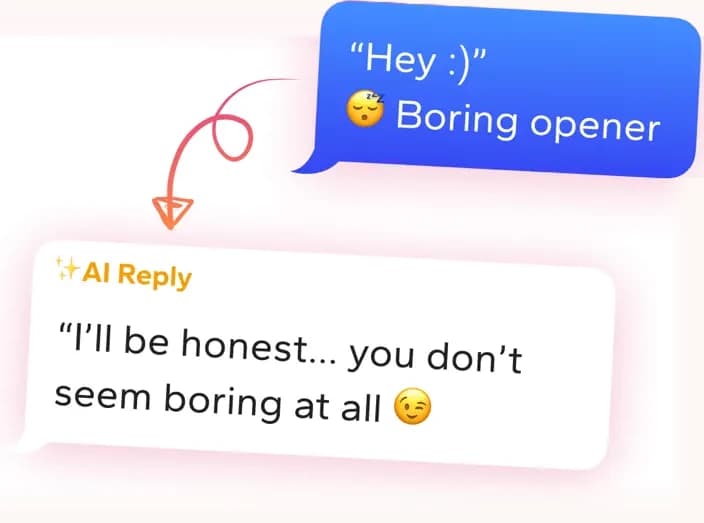
Get replies that sound like you
Screenshot the conversation in WingAI. It reads the vibe and gives you natural replies for this exact situation.
Try for freeCheck how the thumbs up arrives
Before you decide anything, look at the pattern around the emoji. Does it come quickly after a message that was only a statement, like a comment about your day? Then it may just be an acknowledgment, the same way you would nod. Does it come after a question that clearly wanted words? That is closer to a pass. Notice the time of day too. A thumbs up at 8am on a workday is often a glance between meetings. One at midnight after hours of silence tells a different story. Also compare it with her other habits. If she reacts that way with friends and family as well, it may be how she handles a crowded phone right now rather than anything about you.
Send something easy to answer
Her capacity looks low, so lower the cost of replying. A message with one clear, small question works better than a paragraph or a heavy check-in. Pick something tied to a thing she has already told you, like a show she was watching, a trip she mentioned, or a food she loves, and ask about it in a way a person can answer in a sentence. Keep your own message short enough that it does not look like a long speech waiting for a reply. Skip anything that asks about the relationship, her feelings, or why things changed. You are making it pleasant to respond, not building a test.
Space out your next attempt
If she answers with another thumbs up or nothing, give the thread real room. A few days is reasonable, and a week is fine. Do not send a follow-up asking if she saw it, and do not stack new messages on top of the old one. When you do write again, make it a fresh, low-key topic that has nothing to do with the earlier silence. If that gets the same result, stop starting conversations and keep your life moving. Leave the door open by being friendly if she writes first. Believe the pattern you are shown, and do not read hidden meaning into gaps in either direction.
Why these don't work
“Why are you only sending thumbs up now? You used to send me such long voice notes.”
It turns her shrinking energy into a complaint and asks her to defend a habit change when she may not even have an explanation.
“Wow, a thumbs up. Guess I'm not worth actual words anymore.”
The sarcasm tells her you are keeping score of her effort, which makes a quick emoji feel like something she now has to apologize for.
“Sent her a three minute voice note of my own, answering everything she said last month and asking if we're okay.”
Matching her old intensity when she has gone light drops a heavy relationship question onto a thread that currently feels like a quick check-in.
Pitfalls to avoid
- Reading the emoji as a verdict and writing a long reply built around that guess, instead of treating it as one small piece of information.
- Sending a second and third message within a day to fill the silence, which stacks pressure on a thread she is already not replying to.
- Quietly punishing her by going cold or replying hours late on purpose, which she will likely read as a game or as you losing interest.
People also ask
- Does a thumbs up instead of a voice note mean she is losing interest?
- Not necessarily. It means something changed, and the cause could be a busy week, low energy, or cooling interest. One emoji cannot tell you which. Watch the pattern over a couple of weeks, notice whether she still writes words when you send something easy to answer, and judge by that.
- Should I send short replies to match her energy?
- Keep your messages light, but do not shrink them into one-word replies on purpose. A short, specific message with an easy question is fine. Copying her minimal effort just makes the thread feel dead for both of you, and it gives her nothing to pick up when she has a free minute.
- How long should I wait before texting again after a thumbs up?
- A few days is a fair gap, and up to a week is fine if the conversation felt finished. Do not follow up asking if she saw your message. When you write again, use a fresh, casual topic rather than circling back to the earlier exchange or the silence.
- What if she says she is just busy when I ask about it?
- Take her at her word without arguing. Busy can be completely true, and it can also be a polite way of saying she has less room for this. You cannot tell from one line. Stay friendly, drop the subject, and let her actions over the next few weeks answer it.
It doesn't sound like a bot
“I was skeptical at first. Then I tried it on a dry chat and the replies actually sounded like me, not a chatbot.”
Mazoonx
“I overthink every text. Having three options and picking the one that sounds like me cut that spiral short.”
Sam R.
“Didn't think it would be this good. The funny options actually get responses, which is wild.”
Nico_dang
Get replies that sound like you
Screenshot the conversation in WingAI. It reads the vibe and gives you natural replies for this exact situation.
Try for free