How to reply when she leaves you on read then responds later
She read your text, went quiet for hours or days, then answered. Here is how to reply without sulking, over-explaining, or treating the gap like a verdict.
Start with what the gap probably looked like from her side. A message gets opened on a crowded train, in a work break, or half asleep, and the plan is to answer properly later. Later arrives wrapped in laundry, a deadline, a friend's crisis, and the message slides down the screen. Opening it and leaving it feels, to the sender, like a decision. To the person who did it, it is often just a postponement she forgot she made. Some of the time it is a real choice to wait, and some of the time it is her sorting several conversations by how much energy each one asks for. You cannot tell which from the delay alone, so stop trying.
Your aim here is modest and useful: keep the exchange pleasant and keep your own composure intact. You are not trying to win the delay, punish it, or prove you were busy too. A reply that carries no trace of the wait leaves room for her to engage on whatever terms she can manage that day. The mood you want is that of someone with a full life who is glad the conversation resumed. Pettiness, even the polite kind, makes the next stretch of silence feel like a verdict on you.
Timing works differently depending on where the chat lives. On Instagram or iMessage, read receipts make the gap visible to both of you, which gives it extra weight it may not deserve. On Hinge or Tinder, she may be juggling a dozen threads and reading yours between others. On WhatsApp, a day of silence can simply be a day the app stayed closed. Match your expectations to the platform before you decide what a gap means. Reply when you naturally would. Waiting to even the score turns a casual exchange into a negotiation neither of you agreed to.
What tends to backfire is anything that asks her to account for herself. A joke about the delay, a mock complaint, or a long explanation of how unbothered you are all put the gap back at the center of the conversation. Even a warm "no worries" can land as a reminder that something needed forgiving. The opposite failure is flat compliance: a reply so small it hands her nothing to answer. If she has to invent the next topic herself, the thread dies from effort, not from disinterest.
When her message arrives, read the content before the timestamp. Is she asking you something, adding detail, or offering a small joke? Those are signs she is putting effort in. A one line reply after a long gap is thinner evidence, but a single thin reply proves little, because tired people write short. What matters is the trend across several exchanges. If the gaps shrink and her messages grow warmer or more specific, the early silence was probably circumstance. If the gaps stay long and the replies stay minimal, take that as information about her priorities and let your own effort settle at a level you would be comfortable sustaining.
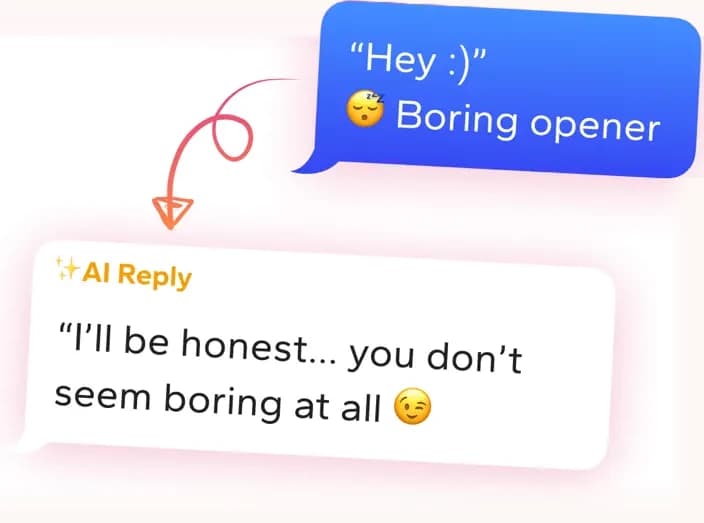
Get replies that sound like you
Screenshot the conversation in WingAI. It reads the vibe and gives you natural replies for this exact situation.
Try for freePicking up as if no time passed
Respond to the thing she actually said, in the register she used. If she sent a joke, answer the joke. If she shared a plan for the weekend, react to the plan. Resist the urge to reference the silence, even lightly, because any mention hands the delay a significance it did not have until you spoke. Think of it as rejoining a conversation in a cafe after someone stepped out for a call: you do not recap the absence, you just carry on. If your original message asked a question she skipped, you can let it go or fold it into your reply naturally, without pointing out that it went unanswered.
Giving her something easy to answer
A reply that ends with agreement leaves her nothing to pick up, and someone who already took a day to respond is unlikely to build the next turn from scratch. Add a detail from your own day, ask about something she mentioned, or offer a small opinion she can push against. Keep the question specific and light. Asking what she thinks about a new restaurant is easier to answer than asking what she is looking for. You are lowering the cost of replying, not demanding a performance. If she responds quickly to specific questions, you have learned something useful about what keeps her engaged.
Deciding when the pattern is clear
One slow reply is weather. A run of them is climate. Keep a loose mental tally across a couple of weeks rather than reacting to any single gap, since a bad week at work can distort things. If most exchanges involve long silences followed by brief answers, you can stop adjusting your approach, because the message wording is not the problem. Ease off the frequency, stop opening with questions that need effort, and see whether she closes the distance. If she does, the conversation can pick up again. If she does not, you will have spent your energy elsewhere, which was the better use of it anyway.
Frequently asked
- What does it mean when someone leaves you on read and then replies later?
- Usually it means she saw the message and postponed answering, then got to it when she had attention to spare. Reasons range from a busy day to low priority. The delay alone cannot tell you which. Watch her words and how the timing trends over several exchanges.
- Should I mention that she left me on read?
- It is better not to. Bringing it up makes the wait the topic and can read as irritation, even if you intend it lightly. Reply to what she wrote instead. If a pattern of long silences really bothers you, raise it calmly later, once there is some rapport.
- How fast should I answer once she finally replies?
- Answer at your normal pace, whether that is minutes or a few hours. You do not need to engineer a matching delay, since that turns the chat into a contest. Replying naturally keeps things relaxed and shows your attention does not depend on how she treated the last message.
- How long should I keep messaging if she keeps going quiet?
- Give it a couple of weeks and several exchanges before deciding. If the gaps stay long and her replies stay thin, put less energy into starting conversations and see whether she picks up the slack. If she does not, move your attention toward people who answer with more consistency.
What not to send
“lol took you long enough”
Teasing about the gap tells her you were counting hours, and it asks someone who just re-engaged to feel faintly guilty for doing so.
“No worries at all, I know you're super busy, I was just checking in, totally fine!”
Over-explaining that you are fine makes it obvious you spent the wait wondering, and it buries whatever she actually wrote under reassurance.
“haha yeah”
After a long gap she has given you something to respond to, and a throwaway answer hands back no hook, so the exchange can stall again for another day.
Mistakes to avoid
- Treating the length of the silence as a measurement of interest, then rereading the whole thread for hidden meaning instead of reading the message she sent.
- Replying with a deliberate delay of your own so the timing looks balanced, which only teaches both of you to keep score.
- Sending a burst of follow-up texts during the silence, so that her eventual reply has to address a pile of messages instead of one easy thing.
Real user feedback
“I was skeptical at first. Then I tried it on a dry chat and the replies actually sounded like me, not a chatbot.”
Mazoonx
“She went cold mid-week and I had no idea what to say. The reply I sent felt natural and she picked the chat back up.”
Marcus T.
“I overthink every text. Having three options and picking the one that sounds like me cut that spiral short.”
Sam R.
“I always freeze on the first sentence. This gets me past that blank box so I actually hit send.”
joejoe4567
Get replies that sound like you
Screenshot the conversation in WingAI. It reads the vibe and gives you natural replies for this exact situation.
Try for free