How to reply when she gets upset about other people
She reacted badly to a question about dating history or other people. Learn what that signal means and how to reply without making it worse.
When you ask about her dating history, other people she's seeing, or exes and she gets noticeably upset, that's not random. She's either felt burned before by someone who asked those questions insincerely, or she's testing whether you can handle a boundary she needs to set.
The upset reaction itself is real information. It tells you she has something at stake in how you handle this moment. A good reply doesn't smooth it over with apologies or over-explanations. It shows you heard the boundary, respects it without needing her to repeat herself, and moves forward without dwelling on the tension.
What you're doing here is rebuilding trust after a misstep. That means taking the L, making space for her reaction, and proving you're not going to push the same button again.
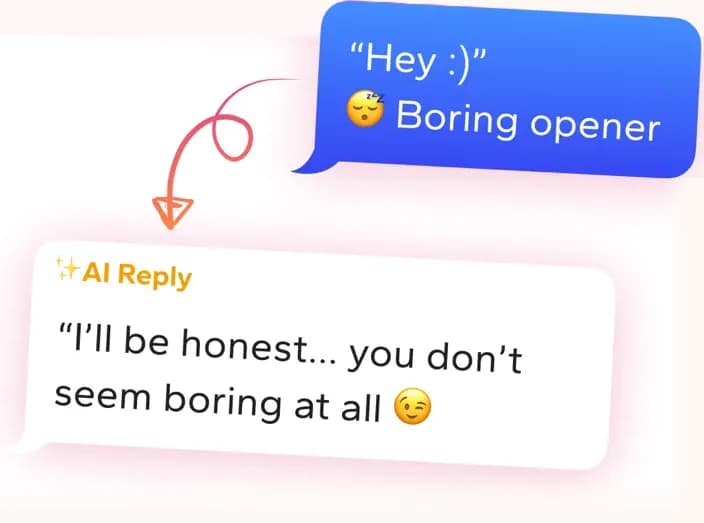
Get replies that sound like you
Screenshot the conversation in WingAI. It reads the vibe and gives you natural replies for this exact situation.
Try for freeRizz AI Screenshot the chat and get the next message for this person.
She set a line, not because you're bad, but because she had to
People don't get upset at innocent questions unless something behind it stung. Maybe someone she dated used questions about exes to chip away at her. Maybe she's been through gossip or judgment based on her dating life. Maybe she just needs some things kept private and hasn't had to enforce that boundary clearly before.
The upset isn't a referendum on you or your intentions. It's her drawing a line she needs to exist. Treating it like you committed a crime makes it about your feelings instead of hers. Treating it like no big deal makes it sound like you don't respect what she just communicated.
Acknowledge the boundary and reset without rehashing
A working reply does two things cleanly: it shows you heard and accept the boundary, and it shows you're moving on without making her explain or justify it further. Don't apologize for asking. Don't say 'I get why you're upset.' Don't promise you'll never ask again. Just make a short, clear statement that confirms you're respecting what she said.
Then shift the conversation somewhere else immediately. Not to prove you don't care, but to show her you can take a boundary and keep the vibe intact. The reset happens through action, not through reassurance.
Wait for her to come back to neutral before you keep going
Send your reply and then give her space. Don't double-text. Don't follow up with a question. Don't send something funny to 'break the tension.' If you do those things, you're asking her to comfort you about the boundary she just had to set.
If she goes quiet, that doesn't mean it's over. It means she's processing. Wait at least a day. If she reaches back out, you're fine. If she stays quiet after that, it's worth one low-pressure message that opens a door but doesn't demand she walk through it. After that, you're done. You showed you could take a boundary. It's on her now.
Why these replies fail
“I'm sorry, I didn't mean to upset you. I was just curious. I respect your privacy, I promise.”
Over-apologizing and promising turns this into your problem, making her feel like she overreacted and needs to reassure you.
“Ok I get it. You don't want to talk about exes. I'm not like them anyway.”
The second sentence undercuts the first by implying you're different and better, which sounds patronizing and self-serving.
“No worries! So what did you do this weekend?”
Acting like nothing happened and forcing cheerfulness signals you didn't take her boundary seriously, just want to move past the discomfort.
Common mistakes
- Apologizing repeatedly or acting like you did something seriously wrong, which makes the awkwardness bigger
- Explaining why you asked in the first place, which sounds like you're defending the question
- Pivoting to 'I'm not like other guys' or reassuring her you're different, which can feel patronizing
- Going silent and treating her like she's mad at you, which makes her carry the weight of fixing it
- Asking about it again later in a different way, signaling you didn't actually hear the boundary
Questions people ask
- Should I apologize for asking the question?
- Not in a big way. A quick acknowledgment works better than a formal apology, which can make the moment feel heavier than it needs to be. Say something like 'Got it' or 'Fair enough,' then move on. Apologizing repeatedly signals you think you messed up badly, which puts her in the position of having to comfort you.
- What if she brings it up again later?
- Answer it if she asks directly, but keep it short. If she wants to share more, she will. Don't treat the second conversation like a chance to rehash the first one or explain yourself better. Just be straightforward and move forward.
- How long should I wait before texting again if she goes quiet?
- At least a day. More if you can stand it. If she hasn't come back after two or three days, send one message that's light and opens a door without demanding a response. Something that invites her back in but doesn't make her feel obligated.
- Does this mean she's not interested in me?
- Not necessarily. Setting a boundary is actually a sign she's serious enough to protect her own space. People who aren't interested usually just ghost. Someone who gets upset and stays in the conversation is still deciding whether to keep going with you.
What people say after using WingAI
“I was skeptical at first. Then I tried it on a dry chat and the replies actually sounded like me, not a chatbot.”
Mazoonx
“Used it for a couple hours and set up a date the same night. Not even kidding.”
Nikola2214
“I overthink every text. Having three options and picking the one that sounds like me cut that spiral short.”
Sam R.
Get replies that sound like you
Screenshot the conversation in WingAI. It reads the vibe and gives you natural replies for this exact situation.
Try for free