He doesn't remember what you told him: what it actually means
Forgetting details you shared doesn't always mean disinterest. Learn how to read the signal and respond without pushing.
When someone forgets details you mentioned, it stings. But memory lapses don't always track interest the way you think they do. He might be distracted, juggling multiple conversations, or just bad at retaining information in text. The real signal is whether he asks follow-up questions, shows up consistently, and engages when you're in front of him.
Your reply here has one job: create an opening for him to either step up or reveal himself as checked out. Don't call out the forgetting directly. Instead, re-anchor the conversation with something that makes engagement easy and attractive. If he cares, he'll take it. If he doesn't, you'll know fast.
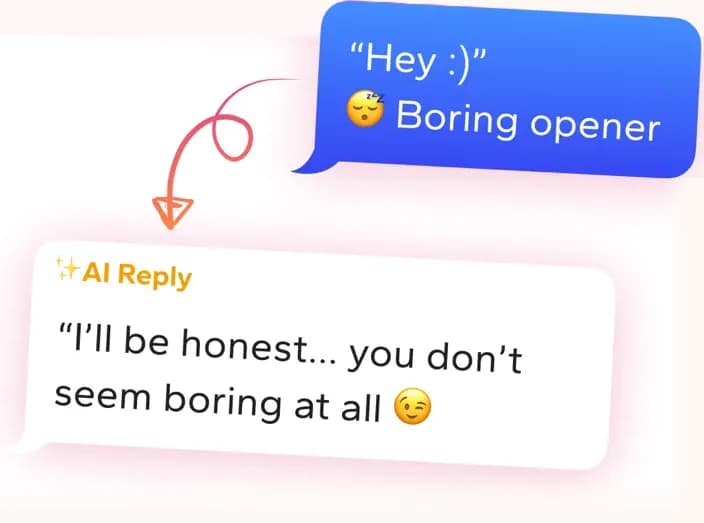
Get replies that sound like you
Screenshot the conversation in WingAI. It reads the vibe and gives you natural replies for this exact situation.
Try for freeRizz AI Screenshot the chat and get the next message for this person.
Forgetting details doesn't always mean he's not interested
Memory in texting is different from memory in person. People scroll past stuff, get distracted mid-read, or just don't retain written information the way they do face-to-face conversation. This doesn't excuse poor attention. But it also doesn't automatically mean he's uninterested.
What matters more is the pattern. Does he forget and move on, or does he forget and then ask questions when you remind him? Does he show up and engage when you're together? Is he consistent with his texting frequency, or does he go silent for days? One forgotten detail is noise. A pattern of not asking questions, not following up, and not making plans is the real signal.
Slip the detail back in naturally without repeating yourself
When you re-engage, mention the thing he missed as context for something new, not as a correction. This does two things: it shows you're unfazed enough to move forward, and it gives him a low-pressure way to acknowledge what he missed.
Your reply should either build on what you originally said (so it becomes part of the current conversation thread) or ask him a question that requires him to engage thoughtfully. If he actually cares, he'll use this opening to ask you about the thing he blanked on. If he doesn't, he'll just answer your new question shallowly and move on. That's your real data.
Wait for him to step up, then decide if this is fixable
Send your reply and give him 24 to 48 hours to respond. If he engages with real interest, consider it a minor stumble and move forward. If he answers vaguely or asks nothing about you, that's worth noticing.
If this becomes a pattern over the next few weeks, stop doing the work to keep him interested. Don't send another message after he ghosts or gives lazy replies. Don't re-explain yourself. Just see other people. The point of this reply isn't to fix him. It's to find out quickly whether he's worth your attention or whether you're carrying the whole conversation alone.
Why these replies fail
“Wait, you weren't listening? I literally just told you about Denver. Were you not paying attention?”
Calling out the mistake makes him defensive and turns the conversation into a conflict instead of letting him fail on his own.
“Yeah so the Denver conference is next month, it's from the 15th to 18th, and I'm really excited about the keynotes. I've been researching speakers all week...”
Over-explaining the same thing signals that you need him to care, which kills attraction and lets him off the hook.
“Nothing much, just working through the weekend I guess”
Matching his low energy and not bringing the detail back into play rewards his inattention and wastes your chance to see if he'll engage.
Common mistakes
- Calling out the forgetting ('You weren't listening when I told you about...'). Makes you sound bitter and puts him on defense.
- Over-explaining the same detail again as if repetition will make him care. It just makes you sound unsure.
- Letting it slide without a response. Silence reads as acceptance and he learns he can zone out.
- Pivoting to a totally new topic to 'reset.' This rewards his inattention.
- Asking him why he wasn't listening. Puts you in therapist mode instead of dating mode.
Questions people ask
- Should I directly tell him he didn't listen?
- No. Calling out the mistake makes him defensive and shifts the conversation to conflict. Instead, move forward naturally and let his next reply show you whether he cares enough to follow up or ask questions. His behavior will tell you more than his explanation ever could.
- Does this mean he's not interested?
- Not necessarily. A single forgotten detail might just be distraction or bad text retention. The real signal is whether he asks follow-up questions, remembers things over time, and shows up consistently. Look for a pattern, not one slip.
- How many times should I re-explain something before I give up?
- Once is enough. Bring it back into the conversation naturally one time. If he still doesn't engage or ask about it, stop bringing it up. You're not responsible for making him care. At that point, you're just working too hard.
- Should I wait for him to text first before I respond?
- No. Respond on your own timeline. But make your reply count. Use it to test whether he'll step up when you give him an easy opening. His response tells you what you need to know about his interest level.
What people say after using WingAI
“I overthink every text. Having three options and picking the one that sounds like me cut that spiral short.”
Sam R.
“I was skeptical at first. Then I tried it on a dry chat and the replies actually sounded like me, not a chatbot.”
Mazoonx
“Didn't think it would be this good. The funny options actually get responses, which is wild.”
Nico_dang
Get replies that sound like you
Screenshot the conversation in WingAI. It reads the vibe and gives you natural replies for this exact situation.
Try for free