Signs he regrets sleeping with you and how to respond
Mixed signals after sleeping together? See which behaviors point to regret versus an awkward adjustment, and how to word your reply without chasing.
Going quiet after sex has a lot of possible explanations, and regret is only one of them. Some people feel exposed after a new level of closeness and need a day to settle. Some are juggling work, family, or an unfinished situation with someone else. Some are unsure whether they wanted a relationship or a one-off, and they stall because they have not decided. From your side, you cannot see which one it is, so treat any single slow reply as a data point and not a verdict.
Your aim here is modest. You are not trying to extract a confession, win him back, or prove you are unbothered. You want to find out, at low cost to your own dignity, whether he is still interested in spending time with you. That means writing something that is easy to answer, that does not demand an emotional account of himself, and that you would be comfortable having him read in a year. A message built around reassurance or around a hidden test tends to fail, because he can feel which one it is.
Timing and medium shape how a message lands. Text is flat, so a warm sentence can read as needy and a casual one can read as cold, which is why tone matters more than clever phrasing. A reply sent within a few hours of his message reads as relaxed. A long, drafted paragraph sent at midnight reads as anxious, whatever it says. If he has been silent for several days, one short message that refers to something real from your time together, a place, a joke, a plan you half made, gives him an easy way back in without mentioning the awkwardness at all.
Several habits reliably backfire. Apologizing for something you did not do hands him a story where you were the problem. Asking what he is feeling pushes a conversation he may not have words for yet. Sending a second message after the first goes unanswered turns a light question into pursuit. Writing a pointed, wounded line to make him feel guilty usually produces a defensive reply or silence. All of these move attention off the plans and onto the tension.
Reading his response comes down to what he does, not what he says. A prompt, warm answer that suggests a plan is a good sign. A polite answer that never commits to a time is lukewarm. A reply that is friendly but keeps drifting to vague later is telling you something even if the words are kind. No reply after a single clear message is also an answer. None of these prove what he is feeling inside, but they tell you where you stand, and that is what you need to decide your next step.
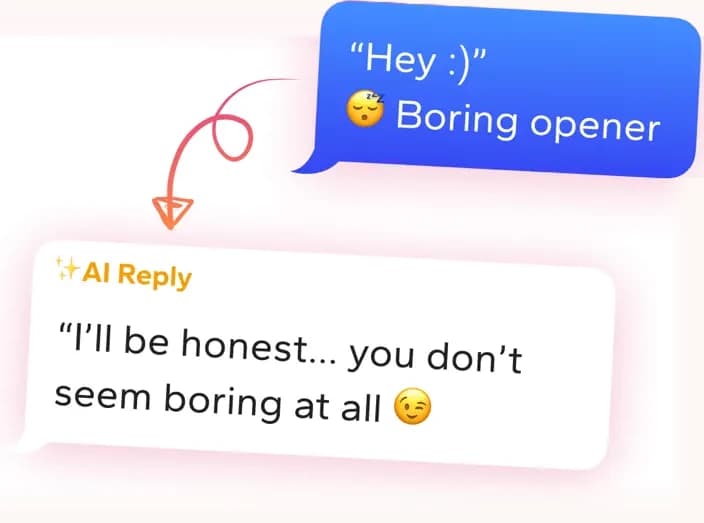
Get replies that sound like you
Screenshot the conversation in WingAI. It reads the vibe and gives you natural replies for this exact situation.
Try for freeRegret or just a slow week
Look at patterns across several days, not one quiet afternoon. Avoidance tends to show up as several things together: he stops starting conversations, his answers get shorter, plans get postponed without a new date attached, and the playful tone turns polite. Slower texting alone could be a busy job or a rough week. Notice whether he still answers questions you ask and whether he makes any effort to propose a time. If he is slow but warm and offers an alternative when he cancels, that points to a scheduling problem. If he is polite, brief, and never suggests anything, that looks more like distance. You will rarely be certain, so decide based on what you can observe.
Tone for your first message
Aim for relaxed and a little warm, the way you would write to someone you like and have no reason to be anxious about. Keep it short enough to read in a few seconds. Mention something specific from your time together or something he told you, because that proves you are thinking of him as a person and not of the situation as a problem. Name the awkwardness only if it feels natural, and then in half a sentence. Leave out requests for reassurance, questions about where this is going, and anything that asks him to rate how it went.
Adjusting to what he sends back
If he answers warmly and picks up your reference, match his energy and let a plan form naturally. If he answers politely but vaguely, send one light follow-up only if he left an opening, such as saying he is busy this week, and otherwise let it rest. If he says he needs space, accept it in a sentence and stop messaging. If he says he is not looking for anything serious, believe him and decide for yourself whether that works for you. If he does not answer, one message was enough. Sending more will not change his reply, and it will change how you feel about having sent them.
Common questions
- How long should I wait before texting if he goes quiet after we sleep together?
- A few days is reasonable, since many people go quiet briefly after a new level of closeness. If he has said nothing for three or four days, send one short, low pressure message. If he messaged you first, reply within a few hours. Waiting longer than that to answer him mostly just adds tension.
- What if he says he needs space or time to think?
- Take him at his word and keep your reply short and friendly. Do not ask how long, and do not check in to see whether he has decided. Give him real room, which means no follow ups. If he wants to talk again, he knows how to reach you.
- Should I bring up the night we slept together or act like it never happened?
- Neither extreme works well. Skipping it completely can feel like you are tiptoeing around it, and a long discussion can feel heavy. A brief, easy mention, or simply writing warmly about something shared, usually works. Let him decide how much more to say about it.
- If he acts cold after sex, does that mean he is not interested?
- Not necessarily. Coldness can come from nerves, confusion, or something unrelated to you. But if he stays distant and vague after you have sent one friendly message, his behavior is giving you your answer. Decide what you want and stop waiting for a different reply.
Messages that backfire
“I'm so sorry if I came on too strong, I really didn't mean to make things weird between us.”
It assigns you the blame for his silence and gives him a ready excuse to agree that things got weird.
“Fine, I get it. You got what you wanted. Don't worry, I won't bother you again.”
It accuses him of using you without proof, which turns a quiet stretch into a fight he can win by simply not replying.
“Hey, just checking in again, did you see my last message? I'd really like to know where we stand.”
A second message before any answer to the first reads as pursuit, and asking him to define things after sex puts him on the spot.
Where people go wrong
- Reading one slow reply as proof of regret and sending an anxious message before there is any real pattern to respond to.
- Asking him to explain his feelings or define the relationship right after sex, which puts pressure on him when he may not know the answer.
- Sending a second or third message after the first goes unanswered, which shifts you from interested to chasing.
From our users
“I was skeptical at first. Then I tried it on a dry chat and the replies actually sounded like me, not a chatbot.”
Mazoonx
“I overthink every text. Having three options and picking the one that sounds like me cut that spiral short.”
Sam R.
Get replies that sound like you
Screenshot the conversation in WingAI. It reads the vibe and gives you natural replies for this exact situation.
Try for free