How to reply when you think you've overshared over text
You sent too much. Here's how to respond without making it worse, and when to actually move on.
When you're worried you've already said too much, you're usually right that you said more than you planned. But the problem isn't the size of what you said. It's how you handle the next message.
If you send a follow-up that apologizes, explains, or justifies what you already said, you're drawing attention to it. You're also signaling that you're anxious about her reaction, which changes how she reads everything backward. What felt like oversharing in the moment becomes a bigger deal because you made it one.
A good reply here does one job: it moves the conversation forward as if the overshare never happened. It answers something she said. It asks about her. It introduces a new thread. It acts normal. That's the whole move.
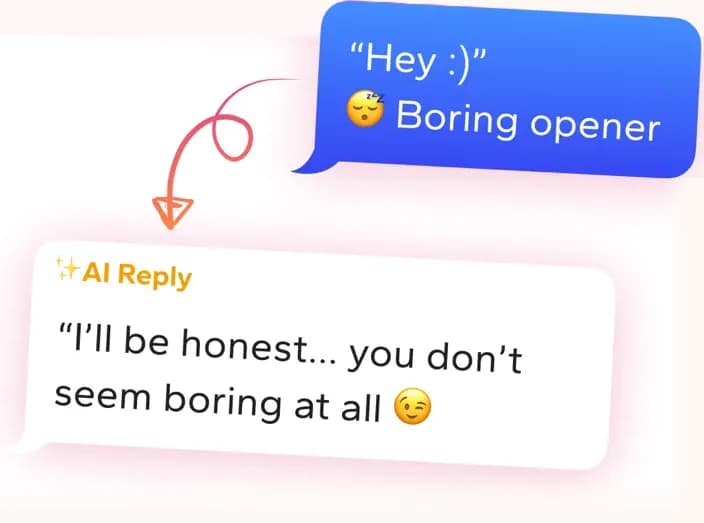
Get replies that sound like you
Screenshot the conversation in WingAI. It reads the vibe and gives you natural replies for this exact situation.
Try for freeRizz AI Screenshot the chat and get the next message for this person.
When she doesn't immediately react to it
Silence after an overshare can feel like rejection, but it usually isn't. She may not have read it yet. She may have read it and thought it was fine. She may be figuring out how to reply. The absence of a worried response is not a worried response.
Most people don't flag oversharing unless it's something really concerning, like red flags about your character. Small talk boundaries and personal detail levels shift as you talk more. She likely knows that. Don't interpret neutral silence as disapproval.
Your next message should ignore it happened
The move is to reply to something she actually said, ask her a real question, or add something new to the conversation. Treat your last message as a normal part of the thread, not an incident. This does two things at once. It shows you're not spiraling, and it signals to her that you're not treating it like a mistake either.
If she felt uncomfortable, your calm follow-up makes it clear you're not pushing for reassurance about it. If she didn't notice or care, you've just kept the conversation flowing naturally.
Wait for her next message before you send anything else
Send one reply to whatever she said last. Then stop. Don't send a second message. Don't send a 'funny' message to lighten the mood. Don't send anything else until she replies. You already said more than you planned. Adding more messages now is adding fuel.
If she doesn't reply within a day or two, assume she's busy or lost interest for reasons unrelated to your overshare. One follow-up after a few days is fine. After that, move on. Continuing to message signals you're stuck on it, which makes it bigger.
Why these replies fail
“Haha sorry about that, I usually don't get into all that on a first conversation”
This makes the overshare the topic instead of letting it fade. You're asking her to reassure you that it's fine.
“I feel like I came on too strong. I get that way sometimes when I'm interested”
You're narrating your own insecurity and asking her to validate your self-awareness, which extends the awkwardness.
“Anyway, enough about me lol”
This flags the overshare as something you both noticed and regret, making her feel worse about it too.
Common mistakes
- Sending 'sorry for that' or 'that was weird' messages that spotlight the thing you regret
- Over-explaining what you meant or why you said it, which makes you sound defensive
- Going silent for days waiting for her reaction, then sending a long message when she doesn't reply
- Suddenly becoming vague or distant to 'correct' the overshare, which feels like mood whiplash
- Asking meta questions about whether she's uncomfortable, which puts her on the spot
Questions people ask
- Should I send a message acknowledging I said too much?
- No. The second you flag it yourself, you've made it a problem. If she brings it up or seems uncomfortable, then respond directly. Until then, act like it didn't happen. A brief 'sorry' or 'that was a lot' actually draws more attention to it.
- What if she hasn't replied and it's been hours?
- Don't panic-send anything. Give it at least a full day. She's probably not ignoring you because of what you said. If you do send a follow-up, make it a normal reply to something she said, not a comment on your earlier message.
- How do I know if I actually overshared versus just being open?
- If you told her something personal but it wasn't a red flag about your character or mental state, you probably didn't overshare. Talking about family stuff, past relationships, or mistakes you've made is normal conversation. If you're still anxious about it an hour later, that's anxiety talking, not your gut.
- If she does bring it up as an issue, what should I do?
- Give a short, honest response without over-explaining. 'Yeah, I opened up more than I usually do early on' works. Don't defend it or apologize excessively. Then move forward. If it's a dealbreaker for her, that's information. Most of the time it won't be.
What people say after using WingAI
“She went cold mid-week and I had no idea what to say. The reply I sent felt natural and she picked the chat back up.”
Marcus T.
“I was skeptical at first. Then I tried it on a dry chat and the replies actually sounded like me, not a chatbot.”
Mazoonx
“I overthink every text. Having three options and picking the one that sounds like me cut that spiral short.”
Sam R.
Get replies that sound like you
Screenshot the conversation in WingAI. It reads the vibe and gives you natural replies for this exact situation.
Try for free