How to text when she mentions past relationship hurt
Respond to her opening up about past pain without dismissing it, rushing to fix it, or making it about you.
When she brings up how she's been hurt in the past, she's testing whether you can hold space for something real. This is not a problem to solve or a red flag to diagnose. She's showing you something vulnerable and checking if you'll panic, minimize it, or turn it into reassurance-seeking.
A good reply acknowledges what she said without interrogating her pain or flooding her with comfort. You're not trying to prove you're different from the guy who hurt her. You're not running either. You're just steady.
The move is to take it seriously, stay grounded, and leave room for her to say more or to move on. This builds trust faster than any promise can.
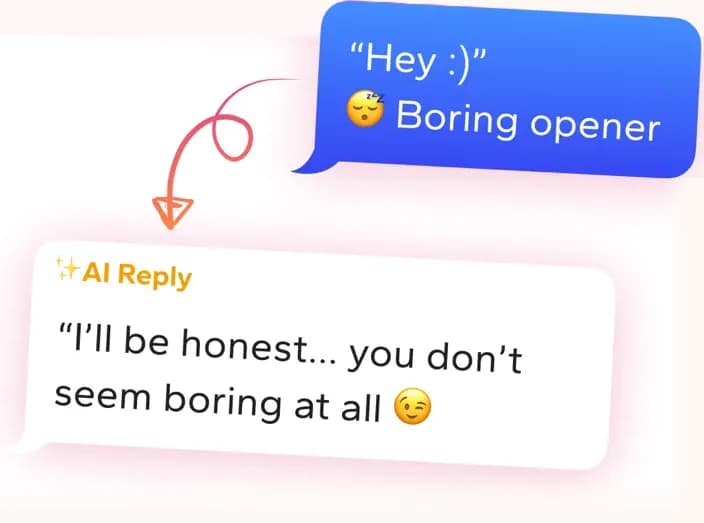
Get replies that sound like you
Screenshot the conversation in WingAI. It reads the vibe and gives you natural replies for this exact situation.
Try for freeRizz AI Screenshot the chat and get the next message for this person.
She's testing whether you can sit with hard things
This isn't a random complaint. She's saying something that took effort to say. If a woman mentions past hurt early in texting, she's already decided this matters enough to risk sounding damaged or heavy. She's watching to see if you'll treat it like a minor inconvenience, make it weird, or actually hear it.
What she's signaling: I have a real history. I'm telling you because it affects how I connect. Can you handle that without panicking or fixing me?
Acknowledge it, sit with it, move when she moves
A solid reply does three things. First, it shows you actually registered what she said. Don't paraphrase or psychoanalyze. Second, it stays calm. No alarm, no overcompensating warmth. Third, it gives her control of where the conversation goes next. She can elaborate if she wants to, or she can steer elsewhere. You're not forcing deeper talk and you're not pretending she didn't say it.
The reply tends to be short. One or two sentences. It names something true about what she just said without making it bigger than it is.
Send it the same day, then give her space to drive
Reply when you see it or within a few hours. Delaying feels evasive. But keep it brief so she doesn't feel like she's triggered a whole serious conversation that now needs managing. After you send it, let her decide what comes next. If she wants to talk more about it, she will. If she wants to move on, she will. Don't follow up with more questions about her past unless she brings it up again.
If she goes quiet after sharing, that's normal. She may have said what she needed to say. Give it a day or two, then text about something else to show you're still here but not hovering.
Why these replies fail
“I'm sorry that happened to you. But I promise I'm different. You can trust me.”
Makes it about proving yourself instead of hearing her, and sounds defensive about accusations she didn't make.
“That's rough. Do you want to talk about what happened? I'm here for you.”
Turns a moment of trust into an interview and shifts the power to you as the therapist figure.
“Yeah I get it. I've been hurt too...”
Steals the moment by centering your own pain when she was vulnerable first.
Common mistakes
- Rushing to reassure her by saying 'I'm not like that' or 'I'd never hurt you', makes it about your innocence, not her experience
- Asking for details about what happened, turns her vulnerable moment into an interrogation
- Staying silent or changing the subject, signals you're uncomfortable with real talk
- Over-explaining your own past hurts, shifts focus to you when she just opened up
- Treating it like a solvable problem, offering advice when she just needs acknowledgment
Questions people ask
- Should I ask her what happened or who hurt her?
- Not in your reply. Let her control that. If she wants you to know details, she'll share them. Asking immediately signals you're either interrogating her or trying to assess the damage, both of which feel bad.
- What if she brings this up really early, like on the second message?
- Still treat it the same way. Some people lead with their wounds because they want to know early if someone can handle them. Early disclosure isn't a sign of instability. It's a sign she's being direct about what matters to her.
- Does acknowledging her hurt mean I have to get serious with her?
- No. You're not committing to therapy sessions or taking on her healing. You're just not flinching when she's real. You can keep things light after without it being cruel.
- What if she keeps bringing up past hurt in every conversation?
- That's a pattern worth noticing. Once or twice, normal. Every time, she may need more support than you can give early on, or she may be stuck in a loop. You can still be kind while being honest that you're not the right fit.
What people say after using WingAI
“I was skeptical at first. Then I tried it on a dry chat and the replies actually sounded like me, not a chatbot.”
Mazoonx
“I overthink every text. Having three options and picking the one that sounds like me cut that spiral short.”
Sam R.
“She went cold mid-week and I had no idea what to say. The reply I sent felt natural and she picked the chat back up.”
Marcus T.
Get replies that sound like you
Screenshot the conversation in WingAI. It reads the vibe and gives you natural replies for this exact situation.
Try for free