How to text when a match says they're still figuring out their life
A match says they're still figuring out their life. Here's how to read what they mean, reply without pressure, and decide whether to keep texting.
When a match says they're still figuring out their life, they've usually just put a boundary or a warning label on the table. Maybe they changed jobs last month, are living with a roommate until a lease ends, or are mid-move to another city. Maybe they're telling you gently that they don't have room for this. Often both are true. The line is vague on purpose, and that vagueness is the only information you get at this point, so don't treat it as an invitation to interrogate.
What you want from your reply is simple. You want them to feel that mentioning their situation cost them nothing. People who say this are often braced for one of two reactions: a flood of sympathy that makes the chat feel like a counseling session, or a polite retreat that confirms they were right to hedge. If you give neither, the conversation stays where it was before the disclosure, and that ease is what makes someone willing to keep talking.
Timing changes how this lands. Early in a thread on Hinge or Tinder, the statement is often a pre-emptive disclaimer, a way of lowering expectations before anyone has asked for anything. Later, after a few days of easy back and forth, it carries more weight and may be the first real crack of honesty. In the first case, a quick, light reply works best. In the second, a short beat of acknowledgment is fine before you move on to something concrete, like a plan.
Most of what backfires here comes from the reader's own anxiety. Offering to wait turns you into someone holding a place in line. Asking what exactly they're figuring out puts a stranger in the role of therapist and makes them explain something they deliberately kept short. Matching their uncertainty with your own confession can feel like a bonding attempt, but it often just doubles the heaviness. And a breezy sign-off that implies you'll come back when they're sorted comes across as a door closing, however politely it's phrased.
Reading their response is simpler than it feels. Someone who meant transition will keep behaving like a person who's interested: replies within a normal window, asks about your day, picks up threads you dropped earlier. Someone who meant no will get shorter, slower, and stop generating questions. One slow day tells you nothing. A steady pattern across several exchanges tells you most of what you need, and you never had to ask them to explain.
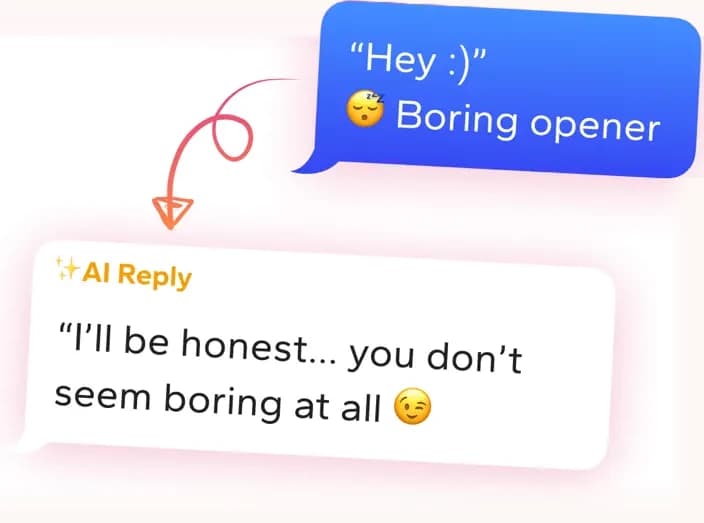
Get replies that sound like you
Screenshot the conversation in WingAI. It reads the vibe and gives you natural replies for this exact situation.
Try for freeTelling flux from a soft no
A person in real flux still behaves like someone with a phone and a pulse. They answer in a few hours, send a meme, ask what you did over the weekend, and remember the thing you mentioned about your sister's wedding. Their life is messy, but their attention is on you when they're texting. A soft no looks different. Replies thin out, questions disappear, and every message ends without a hook. Nothing dramatic happens, which is the point. You can't tell from one text, so give it a few exchanges and watch whether the effort is mutual. If you're the only one steering, you have your answer.
Shaping a reply that moves on
Treat their line like a weather report. Acknowledge it in a few words, then change the subject to something in the present: a detail from their profile, what you're doing tonight, something funny that happened at work. Tone matters more than wording. Relaxed and a little amused reads as someone who has a full life and isn't waiting on theirs. Heavy reassurance or careful phrasing reads as someone preparing to be disappointed. Keep it short enough that the topic doesn't become the whole message. If they want to say more about it, they'll bring it back up on their own, and that's your cue to listen.
Asking to meet anyway
Being in transition doesn't cancel a coffee. If the texting has been warm for a few days, propose something specific and small, like a drink on a weeknight or a walk on Saturday afternoon. A concrete offer is easy to say yes or no to, and either answer is useful. A vague 'we should hang out sometime' hands them an easy way to stall. If they decline and offer an alternative, that's interest with a scheduling problem. If they decline and offer nothing, take it at face value and let the thread fade without drama or a long farewell.
People also ask
- Should I ask what they're figuring out?
- Not unless they open the door. A match who drops that line and moves on wants the chat to move on too. If they elaborate or ask about your own situation, a light question back is fine. Making their circumstances the main topic puts weight on a conversation that hasn't earned it yet.
- What if they keep saying they're too busy to meet?
- Offer one specific plan and see what happens. People who like you and are busy still say yes to a short coffee or a drink after work. If you get vague answers twice, treat it as a no, stop pushing, and put your energy into conversations that are moving.
- Is it okay to say I'm still figuring things out too?
- Yes, if it's true and you say it in passing. Mention it once, lightly, and carry on with something else. Turning it into a shared confession can make the chat heavy fast, especially with someone you haven't met. Keep it brief and let the conversation return to ordinary topics.
- How soon should I ask them out after they say this?
- On the same schedule you'd use with anyone else. If the messages have flowed for a few days and they're replying with interest, suggest meeting. Their situation doesn't justify delaying. Let them decide whether they have time for a coffee, since that's the honest way to find out.
Why these don't work
“That's totally fine! No pressure at all. I'm here whenever you're ready to focus on dating. Just let me know when things settle down.”
It turns their passing remark into a waiting list with you at the front, which makes you look like someone with nothing else going on.
“Haha same honestly. What are you figuring out? Career stuff or more personal?”
Pressing for details pushes someone who chose a vague phrase into explaining the one thing they were trying not to explain on a first chat.
“Cool, well I'll let you focus on that. Hit me up when things are clearer.”
It treats their honesty as a reason to step away, so the next time they're candid with a match they'll remember how that went.
Pitfalls to avoid
- Promising to wait or check back later, which casts you as a patient bystander and removes any reason for them to put in effort now.
- Treating the comment as a puzzle to solve and firing off questions about their job, city, or plans before they've offered any of it.
- Reading one slow reply as rejection and either sending a rapid follow-up or pulling back dramatically, instead of watching the pattern over several exchanges.
It doesn't sound like a bot
“I overthink every text. Having three options and picking the one that sounds like me cut that spiral short.”
Sam R.
“I was skeptical at first. Then I tried it on a dry chat and the replies actually sounded like me, not a chatbot.”
Mazoonx
“I always freeze on the first sentence. This gets me past that blank box so I actually hit send.”
joejoe4567
“Used it for a couple hours and set up a date the same night. Not even kidding.”
Nikola2214
Get replies that sound like you
Screenshot the conversation in WingAI. It reads the vibe and gives you natural replies for this exact situation.
Try for free