How to text someone who's mad at you
Repair damage with the right apology text. Learn what works when someone's upset, what kills your chances, and when to send it.
When someone's mad at you, your text lands on an already hot wire. She's not reading generously. She's reading defensively, looking for whether you get why she's upset or if you're about to make it worse.
A good reply here does two things at once. It takes responsibility for the specific thing that hurt her, without dragging her into your feelings about it. And it gives her a reason to believe you actually understand why it mattered, not just that you got caught.
Most people fail by defending themselves, explaining what they meant, or making the apology about their own regret instead of her experience. All of those read as "I'm more concerned about myself than about you." She's already mad. That converts her to done.
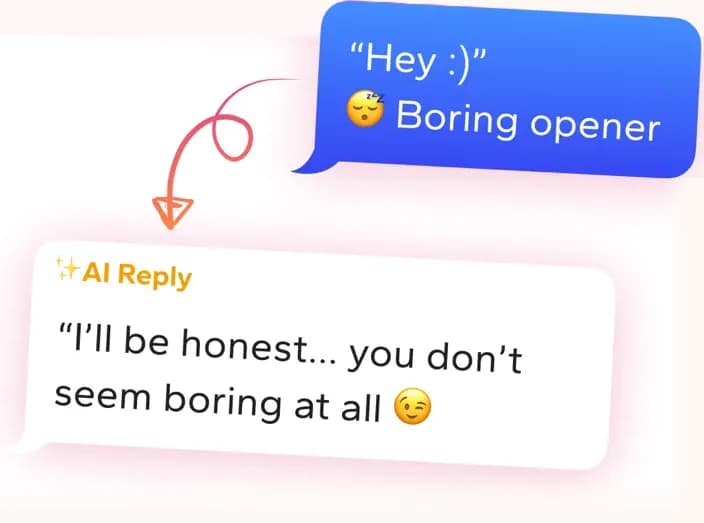
Get replies that sound like you
Screenshot the conversation in WingAI. It reads the vibe and gives you natural replies for this exact situation.
Try for freeThe silence before her message tells you how mad she is
Read the gap first. Three days of no response is not the same as three hours. The longer she waited, the more she needed you to notice something was wrong before she had to tell you. She gave you a window to course-correct on your own. You didn't take it.
Her message itself is a last resort, not an opening move. She's also testing whether you'll get defensive or actually hear her. The tone of her text, the length, whether she uses your name or a cold opener, all of that is data about whether she's still invested in this or mentally checking out. Take it seriously. Don't match her energy with your own frustration.
Name the thing you did, then name why it mattered to her
Don't apologize for 'being distant' or 'not communicating.' That's vague enough to feel like you're not really admitting anything. Say the actual thing. You didn't text back for days. You cancelled plans. You lied about where you were.
Then add one sentence about the real injury, not the surface complaint. If you ignored her texts, the injury isn't that you didn't respond. It's that she felt like she didn't matter to you. If you cancelled plans last minute, it's not the inconvenience. It's that she felt deprioritized. Show her you understand why your action hurt, not just that it annoyed her. That's the move that rebuilds trust.
Send it when you're calm and she might read it seriously
Don't send it while you're angry or defensive. Reread it in the morning. If it feels like you're justifying yourself or making her responsible for your feelings, delete it and start over.
Don't send it at 11pm or 2am. She'll think you're drunk or spiraling. Send it during the day when she's at work or out with friends, not in a moment where she's alone and every word will land harder. Give her some space to receive it without the whole thing feeling like emotional intensity directed at her. And then actually wait. Don't send another message in three hours asking if she got it. Let her come back to you on her own timeline.
Why these replies fail
“I'm sorry you're upset, but I was going through a lot and didn't know how to tell you”
It centers your struggle instead of her hurt, making the apology conditional on her understanding your situation first
“I didn't mean to hurt you. That's not who I am. I hope you can forgive me”
Vague and self-focused. It asks her to comfort you instead of showing you understand what you actually did
“We need to talk about this. Can you call me?”
Passes the responsibility back to her to do the emotional labor of explaining her own hurt
Common mistakes
- Defending your actions or explaining your intentions instead of owning the impact
- Using 'I feel bad' or 'I'm sorry you feel that way' (makes it about you, not her)
- Sending a wall of text that looks like you're trying to convince her you're right
- Waiting too long to send anything, letting anger harden into resentment
- Asking her to forgive you in the same message, forcing a response she's not ready for
Questions people ask
- Should I apologize if I don't think I did anything wrong?
- Not a blanket apology, no. But you can apologize for the impact of your actions without agreeing her reading of your intent is correct. Say 'I didn't mean to make you feel X, and I'm sorry I did' rather than 'I'm sorry I did the thing you think I did.' That's honest and takes responsibility without being dishonest.
- How long should I wait to hear back after I send the apology?
- At least 24 hours. She's angry and needs time to let it settle. If you haven't heard back in three days, you can send one more message, but make it about giving her space to come to you, not about whether you're still thinking about it.
- What if she doesn't respond at all after my apology?
- That means she's still protecting herself. Don't send another apology text. She heard you. If the relationship matters, she'll come back when she's ready. Sending more messages now looks like you're trying to make yourself feel better, not actually giving her what she needs.
- Should I explain my side of things in my apology text?
- Not in the apology itself. Explanations for your behavior come later, after she's had time to feel heard. Right now, any 'but' or 'however' reads as a defense. Save it for when she asks, or after things are calmer.
What people say after using WingAI
“She went cold mid-week and I had no idea what to say. The reply I sent felt natural and she picked the chat back up.”
Marcus T.
“I was skeptical at first. Then I tried it on a dry chat and the replies actually sounded like me, not a chatbot.”
Mazoonx
“I overthink every text. Having three options and picking the one that sounds like me cut that spiral short.”
Sam R.
Get replies that sound like you
Screenshot the conversation in WingAI. It reads the vibe and gives you natural replies for this exact situation.
Try for free