How to text someone after a few days of silence
Texting someone after a few days of silence? Skip the apology, give your message a reason to exist today, and make it easy for them to answer.
Start with what the gap looks like from their side. Three days of quiet rarely feels like a verdict to the person on the receiving end. Your last message may have landed during a work crunch, been read on a train and filed under later, or sat under forty other notifications. Many people carry a mental pile of unanswered texts and feel faintly guilty about every one of them. When your name pops up again, the most likely reaction is a small flicker of relief that the conversation is still alive, followed by whatever mood they happen to be in.
Your goal is narrow. You are not trying to win back lost ground or prove you were never bothered. You want one message that reads like a continuation of normal life. If it feels like a reopening ceremony, with a throat clear and a nod to the absence, you hand the silence a weight it never had. The most useful target is a text that could have been sent on day one or day four and would make about the same sense, because it is tied to something real in your conversation or your week.
Platform and timing matter more than people expect. On iMessage or WhatsApp, read receipts and typing bubbles mean the gap is visible in a way it is not on Instagram or Hinge, where a late reply is ordinary. If you met on Tinder or Hinge and moved to texting recently, the history is thin, so a callback to one specific detail from their profile or an earlier chat carries more weight than a general check-in. Mid-afternoon or early evening on a weekday looks like someone with a normal routine. A text at 1 a.m. looks like someone who has been staring at the thread.
What tends to backfire is anything that asks the other person to manage your feelings. A long preamble about being bad at texting, a joke that only works if they are already worried you vanished, a question about where things stand. Each one converts a light moment into a small test, and people dodge tests by going quiet again. Overcorrecting is just as common. Some people send something so breezy and stripped of context that it reads as a mass message, which feels worse than saying nothing.
Reading their response comes down to proportion. A quick reply that picks up your thread, even briefly, means the door is open and you can match their energy. A slow but warm answer usually reflects their schedule, not their interest. A short, flat reply that answers nothing and adds nothing deserves attention, but one dry message is not enough evidence to judge. Look at whether they ask anything back or offer a detail you can build on. If you hear nothing at all, give it the same few days you would give anyone and treat the silence as information.
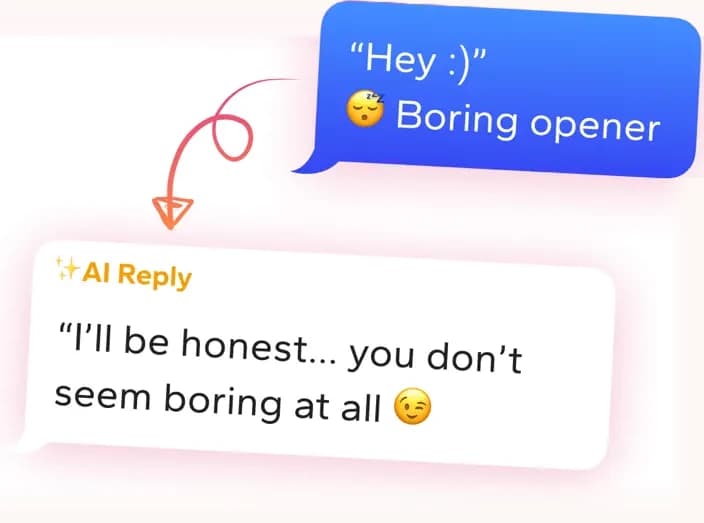
Get replies that sound like you
Screenshot the conversation in WingAI. It reads the vibe and gives you natural replies for this exact situation.
Try for freeWhy these don't work
“Hey stranger, sorry I fell off the face of the earth, work has been insane and I feel terrible.”
The long apology turns three quiet days into an offense, and the other person now has to reassure you before the conversation can start.
“So I guess you're busy or something? No worries.”
This is a dig dressed up as understanding, and it gives them a reason to feel defensive or accused instead of glad you wrote.
“hey”
A bare greeting after several days of nothing has no hook and no reason to exist today, so it feels like a low-effort check that they are still around.
Pick a hook from your last chat
Scroll up before you type anything. Look for the last thing that got a real reaction from them: a story about their weekend, a complaint about a coworker, a show they were halfway through. A follow-up to that works because it proves you were listening and gives the message a clear reason to arrive now. If your last exchange fizzled out, skip it and use something from your own days that links back to them, like passing a place they mentioned or finding out how a thing they were worried about turned out. Keep it to a sentence or two. A hook with a paragraph of setup starts to feel like homework.
Ask something with a small answer
If you end on a question, shrink it. Asking how their week has been invites a vague stock reply and takes effort to answer well. Asking whether the interview they dreaded went okay, or whether they ever finished the book, can be answered in six words and often leads somewhere. Avoid questions that quietly ask for a ruling on the two of you. The goal is for replying to feel easier than not replying. If you share a thought instead of asking, leave a gap they can step into, such as an opinion they might disagree with or a detail they can top.
Handle the sent-but-unanswered thread
If your last message sat unanswered, resist the urge to refer to it, even lightly. Pointing at your own unreplied text, with a line like you never answered me, makes them the defendant. Treat the old message as if it landed in a drawer and start from something new. Do not double up by resending it in different words either. One fresh, standalone text is enough. Then put the phone down and get on with your evening. If you check the thread every twenty minutes, you will start reading meaning into a delay that probably has a dull cause.
Pitfalls to avoid
- Drafting the message for an hour and loading it with so much explanation that the apology becomes the main event, which makes a small gap feel like a big problem.
- Sending a second text a few hours later because the first one has no reply yet, which turns a relaxed reopening into visible anxiety.
- Texting late at night after rereading the old thread, when the message is driven by restlessness instead of a clear reason to write today.
People also ask
- How do I break the silence in a text without making it awkward?
- Send something that picks up a real detail from your last conversation or from your week, and say nothing about the gap. Keep it short and give them an easy way to answer. The awkwardness usually comes from addressing the silence directly, not from the silence itself.
- Is three days too long to wait before texting someone back?
- No. Three days is within the ordinary range of busy people, and most won't have counted. It only becomes a problem if you treat it like one. Send a normal message at a normal hour, and don't apologize for the time that passed.
- Should I send a funny message or a serious one after a few days?
- Match whatever tone your earlier texts had. If you two joked around, a light callback fits. If the last chat was more earnest, a warm, simple question suits better. A sudden shift in tone after a gap feels forced and makes the message harder to answer.
- What if they read my text and still don't reply?
- Give it a few days before reading anything into it, since many people read a message and mean to answer later. If a week passes with nothing, one more light attempt is reasonable. After that, let it go without sending a final message about the silence.
It doesn't sound like a bot
“I overthink every text. Having three options and picking the one that sounds like me cut that spiral short.”
Sam R.
“She went cold mid-week and I had no idea what to say. The reply I sent felt natural and she picked the chat back up.”
Marcus T.
“I was skeptical at first. Then I tried it on a dry chat and the replies actually sounded like me, not a chatbot.”
Mazoonx
Get replies that sound like you
Screenshot the conversation in WingAI. It reads the vibe and gives you natural replies for this exact situation.
Try for free