Tell your boyfriend you love him after fighting
How to say 'I love you' after an argument without backing down or seeming weak. Text moves that repair while staying honest.
After a fight, saying 'I love you' feels risky. You worry it looks like you're caving, or that it'll be thrown back at you. But the real move isn't about surrendering the argument. It's about separating what you fought about from what you feel about him.
Good replies here do two things at once. They say the love is real and independent of the conflict. They also signal that you're not pretending the argument didn't happen or asking him to pretend either. This matters because half-hearted 'I love yous' after fights read as manipulation, not connection.
Timing changes everything. Sending this too fast looks panicked. Waiting too long makes it feel calculated. The window is when both of you have cooled but haven't started the freeze.
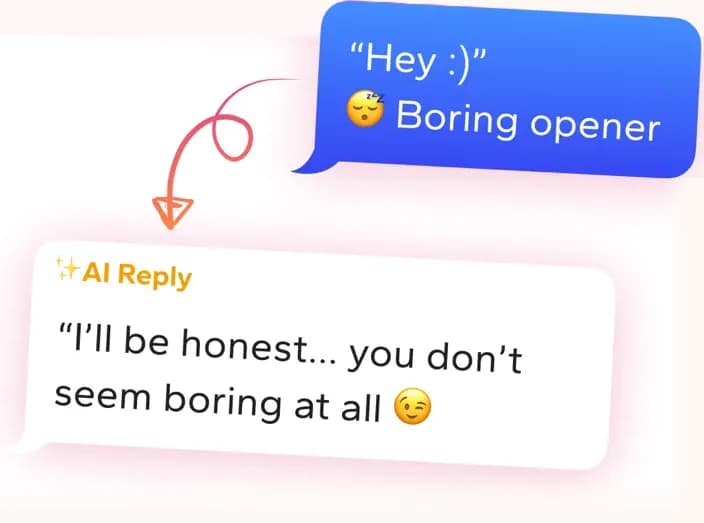
Get replies that sound like you
Screenshot the conversation in WingAI. It reads the vibe and gives you natural replies for this exact situation.
Try for freeWhy arguments make 'I love you' feel dangerous
After a fight, you're tracking whether he's still mad. You're wondering if saying 'I love you' will be used as evidence that you were wrong, or that you don't really care about the thing you fought about. That fear is real but it's usually backwards. He's probably waiting for a signal that you're not shutting him out. Saying 'I love you' doesn't erase the argument. It just tells him the argument doesn't erase the relationship. Read the silence first. If he's been quiet for hours but hasn't blocked you or said he needs space, he's waiting for you to move first.
State love first, then address what happened
The move is to say 'I love you' as its own complete sentence, then handle the conflict separately in the next message or conversation. This order matters. If you bury 'I love you' inside an apology or explanation, it stops being a statement and becomes a bargaining chip. Lead with the thing that's true independent of the fight. Then, once that's said, you can talk about what you actually disagreed on, what you want to handle differently next time, or what you need from him. The two conversations need air between them.
Send it in daylight after you've both cooled
Wait until at least a few hours have passed and your body isn't in fight mode anymore. Send it when you're actually calm, not when you're staring at your phone at 11pm replaying things. The best timing is usually the next morning or early afternoon, when a clear head makes the message land as something real rather than panic or desperation. If he doesn't reply right away, that doesn't mean it didn't work. He might need time to sit with it. If it's been a full day with no response and he's not normally silent that long, send one follow-up text about something low-stakes to restart the conversation, then give him space to come back.
Why these replies fail
“I'm sorry for how I acted. I love you and I hate fighting with you.”
The apology comes first, so 'I love you' reads like part of the apology rather than a separate truth.
“I love you but I still think you were wrong about what happened.”
The 'but' cancels out what you just said and turns 'I love you' into a setup for an argument instead of a bridge.
“We need to talk about this properly. I love you and I hope you can forgive me soon.”
It turns 'I love you' into a request for forgiveness, which makes it conditional and manipulative instead of solid.
Common mistakes
- Leading with apology instead of love, which makes the 'I love you' sound like part of the apology instead of separate
- Adding 'but' after 'I love you', which erases what you just said and circles back to the fight
- Sending it at 2am or when you're clearly still upset, which reads as needy rather than clear
- Making it a question or asking for forgiveness in the same text, which waters down the statement
- Keeping it vague, like 'miss you,' when what you mean is actually 'I love you'
Questions people ask
- What if he doesn't say 'I love you' back right away?
- That's normal after a fight. He might need time to move past the anger before he can soften into that. Don't send a follow-up asking why. Let him sit with what you said. If he replies to other messages normally, he got it and he's processing.
- Should I wait for him to reach out first?
- Only if he said he needs space. If he's just quiet, reaching out shows you're not punishing him for the argument. But reach out calmly and not immediately. Give it a few hours minimum so it doesn't look like you couldn't sit with the conflict.
- Does saying 'I love you' mean I'm giving in on the argument?
- No. Loving someone and disagreeing with them are separate things. Saying 'I love you' doesn't mean the argument didn't matter or that you're changing your position. It means the relationship is bigger than this one fight.
- What if he responds with something cold or mean?
- That's information. He's not ready to reconnect yet, or he's still working through his own anger. Don't push back or defend yourself. You said what you meant. Give him another day of space and then try to talk in person if possible.
What people say after using WingAI
“I was skeptical at first. Then I tried it on a dry chat and the replies actually sounded like me, not a chatbot.”
Mazoonx
“I overthink every text. Having three options and picking the one that sounds like me cut that spiral short.”
Sam R.
“Used it for a couple hours and set up a date the same night. Not even kidding.”
Nikola2214
Get replies that sound like you
Screenshot the conversation in WingAI. It reads the vibe and gives you natural replies for this exact situation.
Try for free