Tell someone you're dating their joke upset you
How to address a joke that landed wrong without blaming them or creating distance. Direct approaches that keep the conversation honest.
When someone you're dating makes a joke that stings, you face a choice: mention it or let it sit. Staying quiet builds resentment. Bringing it up badly sounds accusatory and makes them defensive. The goal is to signal that the joke bothered you without turning it into a fight or making them feel attacked.
A good response names what happened, keeps blame minimal, and gives them room to hear you. It's honest without being a lecture. You're not asking them to apologize or feel guilty. You're just saying this landed on you a certain way and you wanted them to know.
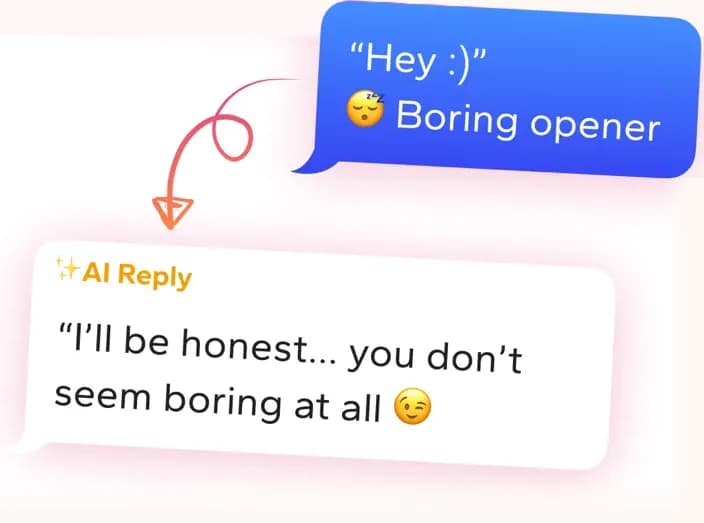
Get replies that sound like you
Screenshot the conversation in WingAI. It reads the vibe and gives you natural replies for this exact situation.
Try for freeRizz AI Screenshot the chat and get the next message for this person.
The difference between a joke and a dig
A joke that upsets you usually hits one of a few nerves. It touches something insecure, it lands like a jab disguised as humor, or it relies on laughing at someone rather than with them. The tricky part is that they might have meant it lightly. That doesn't make your reaction wrong. What matters is that you heard it differently than they said it. Before you bring it up, get clear on what actually stung. Was it the target of the joke? The timing? A sensitivity they didn't know you had? This clarity stops you from venting and helps you explain what landed.
Name it without making them the villain
The move here is to describe the joke and your reaction without accusing them of intent. Say what the joke was and how it hit you. "That joke felt like a dig at me" is better than "That was a mean thing to say." One describes an impact. The other assigns motive. You're not a mind reader, and they'll believe you about how something made you feel way faster than they'll accept that they were trying to hurt you. Keep it small and specific. Don't bring in other times they've said something off. Just this one thing, just how it landed.
Bring it up soon, but not in the moment
If you call it out immediately, it can feel like you're shutting them down mid-laugh or making a scene. Wait until you're together again and calmer, or bring it up in a calm text within a few hours. The faster you mention it, the easier it is to frame as "this just stayed with me" rather than "I've been mad about this." If they ask what's wrong or why you're quieter, that's your opening. If they don't, pick a natural pause in conversation when you're both focused. Avoid bringing it up when they're busy, tired, or defensive about something else.
Why these replies fail
“That was actually really hurtful and kind of showed your mean side. I'm not sure what that was about.”
It assigns character judgment ("mean side") instead of describing the impact, which makes them defensive instead of reflective.
“Yeah so that joke you made three days ago really bothered me. I've been thinking about it ever since and it's actually kind of a pattern with you.”
Waiting days and expanding to a pattern turns a single moment into an indictment, making it harder for them to hear the actual concern.
“lol I know you didn't mean it but that was a little harsh”
The laugh and the preemptive excuse undercut the message and make it unclear whether you actually want them to take it seriously.
Common mistakes
- Waiting days to bring it up, which makes it feel like you've been sitting with resentment and amplifies the weight
- Framing it as a character flaw ("that's mean" or "you're cruel") instead of describing the specific impact on you
- Over-explaining or justifying why the joke was wrong, which feels preachy and defensive
- Bringing it up via text when the moment has already passed and they can't read your tone
- Using softening language that waters down what you actually felt ("I know you didn't mean it, but...")
Questions people ask
- What if they say I'm overreacting or being too sensitive?
- Stay with what you know. "I'm just telling you how it landed on me. You get to feel how you feel about it, but I wanted you to know." Don't defend your reaction or prove it was justified. If they can't hear that without dismissing you, that's information about how they handle feedback.
- Should I apologize for bringing it up?
- No. You're not sorry you brought it up. You're expressing something real. An apology suggests you shouldn't have said anything, which muddies the message. Stay steady. You can be calm and direct without being apologetic.
- How do I know if this is worth saying or if I should let it go?
- If you're still thinking about it an hour later, say something. If it's going to affect how you feel around them next time they joke, say something. Quick stings you forget in five minutes don't need airtime. Ones that linger do.
- What if they get defensive and we end up in a fight?
- Their defensiveness isn't your job to manage. You stated something calmly and true. If they turn it into a fight, that tells you something about how they handle being told they hurt someone. Stay calm. Don't escalate. You don't need to win. You just needed to say it.
What people say after using WingAI
“I was skeptical at first. Then I tried it on a dry chat and the replies actually sounded like me, not a chatbot.”
Mazoonx
“I overthink every text. Having three options and picking the one that sounds like me cut that spiral short.”
Sam R.
“Didn't think it would be this good. The funny options actually get responses, which is wild.”
Nico_dang
Get replies that sound like you
Screenshot the conversation in WingAI. It reads the vibe and gives you natural replies for this exact situation.
Try for free