How to tell someone their behavior annoyed you early dating
Tell them what bugged you without starting a fight. Learn when to bring it up, what tone works, and how to keep the connection alive.
Early dating is fragile. You're still deciding if you like each other, and one awkward conversation can kill momentum. But letting annoying behavior slide signals you don't have standards, which is worse. The goal is to be direct enough that they know it mattered, but light enough that it doesn't feel like an attack.
A good message here does two things at once. It calls out the specific thing that bothered you, and it leaves room for them to respond without feeling trapped or defensive. You're not trying to punish them or prove a point. You're just letting them know something landed wrong.
Timing matters more than you think. Bringing it up while you're still mad makes it feel like a complaint. Waiting too long makes it seem like you're keeping score. The window is usually the next day or within a few days, when you can talk about it like an adult instead of venting.
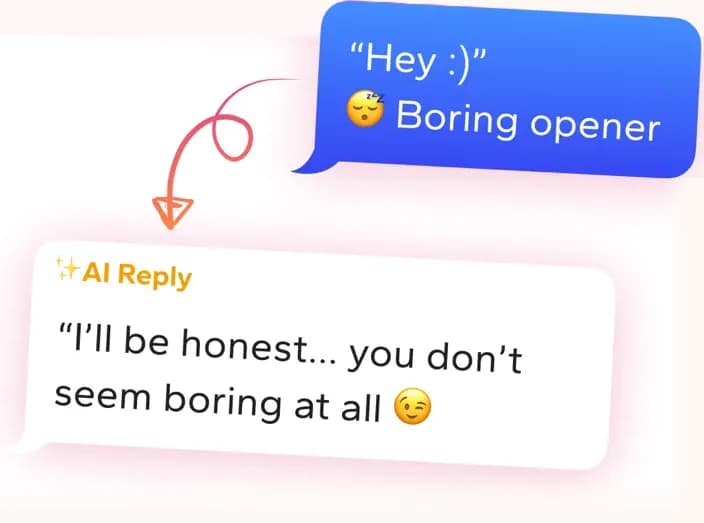
Get replies that sound like you
Screenshot the conversation in WingAI. It reads the vibe and gives you natural replies for this exact situation.
Try for freeRizz AI Screenshot the chat and get the next message for this person.
Read what actually happened versus what you imagined
Before you say anything, be honest about what bothered you. Did they actually do something disrespectful or rude, or did you interpret something innocent as a slight? Early dating makes us hyperaware and sometimes we project. If they were late and you decided that means they don't care, that's on you. If they made a joke at your expense, that's on them.
The distinction matters because your tone will reflect it. If you're upset about something real, you can bring it up directly. If you're upset about what you think it means, you'll sound paranoid. Stick to what they actually said or did, not what you think it reveals about their feelings for you.
Name the behavior and explain the impact in one breath
A good message is short and connects the action to how it landed on you. Don't make them guess what the problem is. Say the thing. 'When you checked your phone the whole time we were talking' is clear. 'I felt like you weren't interested' is why it mattered. You're not asking them to defend themselves or apologize. You're just marking that it happened and that you noticed.
The second part is important. Telling them the impact stops it from feeling like you're nitpicking. It shows this wasn't just an observation, it actually changed how you felt in the moment. Keep both parts brief. Long explanations start to sound like you're building a case against them.
Send when you're calm and give them 24 hours to land
Wait until the next day or later if you're still heated. Sending something when you're angry almost always makes it sound meaner than you meant. Step back, sleep on it, then decide if you still need to say something. Most of the time you will, but the urgency dies down and your phrasing gets better.
After you send it, let them respond on their own timeline. Don't follow up immediately or add more detail unless they ask. If they don't respond in a day or two, they either didn't see it or they're avoiding it. If they're avoiding it, that's information too. One awkward conversation shouldn't kill momentum unless they handle it badly. If they do, you have your answer.
Why these replies fail
“Honestly I don't think this is going to work out. The way you talked to me yesterday showed me you don't respect me and I can't be with someone like that.”
This escalates one comment into a relationship-ending statement and reads like you're punishing them instead of flagging a problem.
“I'm probably just being sensitive but when you made that joke I felt a little hurt lol”
The disclaimer makes it sound like you don't actually believe there was a problem, which means they won't take it seriously and will dismiss you next time.
“You know what, forget it. It's fine. Everything's fine.”
This is passive aggressive and tells them nothing while leaving resentment in the background, which will leak out later.
Common mistakes
- Making it about their character instead of their action (don't say 'you're insensitive,' say 'that comment made me feel small')
- Softening so much it becomes unclear what the problem was ('I'm probably just tired but...')
- Bringing it up over text when it needs a call or in-person conversation for tone
- Listing multiple annoyances at once instead of one clear issue
- Ending with a question that puts the burden on them to fix it ('why would you even say that?')
Questions people ask
- What if they get defensive and say I'm overreacting?
- Stay calm. Say something like 'I get that you didn't mean it, but it landed this way for me.' You're not asking them to agree, just to hear it. If they refuse to hear you at all, that tells you something real. Don't argue about whether your feelings are valid. They are.
- Should I bring this up over text or in person?
- Text works if it's small and straightforward. Save in-person or a call for anything bigger or if they're a close talker who needs to read your face. Text gives you both space to think. In-person makes it harder to misread your tone. Pick based on how serious it is and what the behavior was.
- Is it too early to call out annoying behavior when we just started dating?
- No. Actually, early is the best time. If you let it slide for weeks, it sets a pattern and becomes harder to address. A small callout now is way easier than a big conversation later when resentment has built up. Just keep it proportional to how new you are.
- What if they apologize? Do I need to say anything else?
- Keep it simple. 'Thanks for hearing me' or 'I appreciate that' and move on. Don't belabor it or keep rehashing it. An apology that gets piled on with more talk starts to feel like punishment. Let them off the hook and see if the behavior changes.
What people say after using WingAI
“I was skeptical at first. Then I tried it on a dry chat and the replies actually sounded like me, not a chatbot.”
Mazoonx
“I overthink every text. Having three options and picking the one that sounds like me cut that spiral short.”
Sam R.
“Used it for a couple hours and set up a date the same night. Not even kidding.”
Nikola2214
Get replies that sound like you
Screenshot the conversation in WingAI. It reads the vibe and gives you natural replies for this exact situation.
Try for free