Signs she cheated: what to look for in her words and behavior
Learn the real signals of infidelity in texts and actions. How to read the gaps, the timing shifts, and what actually matters.
Cheating leaves traces in how someone communicates and behaves, but the traces are often subtle and easy to misread. You might notice she's suddenly protective of her phone, changes her routine without explanation, or becomes distant in ways that don't match a normal argument. The words matter less than the pattern. A single lie or late night out proves nothing. A shift in how present she is, combined with defensive behavior when questioned, tells you more.
Good responses to suspected cheating don't accuse or panic. They get clarity by staying calm and direct. You're not trying to trap her or catch her in a lie. You're asking straight questions and watching how she answers them. The goal is to know what's actually happening so you can decide what to do next, not to collect evidence for a confrontation.
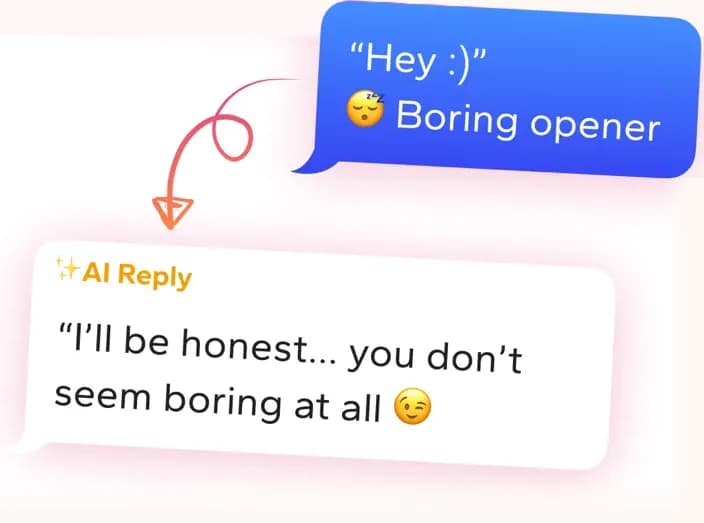
Get replies that sound like you
Screenshot the conversation in WingAI. It reads the vibe and gives you natural replies for this exact situation.
Try for freeRizz AI Screenshot the chat and get the next message for this person.
Patterns matter more than single moments
One late night out doesn't signal cheating. One forgotten text back doesn't mean anything. But when her replies slow down for weeks, she stops mentioning friends' names, her schedule suddenly gets vague, and she's less physical with you, that's a pattern. Cheating typically shows up as a shift in consistency, not a one-time slip. She might also have new reasons to keep her phone private, start working late on specific days, or become irritable when you ask normal questions about her day. The shift is what matters. Track whether this is a new normal for her or something that started after a specific date.
Defensiveness and vagueness are bigger signals than denial
When you ask a straightforward question about where she was or who she was with, a faithful partner usually answers it directly, even if they're annoyed at being asked. They might say, "I told you I was at Sarah's. Why would I lie about that?" Someone who's cheating often gets defensive without actually answering the question. They redirect. They say things like "Why are you checking up on me?" or "You're being paranoid." They might also go vague. Instead of naming friends or locations, they say things like "I was just out" or "with some people from work." Vagueness paired with defensiveness is a stronger signal than a direct lie.
Wait for patterns, then ask directly and observe the response
Don't confront her based on one suspicious night. Give yourself two to three weeks to see if the behavior is actually consistent and new. Once you're sure there's a real change, ask her about it directly. Pick a calm moment and use a factual framing. Say something like, "I've noticed you've been less available the past few weeks. Is something going on?" Watch her response. Does she name a real reason (new project at work, family stuff, stress)? Does she acknowledge the change and explain it? Or does she deny it happened, get angry, or change the subject? Her reaction tells you whether this is worth digging into further. If she gives a real explanation, you can ask follow-up questions to verify it. If she gets defensive or vague, that's when you know you need a bigger conversation about trust.
Why these replies fail
“I know you're cheating on me. Your location was off Friday and you lied about where you were. We're done.”
Accuses without letting her explain, burns the bridge before you know facts, and makes you look reactive instead of thoughtful.
“You've been so distant. I think you might be seeing someone else. Just tell me the truth and we can work through it.”
Leads the witness and makes an assumption, which puts her on the defensive instead of actually opening up about what's happening.
“Okay well if you don't want to tell me where you were then I guess I know what that means.”
Punishes her silence with a threat instead of asking again. Creates an argument instead of getting clarity.
Common mistakes
- Assuming one late reply or one lie means cheating happened. Look for patterns, not single incidents.
- Confronting her based on suspicion instead of facts. This makes her defensive and you look paranoid.
- Ignoring what she says when she does explain. If there's a real reason for the change, she'll state it directly.
- Staying quiet and building a case in your head. Silence breeds resentment and guessing. Ask her directly.
- Focusing on the phone and social media instead of her actual presence and how she treats you.
Questions people ask
- What if she just says nothing happened and gets mad at me for asking?
- Her anger might be real offense at being accused, or it might be a deflection. The difference shows up over days. Does she go back to normal behavior after a day or two, or does she stay distant and angry? A faithful person bounces back. Someone hiding something often stays cold or overly nice to mask guilt.
- Is checking her location or phone the right move?
- No. It creates proof of distrust instead of clarity. If you feel like you need to spy, the relationship already has a bigger problem. Ask her directly instead. If she won't answer straight questions, that's your answer.
- Should I ask her friends or try to verify her story?
- Not unless you already have real evidence. Digging into her story makes you look paranoid and tips her off if something is actually happening. If you need to verify her whereabouts, the trust is already broken and you should address that directly with her instead.
- What if she admits to cheating when I ask?
- That's clarity. You now know what happened and can decide whether the relationship continues. The hard part comes next: deciding if you can move past it or if you're done. That's not something you figure out in a text. You'll need a real conversation.
What people say after using WingAI
“I overthink every text. Having three options and picking the one that sounds like me cut that spiral short.”
Sam R.
“I was skeptical at first. Then I tried it on a dry chat and the replies actually sounded like me, not a chatbot.”
Mazoonx
“I always freeze on the first sentence. This gets me past that blank box so I actually hit send.”
joejoe4567
Get replies that sound like you
Screenshot the conversation in WingAI. It reads the vibe and gives you natural replies for this exact situation.
Try for free