How to tell him his sarcasm hurts without starting a fight
Tell him his sarcasm stings without sounding angry or needy. The right words make him listen instead of defend.
He uses sarcasm constantly, maybe as humor or a defense mechanism. You laugh along sometimes, but certain jokes land wrong. They feel pointed. You're caught between wanting him to know it hurts and not wanting to seem sensitive or kill the vibe.
A good reply does two things: it names the specific impact without framing him as a bad person, and it gives him an easy way to adjust. You're not asking for an apology or a whole conversation about his personality. You're asking for a small behavioral shift in moments that matter to you.
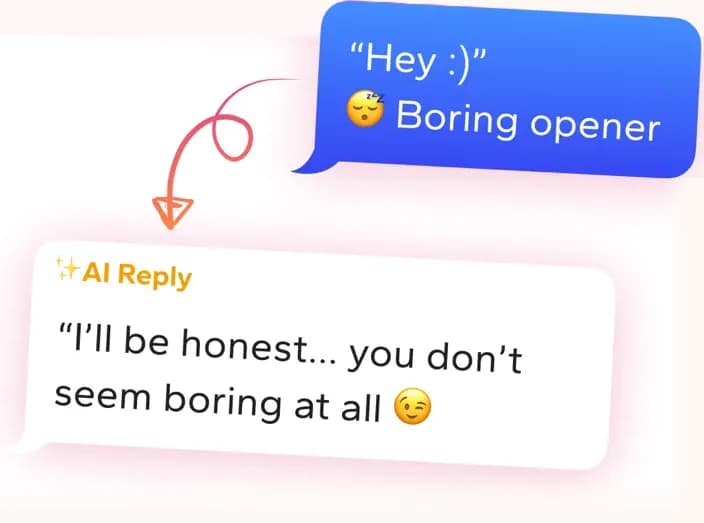
Get replies that sound like you
Screenshot the conversation in WingAI. It reads the vibe and gives you natural replies for this exact situation.
Try for freeRizz AI Screenshot the chat and get the next message for this person.
His sarcasm is a shield, not necessarily disrespect
Sarcasm can be a sign he's uncomfortable with sincerity, that he deflects when things feel too real, or that he just talks like that with everyone. None of that means he intended to hurt you. But intent doesn't matter if the impact stings. The move is to separate the behavior from his character. He's not a cruel person. He just doesn't realize that joke landed different for you. This framing matters because it means you can call it out without triggering his defense mechanisms. You're not saying he's bad. You're saying this one thing didn't land right.
Say it in the moment, simply and without heat
The reply needs to do two things. First, flag that the comment hurt in real time so he associates the feedback with the specific words, not with a later grievance. Second, keep your tone calm and matter-of-fact, not wounded or angry. If you sound hurt, he'll spend energy comforting you instead of hearing you. If you sound mad, he'll go defensive. The move is to be direct and low-key at the same time. Name what happened and what you need without making it bigger than it is. Let him see this as a small adjustment, not a character flaw you've discovered.
Call it out once and watch what he does next
Send the message and then step back. Don't follow up with more explanation unless he asks. If he gets defensive or dismisses it, that tells you something important about whether he's willing to shift. If he apologizes quickly and moves on, he heard you and the conversation is over. If he keeps doing the same thing after you've named it, that's a pattern worth addressing, but not in the same text. One clean call-out gives him the chance to land it right. Repeating it or bringing up old examples turns this into an argument instead of feedback.
Why these replies fail
“you know what, you do this all the time. you're always making jokes at my expense and it's actually really hurtful. i don't think it's funny and i'm tired of pretending it is.”
The word 'always' and the accusation turn a single moment into a character attack, which makes him defend himself instead of hearing you.
“ugh that was mean. you know i don't like when you do that. can we talk about this?”
Being vague about what hurt and asking for a bigger conversation makes him anxious instead of clear on what to fix.
“sorry if i'm being sensitive, but that comment kind of hurt my feelings. i know you were probably just joking around...”
Apologizing for being hurt and making excuses for him signals that you don't actually believe your own boundary, so he won't either.
Common mistakes
- Bringing it up hours later when the moment has cooled, which makes it feel like you've been stewing instead of responding in the moment
- Using language like 'you always' or 'you never,' which makes him defensive instead of receptive
- Apologizing for being hurt, which signals you think your feelings are unreasonable
- Waiting for the perfect time to have a talk, which turns one comment into a relationship issue
- Mixing in other complaints, which buries the actual thing he needs to hear
Questions people ask
- What if he says i'm too sensitive or that i can't take a joke?
- That's him avoiding the feedback. You can say once: 'I can take jokes. This one just didn't land right with me.' Then stop explaining. If he keeps dismissing it, that's important information about whether he respects your feelings, not proof that you're wrong.
- Should i wait for the right moment or text him about it right away?
- Text him soon after it happens, ideally within a few hours while the comment is fresh. Waiting days makes it look like you've been hurt and processing privately instead of just giving him quick feedback. Soon also means you're less likely to be angry when you send it.
- How do i phrase it so he doesn't think i'm attacking him?
- Use 'that comment hurt' instead of 'you hurt me.' Name the specific moment. Keep it short. Skip words like 'always,' 'never,' or 'you think you're so funny.' The shorter and more factual you are, the less he can interpret it as an attack.
- What if this keeps happening after i tell him once?
- Then you know he's not willing to change. You can try once more with more clarity, but after that you're choosing to stay with someone who doesn't adjust when you tell him something hurts. That's the real decision to make, not how to word the text.
What people say after using WingAI
“I always freeze on the first sentence. This gets me past that blank box so I actually hit send.”
joejoe4567
“I was skeptical at first. Then I tried it on a dry chat and the replies actually sounded like me, not a chatbot.”
Mazoonx
“Used it for a couple hours and set up a date the same night. Not even kidding.”
Nikola2214
Get replies that sound like you
Screenshot the conversation in WingAI. It reads the vibe and gives you natural replies for this exact situation.
Try for free