How to tell a date they're dismissing your opinions
Tell a date they're dismissive without being accusatory. Keep it direct, specific, and give them room to hear you.
A dismissive date interrupts you, changes the subject when you speak, or acts like your perspective doesn't matter. It feels small in the moment but it stacks. You need to call it out early before resentment builds or you waste more time.
A good reply here does two things. It names what you're seeing without attacking their character. And it gives them a real chance to adjust, which means you'll know fast whether they actually can listen or if this is who they are.
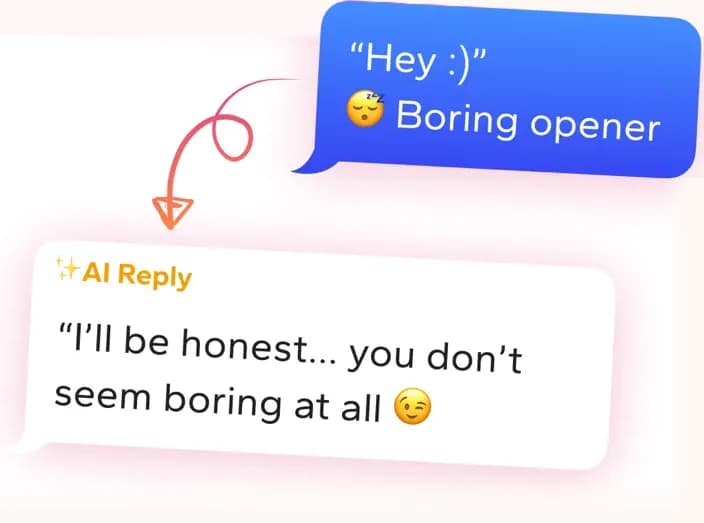
Get replies that sound like you
Screenshot the conversation in WingAI. It reads the vibe and gives you natural replies for this exact situation.
Try for freeRizz AI Screenshot the chat and get the next message for this person.
Spotting dismissal before it becomes a pattern
Dismissal shows up as interruptions, subject changes, or that glassy look that says they checked out. They might ask you a question then scroll their phone mid-answer. They might finish your sentences wrong. They might agree with what you said but phrase it like their own idea.
Between a bad listener and someone actively dismissive, the difference is repetition. Everyone spaces out once. Someone dismissive does it every time you share something personal or take up conversational space. If it happens twice in one date, it's a pattern. That's when you name it.
Calling it out without sounding accusatory
You're not here to diagnose them or make them feel bad. You're testing whether they can hear feedback. A good move is specific and calm. Name exactly what happened in that moment. 'When I was talking about my job change, you cut me off twice and then switched topics. That felt like you weren't interested.' Then stop and wait.
Don't soften it with apologies or excuses for them. Don't ask permission to bring it up. That just dilutes it. You're stating a fact you noticed, not attacking. This gives them a clean opening to either adjust or explain, and you'll see who they actually are based on how they respond.
Wait for the response before deciding to continue
Say it in person, not text. You need to see how they take it. A good response is some version of 'I didn't realize I was doing that, I'm sorry' or 'you're right, let me listen better.' If they get defensive or turn it around on you, that's information. If they apologize but do it again five minutes later, that's also information.
Give them one more date to show you change. If the dismissal happens again with the same frequency, you have your answer. Someone who actually hears you will adjust immediately because it matters to them that you feel heard. If they can't or won't, this won't get better.
Why these replies fail
“I feel like sometimes you don't really listen to me and it makes me feel unheard and I'm not sure if you care about what I think”
It's so softened and vague they might not even realize you're talking about something specific they did, and it turns into their job to manage your feelings
“You know you're kind of rude when you interrupt people”
It's about their character, not their behavior in that moment, so they get defensive instead of understanding what actually happened
“Never mind, forget I said anything”
This punishes them for not listening instead of giving them feedback, and it guarantees the pattern continues because they don't know what to fix
Common mistakes
- Waiting until you're frustrated to bring it up, so it comes across as angry rather than concerned
- Being vague about what bothered you ('you're kind of dismissive sometimes') instead of naming the exact thing
- Softening it so much they don't realize you're serious or think you're joking
- Turning it into a therapy session about why they do it, instead of just saying it happened
- Bringing it up over text when it needs a real conversation
Questions people ask
- What if they get defensive when I bring it up?
- Defensiveness usually means they heard you. Stay calm and don't back down. Say 'I'm not attacking you, I'm just telling you what I noticed.' If they keep defending instead of listening, that tells you something important about whether they can take feedback.
- Should I bring this up over text or in person?
- In person, every time. Text makes it too easy for them to misread your tone or respond badly without facing you. Plus you need to see how they actually react, not just what they type.
- How long should I wait to see if they change?
- One more date minimum. Real change happens immediately though. If they were actually sorry, they'll be more present and actually listen. If it was just an apology without work, you'll notice within minutes.
- What if I'm wrong and I'm the one with the problem?
- Then they'll tell you. A secure person will say 'actually, here's what was going on' and you'll have useful information either way. The goal isn't to be right, it's to find out if they can hear you.
What people say after using WingAI
“Used it for a couple hours and set up a date the same night. Not even kidding.”
Nikola2214
“I overthink every text. Having three options and picking the one that sounds like me cut that spiral short.”
Sam R.
“I always freeze on the first sentence. This gets me past that blank box so I actually hit send.”
joejoe4567
Get replies that sound like you
Screenshot the conversation in WingAI. It reads the vibe and gives you natural replies for this exact situation.
Try for free