How to respond to a dry text from your crush
A one-word reply from your crush is rarely a verdict. Here is how to read it, what to put in your next message, and what to skip so the chat picks back up.
When a crush sends a flat, clipped text, the reason is usually mundane. They are in the middle of work, half watching a show, or typing with one thumb while doing something else. Others are nervous. Someone who likes you can go quiet and short precisely because they care about getting the message right and cannot think of anything clever in the moment. A single dry reply is a data point with almost no weight, so treat it like a hiccup in the conversation, not a ruling on your chances.
Your aim is modest. You are not trying to land the perfect message that makes them fall for you. You are trying to make the next exchange easy and a little more fun than the last one. Pick up one concrete thing from earlier in the conversation, something they mentioned about their week, a show, a trip, a complaint about their boss, and give them a reason to say more about it. A callback works because it proves you were paying attention, and it hands them a topic they already know the answer to, which takes the pressure off.
Timing and the channel matter more than people admit. Over text, tone is stripped away, so a short reply can look cold when it was just quick. A late-evening message from someone who has been up since six reads differently from a Saturday afternoon one. If their dry reply came in the middle of a workday, a light, low-demand message sent a few hours later will land better than a paragraph fired back immediately. Speed is fine, but urgency is not. Replying in minutes with something long tells them you were hovering over your phone.
Several instincts backfire here. Asking what is wrong, pointing out that their text was short, or sending a wounded reply puts them on the defensive and turns a neutral moment into a confrontation. Dumping a long message to compensate for their brevity makes the imbalance obvious. So does stacking questions, since it feels like an interview. Cooling off dramatically, with a clipped one-word answer of your own, punishes them for something that may have nothing to do with you.
Watch what they do with your next message, because that is the real information. If they pick up the thread, add a detail, or ask something back, the dryness was circumstance and you can relax into a normal rhythm. If they answer your callback with another sliver of a reply, give it one more try with a different topic, then ease off. A person who is interested will eventually volunteer something unprompted. If you are always the one supplying the energy, you have your answer, and you can stop spending it.
Reading the context before you reply
Look at what surrounded the dry text before you decide how to answer. Did it arrive at 9am on a Tuesday, or at midnight after a long, lively thread? A short reply after a good conversation could mean they are tired or distracted. A short reply to a question they clearly had no interest in answering is a different thing. Check the pattern across the past few days too. If they were chatty yesterday and brief today, something about their day is the likelier explanation. If they have been brief since the start, the conversation may need a different spark, such as a topic they care about, instead of more small talk.
Building a message they want to answer
Aim for a light callback to something they mentioned earlier, so it is obvious you remember them. Pair it with a low-effort hook, like a playful guess about how it turned out or a small opinion they can agree or argue with. Another angle is an honest, short acknowledgment that the day sounds busy, followed by something easy to reply to later without pressure. Keep it to a sentence or two. Specific details beat broad questions, because 'how was your day' invites a shrug while a reference to their actual plans invites a story.
Matching their pace without copying them
You can be brief without being flat. Brevity means fewer words, while flatness means no content. If they sent three words, send a compact message that still carries a detail, a bit of humor, or a small opinion. Skip the essay, but do not mirror them with a bare acknowledgment either. Think of it as lowering the volume while keeping the tune. This keeps the exchange comfortable for someone who is busy or shy, and it leaves room for them to expand if they feel like it, without you demanding they do.
Why these don't work
“ok”
Answering their flat text with an equally flat one hands them nothing to respond to, so the thread dies and it looks like you took offense.
“Why are your texts always so short? Are you even interested?”
Calling out their brevity turns a harmless moment into an accusation and pressures them to defend themselves instead of chatting.
“Sorry if I'm texting too much, I know you're probably busy, no worries if you don't have time to reply!”
Over-apologizing frames your message as a burden, which makes a crush feel guilty and less likely to engage.
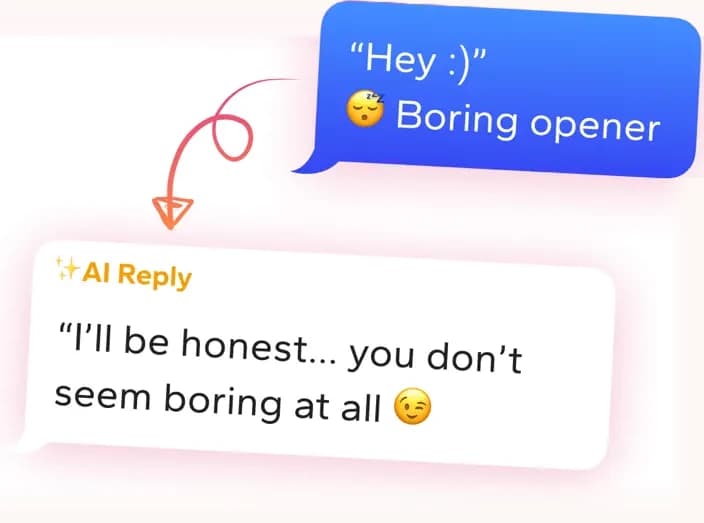
Get replies that sound like you
Screenshot the conversation in WingAI. It reads the vibe and gives you natural replies for this exact situation.
Try for freePeople also ask
- How do I respond to dry texts from a girl I like?
- Reply with a short message that picks up one specific thing she said earlier and gives her something easy to answer. Skip the pressure, the long paragraphs, and any comment about how short her replies are. If she answers with more detail, keep going. If not, ease off.
- Should I reply right away to a dry text?
- You do not need to wait, but you do not need to rush either. A reply within a few hours looks natural. Instant, lengthy responses can feel eager. If their text came during a busy part of the day, a relaxed message later tends to land better.
- What if they keep sending dry replies after I try?
- After two or three solid attempts with different topics and no change in effort from them, stop carrying the conversation. Let them come to you. If they reach out with real interest, respond warmly. If they never do, you have learned what you needed.
- Can I just ask why their texts are so short?
- It usually backfires. Asking sounds like criticism and forces them to explain themselves over text. If something truly bothers you after a pattern has formed, bring it up lightly in person or on a call, not as a reaction to a single short message.
It doesn't sound like a bot
“I was skeptical at first. Then I tried it on a dry chat and the replies actually sounded like me, not a chatbot.”
Mazoonx
“She went cold mid-week and I had no idea what to say. The reply I sent felt natural and she picked the chat back up.”
Marcus T.
“I overthink every text. Having three options and picking the one that sounds like me cut that spiral short.”
Sam R.
“Didn't think it would be this good. The funny options actually get responses, which is wild.”
Nico_dang
Pitfalls to avoid
- Reading one short reply as rejection and pulling back or going cold, which punishes them for something that is probably about their day, not you.
- Sending a long message to make up for the imbalance, which makes the gap in effort even more visible.
- Asking several questions at once, so the reply feels like an interview and the easiest response becomes silence.
Get replies that sound like you
Screenshot the conversation in WingAI. It reads the vibe and gives you natural replies for this exact situation.
Try for free