How to Reply When She Says She's Been Sick All Week
She's been stuck at home sick all week. Here's how to read it, what a good reply does, and how to follow up without pushing.
When someone tells you she's been stuck at home sick all week, she is usually giving you a reason for going quiet, a bit of context about her life, and a small opening to check in. She is not asking for a diagnosis or a long sympathy speech. Most of the time she wants to know that you noticed she was gone and that you're not annoyed by the gap.
A good reply does three things at once. It acknowledges the rough week without making it the whole conversation, it gives her an easy thing to respond to, and it shows you're still interested in her as a person rather than just waiting for the chat to restart. Keep the sympathy proportionate. A sick person with a fever does not need an essay.
The mistake most people make is treating the illness as a reason to be extremely caring, which can feel heavy, or treating it as a reason to disappear for another day, which reads as lost interest. Aim for the middle: warm, brief, and a little bit playful if the conversation was playful before.
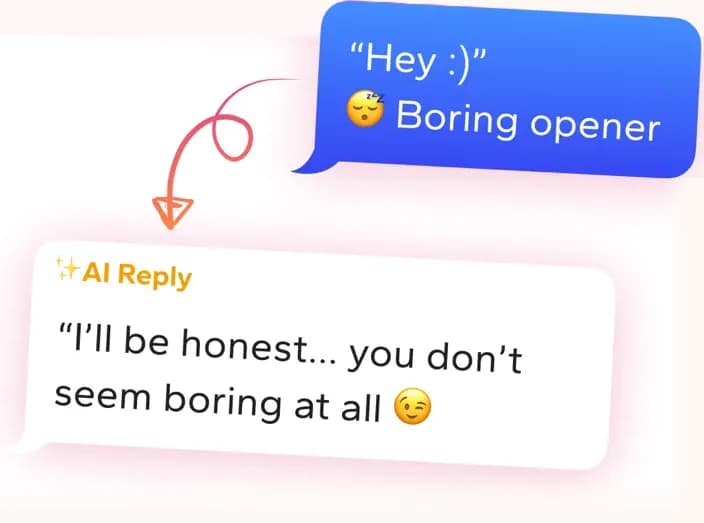
Get replies that sound like you
Screenshot the conversation in WingAI. It reads the vibe and gives you natural replies for this exact situation.
Try for freeRizz AI Screenshot the chat and get the next message for this person.
The week of silence matters more than the text
When she says she's been stuck at home all week, the most important thing she is telling you is that she was not ignoring you. Most people who get quiet mid-conversation worry that the gap means lost interest, so the illness is a relief for her to explain. Read her message as a reassurance first and a health update second.
Check the rest of the thread before you decide how much weight to give it. If she was replying quickly and asking you questions before she went quiet, the illness is almost certainly the whole story. If the conversation was already thinning out, the message may be a soft way of resetting the pace. Either way, you are not being asked to solve anything.
Answer before you get curious
The first move is to respond to the sickness itself, briefly and sincerely. A line that says you hope she's feeling better is enough. Don't follow it with three questions about symptoms, medication, or whether she saw a doctor. Those questions can feel like you need her to perform being unwell for you.
The second move is to hand the conversation back to her in a way that's easy to answer. Ask about something light that gives her room to talk about how she's doing now, not how bad it was. If you were already exchanging stories about your weeks, you can share a small piece of your own to balance the exchange without making it about you.
Reply in daylight, not at 2am
Timing matters more than people expect when someone has been sick. A reply that lands late at night can read as either overly intense or like you were waiting around to pounce. If she mentioned being stuck at home, sending something during her normal waking hours signals that you're treating the conversation as ordinary and comfortable.
If she doesn't reply within a day, wait before sending anything else. Being sick often means energy is low, and a short silence is normal. If you follow up, keep it to a single light message that gives her an easy out. If she still doesn't respond after that, let it sit. Going silent after one follow-up is a reasonable way to avoid turning her illness into a test of how interested she is.
Why these replies fail
“Oh no, that sounds awful!! Have you been to a doctor? Are you taking anything? Please let me know if you need anything, I can bring soup”
It piles on questions and offers to bring soup on the first reply, which pushes intimacy faster than the conversation has earned.
“Damn that's rough. Well I hope you feel better soon.”
It acknowledges the illness but leaves her nothing to answer, so the thread stalls right after she made an effort to explain herself.
“Sick all week?? That's the worst. Wish I could've been there to take care of you lol”
The flirty line lands too early and turns a basic health update into something she has to decide how to handle.
Common mistakes
- Writing a long paragraph of sympathy that makes her feel she has to manage your reaction
- Ignoring the illness entirely and jumping straight to a new topic as if she didn't say anything
- Asking three health questions in a row like an interrogation
- Replying with only a sad face or a single word, which closes the thread
- Using the sickness as a lead-in to a flirty comment that reads as opportunistic
Questions people ask
- Should I ask how she's feeling now?
- Yes, but keep it to one short question about how she's doing today. Asking how she's feeling now shows you're still interested and gives her an easy way back into the conversation. Avoid stacking that question with other health questions, since that can make her feel like she has to report on her symptoms.
- How long should I wait before following up if she doesn't reply?
- Give it at least a day, since illness often lowers energy and slows replies. If you send a follow-up, keep it light and low pressure. If there's still no response after that, let the conversation rest and wait for her to restart it when she's feeling better.
- Is it okay to offer to bring her food or medicine?
- Usually not in the first few exchanges, because it can feel like you're moving into caretaking territory before you've met. If you've already been spending time together in person and she's close to you, a small offer can be fine. Otherwise stick to words of support and let her decide what she needs.
- What if she says she's better but doesn't ask anything about me?
- That's fine, and it doesn't mean she's lost interest. She may have spent the week focused on being unwell and not have much energy left. Share a bit about your week in a casual way and let the conversation find its footing again without reading too much into one quiet exchange.
What people say after using WingAI
“She went cold mid-week and I had no idea what to say. The reply I sent felt natural and she picked the chat back up.”
Marcus T.
“I overthink every text. Having three options and picking the one that sounds like me cut that spiral short.”
Sam R.
“I was skeptical at first. Then I tried it on a dry chat and the replies actually sounded like me, not a chatbot.”
Mazoonx
Get replies that sound like you
Screenshot the conversation in WingAI. It reads the vibe and gives you natural replies for this exact situation.
Try for free