How to reply when she likes texting but dislikes video calls
She enjoys texting but dodges video calls? Here is how to read it and what to say next without pushing or going cold.
When someone says she likes talking but dislikes video calls, she is telling you the medium is the problem, not you. Plenty of people find video calls draining, awkward, or like a job interview, while texting lets them think before they answer and step away when they want to. That is a preference worth respecting, but it does not tell you whether she wants to meet in person or whether she is keeping things light on purpose.
"I like talking" is a real signal, so do not treat her message as a rejection. Your reply should show you heard the preference, keep the conversation warm, and move it one small step toward a real-world plan or at least toward a concrete next topic. What you are trying to find out is whether she wants to build something through text for a while, or whether she is quietly avoiding anything that feels like a date.
"Dislikes video calls" does not mean she wants to hide forever. Many people will do a phone call or an in-person coffee once they trust the other person a bit. A good reply tests that without making her defend the preference.
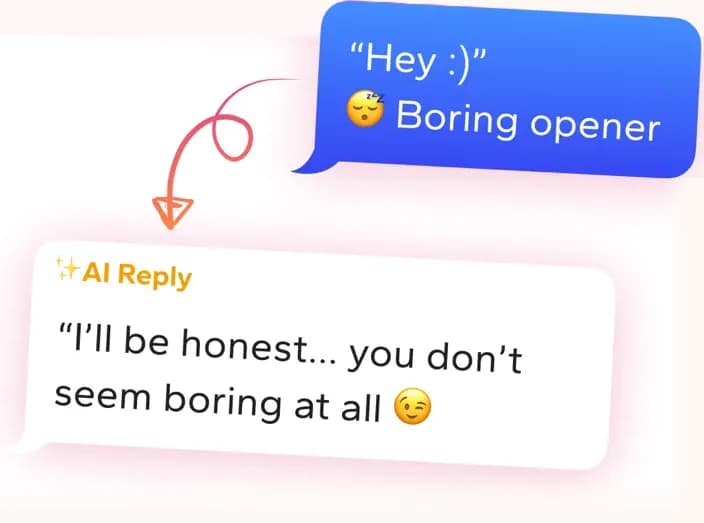
Get replies that sound like you
Screenshot the conversation in WingAI. It reads the vibe and gives you natural replies for this exact situation.
Try for freeTexting AI Screenshot the thread on your phone and get the next text.
Read the video call line as a comfort signal
When she says she likes talking but not video, the first thing to notice is the word "like" next to talking. She is volunteering that the conversation itself is going well. The objection is narrow: video feels exposing, tiring, or too performative. Some people feel watched on camera, some dislike seeing their own face, and some just prefer to answer on their own schedule. None of that says she is unattractive to you or uninterested. It also does not mean she is only interested in a text friendship. Look at what she asks of you in return. If she keeps asking questions and following up on things you said, she is invested. If replies get shorter and she stops asking anything back, the medium may not be the only thing going on. Use the next few exchanges to see which pattern you are in before you decide what to propose.
Offer one smaller alternative, not a menu
Once you have acknowledged what she said, the move is to offer one lower-pressure step that fits her preference. A phone call with no camera is the obvious one, because it keeps the voice connection she already likes. A short meetup for a drink or coffee is the next step if the conversation has real momentum. Pick one, say it plainly, and attach a time window so it does not stay vague. Do not offer three options and make her choose, since that turns a casual preference into a decision she has to manage. Also do not ask her to explain her preference more. Once she has told you the boundary, let the next move show you respect it. If she says no to the phone call too, that is information about how fast she wants to move, and you can keep texting without treating the refusal as a verdict on you.
The week of silence matters more than the text
After you reply, the timing and the gap before the next message tell her how much pressure you are putting on her. If you send a follow-up within an hour, or double text when she has not answered, the preference becomes a problem you are solving for her. Leave a normal gap that matches how she texts, which you can read from her own response times. If she has not replied after a day, a single light message with a new topic or a reference to something she said is enough. If she still does not answer after two or three days, stop initiating for a while and let her come back. If she returns with warmth, pick up where you left off without mentioning the video call again. If the thread dies entirely, you have your answer, and continuing to send messages into silence only makes you look more invested than the conversation has earned.
Why these replies fail
“Cool, I get it, but I'm not gonna lie it's kind of a dealbreaker for me if we can't see each other's faces.”
It turns her preference into a verdict on the connection and makes her feel she has to justify herself.
“Why not though? Is it something specific or are you just not into it?”
It asks her to defend a personal preference and puts her on the spot when she was only being honest.
“No worries! Let's just do a video call Thursday at 8, I'll send a link.”
It ignores what she said and pushes the exact format she told you she avoids, so it reads as not listening.
Common mistakes
- Treating the video call dislike as a dealbreaker and going cold or sulking
- Asking why she doesn't like video calls in a way that sounds like an interrogation
- Pushing for a video call anyway as a compromise she never asked for
- Sending a long paragraph about your own video call preferences
- Ignoring the compliment and jumping straight to logistics
Questions people ask
- Does not wanting video calls mean she is not interested?
- Not on its own. Many people find video draining or awkward even when they enjoy talking to someone. Look at the rest of the pattern: does she ask you questions, follow up on what you said, and keep the conversation going? If yes, the preference is probably about the format. If her replies are getting shorter and she stops asking anything back, the lack of interest may be coming from somewhere else.
- Should I suggest a phone call instead of video?
- It is often a good middle step because it keeps the voice connection she already enjoys without the camera. Offer it once, with a specific time window, and say it plainly. If she declines or does not respond, do not push. Treat it as information about how quickly she wants to move and keep the conversation warm.
- How long should I wait before following up if she does not answer?
- Match the gap to how she usually replies. If she normally answers within a few hours, a day of silence is a reasonable pause before one light follow-up with a new topic or a reference to something she said. If she still does not reply after two or three days, stop initiating for a while and let her come back to you.
- What if she keeps refusing every kind of meeting?
- Keep the texting going only as long as it is mutual and warm. If you keep proposing calls, meetups, or video and she keeps declining, the pattern is clear even if she never says so directly. At that point it is fair to ask one direct question about what she wants and then accept the answer, whether it is a slower pace or no meeting at all.
What people say after using WingAI
“I overthink every text. Having three options and picking the one that sounds like me cut that spiral short.”
Sam R.
“I was skeptical at first. Then I tried it on a dry chat and the replies actually sounded like me, not a chatbot.”
Mazoonx
“She went cold mid-week and I had no idea what to say. The reply I sent felt natural and she picked the chat back up.”
Marcus T.
Get replies that sound like you
Screenshot the conversation in WingAI. It reads the vibe and gives you natural replies for this exact situation.
Try for free