How to respond when she says your childhood question was sweet
She called your question about her childhood sweet. Here's how to read it and keep the conversation going without overthinking the reply.
When someone says your question about her childhood was sweet, she is usually telling you two things at once. She enjoyed being asked, and she isn't sure yet where the conversation is going. The word sweet is warm, but it's also a little soft, the kind of word people use when they feel seen but haven't decided how much to open up. It's a compliment on your question, not a signal that she wants to keep unpacking her past with you right now.
What a good reply does is simple. It accepts the compliment without making a big deal of it, shows that you were actually curious about her answer, and hands her an easy next move. The goal is to make her feel the conversation is safe and light enough to continue, without asking her for more depth than she offered.
The trap here is over-reading. One warm word doesn't mean a deep connection is forming, and it doesn't mean she wants you to follow up on a childhood story. Respond to the feeling she gave you and let the next step come from her side.
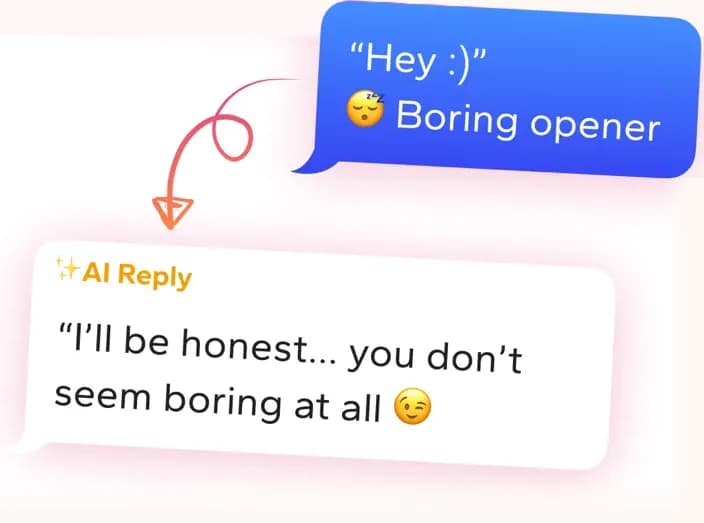
Get replies that sound like you
Screenshot the conversation in WingAI. It reads the vibe and gives you natural replies for this exact situation.
Try for freeRizz AI Screenshot the chat and get the next message for this person.
Sweet is a warm word with a brake on it
Sweet is what people say when they like how something was said, not always when they want more of it. In a text it's often a soft landing. She probably felt pleased that you asked something thoughtful and not just what she does for work. But sweet also tends to close a loop, which is why it can feel like the conversation has paused.
Look at what she added after the compliment. If she answered your question or shared a memory of her own, she's opening a door a little. If she only said thanks, or sent a single word with nothing attached, she's keeping things light. Read the length and warmth of what came next. That tells you how much room she's giving you, and it should decide how far you go.
Answer her memory before you ask another question
When she shares a bit about her own past, the most important move is to actually respond to the specific thing she said. If she mentioned missing her grandma's lake house, react to that detail. Say something that shows you pictured it or understood why it mattered, even briefly. This makes her feel heard, which is what made her enjoy your question in the first place.
Resist the urge to immediately interview her. A good reply usually holds one clear response to what she said and maybe one light, open thread she can pick up or drop. That leaves her in control of how deep the conversation goes. If you ask a second childhood question straight away, it can feel like you're pulling on a thread she only meant to show you.
Let her decide whether the topic continues
The strongest thing you can do after this exchange is make it easy for her to change the subject. Move toward something present or forward-looking, like your weekend, a shared interest, or a plan. That shows you're comfortable with light conversation and don't need the past to be the centre of it.
If she brings childhood up again on her own, that's your signal she wants to go there, and you can follow with real curiosity. If she never returns to it, that's fine. You got a nice, warm moment out of it. Pushing the topic after she's already moved on will undo the good feeling your question created.
Why these replies fail
“Aw thanks! Okay but what was the lake house like? Did you have a favourite room? I want to hear everything”
It stacks several follow-up questions onto her memory and makes her feel she has to perform a full story to keep you interested.
“Ha I'm glad! I had the most intense childhood honestly, my parents split when I was 9 and I basically raised myself after that, anyway what about you”
It answers her light, warm share with a heavy story of your own, which shifts the tone and asks her to meet your depth before she's offered hers.
“Yay I'm so happy you liked it!! I was kind of nervous to ask honestly, I've been thinking about it all day lol”
It puts the spotlight on your nerves and your reaction, so she has to reassure you instead of simply enjoying the conversation.
Common mistakes
- Asking a second, deeper childhood question right away, which tells her you want the whole story now
- Turning the compliment back on yourself with a long paragraph about your own childhood
- Making a big deal of the compliment, like saying you're thrilled she liked it
- Going quiet for a day because you weren't sure how to answer, then coming back with something heavy
- Ignoring the part of her message that actually invited a response, which was her sharing her own memory
Questions people ask
- Does sweet mean she is not interested?
- Not necessarily. Sweet is a positive word, so she enjoyed what you did. It only signals limited interest if her reply is very short and doesn't invite anything further. Look at the whole message, including whether she shared something of her own or asked you a question back, before deciding how she feels.
- Should I ask another childhood question to keep it going?
- Usually not right away. A second question about the same topic can feel like pressure. Respond to what she actually told you, and if the conversation is warm, you can ask something lighter or move to a related but present topic. Save deeper childhood questions for when she's shown she wants to go there.
- How long should I wait before replying?
- Reply within a reasonable window, usually the same day or the next, so the moment doesn't cool. There's no need to wait long to seem casual. A quick, warm response that matches her energy keeps things easy and avoids the sense that you were unsure how to answer.
- What if she does not reply after that?
- Give it a few days before doing anything else. If she still doesn't respond, a short, low-pressure message with no question attached is enough to check in. If that also goes unanswered, let it rest. Pressing for a reply usually makes the conversation feel like an obligation, which is the opposite of the light tone you built.
What people say after using WingAI
“I was skeptical at first. Then I tried it on a dry chat and the replies actually sounded like me, not a chatbot.”
Mazoonx
“Used it for a couple hours and set up a date the same night. Not even kidding.”
Nikola2214
“I overthink every text. Having three options and picking the one that sounds like me cut that spiral short.”
Sam R.
Get replies that sound like you
Screenshot the conversation in WingAI. It reads the vibe and gives you natural replies for this exact situation.
Try for free