How to Reply When She Says She Doesn't Really Do First Dates
She said she doesn't really do first dates. Here's how to reply so you keep the door open without sounding pushy or deflated.
When someone says "I don't really do first dates," she is usually giving you a rule, not a rejection of you. Some people find coffee-and-go meetups draining or awkward and would rather know someone a bit first. Others have been burned by a string of bad first dates and want the first meeting to feel low-stakes. Either way, she has told you what format she prefers, which is useful information.
A good reply does three things. It accepts her boundary without arguing with it, it shows you're still interested in talking to her, and it gives her an easy next step that doesn't require her to commit to anything big. Most replies fail because they either push back ("but it's just a drink") or fold entirely ("no worries, have a good one"), and both leave her with nothing to respond to.
What you're really trying to learn is whether she means "not a first date, but I'm open to getting to know you" or "not interested in meeting you yet." The reply should make that easy for her to show you.
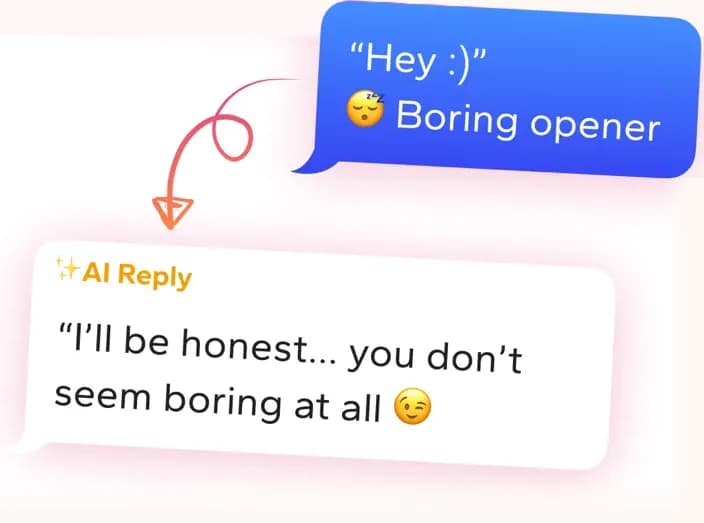
Get replies that sound like you
Screenshot the conversation in WingAI. It reads the vibe and gives you natural replies for this exact situation.
Try for freeRizz AI Screenshot the chat and get the next message for this person.
Read the rule as a format preference first
Most people who say this are describing how they like to start, not making a judgment on you. The word "really" tends to matter. "I don't really do first dates" is softer than "I don't do first dates," and it often means there's flexibility if the conversation is good. Look at the rest of her message too. If she's asking you questions, using exclamation points, or suggesting topics to talk about, she's likely still engaged and just setting a pace. If her replies have been getting shorter or she's taken a while to respond, the rule may be a polite way of cooling things down.
You can't know for sure from one line. What you can do is respond to the preference, keep talking, and watch how she handles the next exchange. Her reply to your reply is where the real signal is.
Keep the conversation going without pitching a date
Once you've acknowledged her preference, the goal is to make the next few messages feel like the getting-to-know-you phase she wants. Ask a question that invites a real answer about something she brought up earlier, not a generic "what do you do for fun." Share a little about yourself so the exchange runs both ways. Let the conversation carry the weight for a few days before you bring up meeting in person.
If she's enjoying the chat, she'll start to ask about you or suggest a call, and that's your opening. If she's only answering in one-word replies, you have your answer and can stop pushing for a date entirely.
The week of silence matters more than the text
After you've sent a reply to her boundary, give it time to land. A reasonable window is one to two days before you check whether she's still replying at her normal pace. If she replies warmly and keeps the thread moving, you can carry on as before. If she answers with a short "haha yeah" and nothing more, you can send one more light message on a different topic, then wait.
If she goes quiet for more than a few days after you've sent something friendly and low-pressure, leave it. Don't send a "hey, you there?" or a follow-up that asks why she stopped replying. One unanswered message is ambiguous. Two in a row with no response is her answer, even if she never says it.
Why these replies fail
“Totally get it, but a first date is literally just a drink. Surely we can make an exception for someone this fun to talk to?”
It argues with her stated boundary and frames her preference as something she should bend on, which tells her you won't respect a no.
“No worries at all, have a great weekend!”
It accepts the rule so completely that there's nothing left to talk about, and it effectively ends the thread without leaving any door open.
“Makes sense! Anyway, are you free Thursday for a drink? There's a place near me with good cocktails.”
It acknowledges her preference and then immediately asks for the thing she just said she doesn't do, so the acknowledgement reads as a formality.
Common mistakes
- Arguing the rule, like "but a first date is just a drink, surely you can make an exception"
- Going limp with "no worries, totally understand, have a good night" and ending the thread
- Asking for a date in the same message you acknowledge her preference, which reads as ignoring it
- Sending a long paragraph about why you think you'd be a good match
- Treating her preference as a test you need to win by being more charming
Questions people ask
- Does "I don't really do first dates" mean she's not interested?
- Not necessarily. It usually means she prefers to talk for a while before meeting, and the word "really" often leaves room for exceptions. Whether she's interested shows up in how she responds to you over the next few exchanges, especially whether she asks questions back and keeps the conversation moving.
- How long should I talk before suggesting we meet?
- There's no fixed number, but a few days of regular back-and-forth is a reasonable baseline. Wait until she's asked you something, shared something personal, or suggested a call. Those are signs she's ready to move the conversation forward, and suggesting a meetup after that will feel like a natural next step rather than a push.
- Should I ask her why she doesn't do first dates?
- You can, but keep it light and curious rather than probing. A question like "what's your take on that, do you prefer getting to know someone online first?" invites her to share if she wants to. If she gives a short answer, don't dig further. Treat her reason as hers to share, not something you need to solve.
- What if she says she doesn't do first dates but then stops replying?
- Give it a day or two, then leave it. A single unanswered message can mean many things, but repeated silence after a friendly message means the conversation has run its course for her. Sending follow-ups that ask why she went quiet usually makes it harder to stay on good terms, even if you were only curious.
What people say after using WingAI
“She went cold mid-week and I had no idea what to say. The reply I sent felt natural and she picked the chat back up.”
Marcus T.
“I overthink every text. Having three options and picking the one that sounds like me cut that spiral short.”
Sam R.
“I was skeptical at first. Then I tried it on a dry chat and the replies actually sounded like me, not a chatbot.”
Mazoonx
Get replies that sound like you
Screenshot the conversation in WingAI. It reads the vibe and gives you natural replies for this exact situation.
Try for free