How to respond when she's upset about everything you say
She criticizes every message. Learn what's actually happening and how to reply without making it worse.
When someone gets upset at nearly everything you say, it's usually not about the words themselves. She might be stressed, tired, testing how you handle conflict, or already checked out emotionally. The pattern matters more than the individual message.
A good reply here does two things. It stops you from defending or over-explaining, which makes her angrier. And it gives her space to either reset or show you this is a real problem. You're not trying to fix her mood or win the argument. You're trying to see if there's something real underneath the friction.
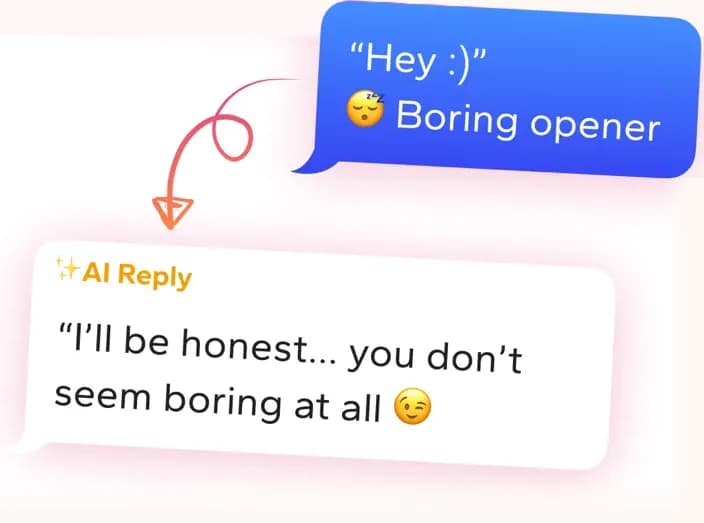
Get replies that sound like you
Screenshot the conversation in WingAI. It reads the vibe and gives you natural replies for this exact situation.
Get a reply like thisWhen someone finds fault with every message you send
This pattern usually means something else is going on beneath the surface. She might be frustrated about something unrelated to you and you're just in the way. She could be losing interest and every text now feels annoying instead of cute. Or she's testing whether you'll stick around when things get difficult.
Rare: she's actually upset about what you said. More common: the real issue is her stress level, your communication style not matching hers, or a dynamic where she feels unheard. Your job is not to figure out which one right now. Your job is to respond in a way that either creates space for real conversation or shows you whether this is worth your time.
The reply that doesn't add fuel to the fire
A good response here is short, honest, and doesn't defend the thing you said. Don't explain your intent. Don't ask what's wrong because she'll either say nothing or blame the same message again. Instead, acknowledge the pattern directly and calmly. Name that things feel tense. Then give her a choice: talk about what's actually bothering her, or step back. You're not being cold, you're being clear.
The move is to stop trying to make her feel better about what you said. Instead, point out that something bigger is off. This either gets her to tell you the real issue, or it shows you that she's more interested in fighting than connecting.
Wait before you send, and don't chase if she goes quiet
Send your reply when you're calm, not in the heat of her upset. If you're angry or defensive, wait an hour. The message should come across steady, not hurt.
After you send something that holds a boundary, do not follow up. No check-in texts, no 'are you okay', no trying to smooth it over. Give her space to either come back and talk honestly or sit with the tension. If she does respond, that tells you something. If she doesn't, that tells you something too. Either way, you're not chasing. If this pattern keeps happening after you've named it once, that's information. You're allowed to decide it's not working.
Why these replies fail
“I'm sorry, I didn't mean it like that. I was just trying to be funny and I should have known you'd take it the wrong way.”
This over-explains and implies she's overreacting, which makes her more defensive and angry at you for not getting it.
“Wow okay, sorry I breathe wrong too I guess”
Matching her tone with sarcasm turns it into a fight instead of addressing the real issue underneath.
“What did I do? What's wrong? Talk to me.”
Asking for clarification when she's upset at everything pushes her to defend the complaint instead of revealing what's actually bothering her.
Common mistakes
- Explaining why you didn't mean it that way, which reads as defensive and dismissive
- Matching her tone and getting angry back, which turns it into a fight you can't win
- Asking too many questions about what's wrong, which feels like you're pushing her
- Over-apologizing to make peace, which teaches her that upset gets results
- Ignoring it and moving on, which lets the resentment build without addressing it
Questions people ask
- Is she actually mad at me or is something else going on?
- Probably something else. But you won't know until you point out the pattern and give her space to tell you. If she comes back and says what's really wrong, it wasn't about your messages. If she just keeps attacking everything you say, that's the real answer.
- Should I give her more time before I respond?
- Yes. Don't reply immediately when you're hurt or defensive. Wait until you can send something that's calm and clear, not reactive. That usually takes an hour or two, not minutes.
- What if she doesn't respond to my boundary?
- That's information. Silence after you've named the pattern means she either doesn't want to talk about it or isn't interested in changing how she treats you. Don't chase her. Let her come back if she wants to. If this keeps happening, you have your answer about whether this is worth it.
- How many times should I try before I give up?
- Once you've named the pattern calmly and given her space, that's enough. If it happens again, you've tried. If it happens a third time and she still won't talk about it or change it, you're not being harsh by stepping back. You're being clear about what you need.
What people say after using WingAI
“I was skeptical at first. Then I tried it on a dry chat and the replies actually sounded like me, not a chatbot.”
Mazoonx
“Used it for a couple hours and set up a date the same night. Not even kidding.”
Nikola2214
“I overthink every text. Having three options and picking the one that sounds like me cut that spiral short.”
Sam R.
Get replies that sound like you
Screenshot the conversation in WingAI. It reads the vibe and gives you natural replies for this exact situation.
Try for free