How to respond to "all good"
"All good" is vague but not a dead end. Learn what it signals and how to reply without over-explaining or sounding unsure.
When someone texts "all good," they're usually closing a small tension or reassuring you after a miscommunication. It can mean they're not upset, they're moving past something, or they're signaling that nothing needs to be rehashed. The vagueness is the point. They're not looking for a long explanation or apology.
Your reply has one job: receive the signal without fumbling it. Most people either over-explain (making it awkward again) or go silent (leaving her unsure if you got the message). A solid reply is brief, warm, and moves forward.
Timing matters too. If you reply too fast, you look like you were sitting on the phone waiting. Too slow, and she wonders if you're still bothered. A quick reply shows you got the message and moved on.
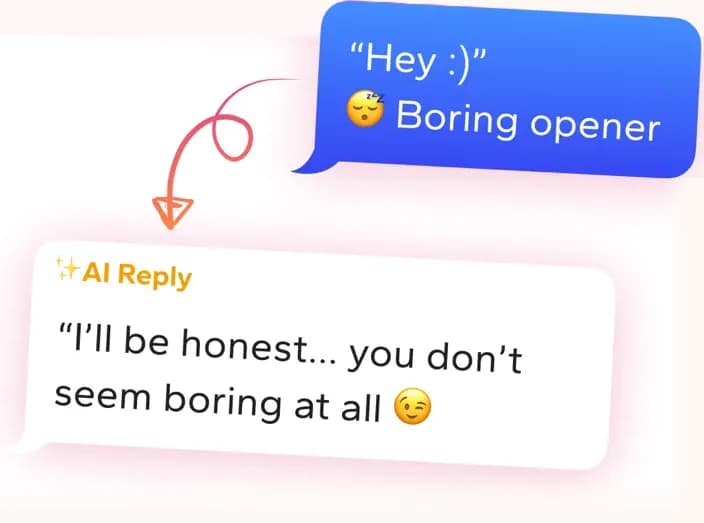
Get replies that sound like you
Screenshot the conversation in WingAI. It reads the vibe and gives you natural replies for this exact situation.
Try for freeRizz AI Screenshot the chat and get the next message for this person.
All good usually means the door is closing, not opening
When she says "all good," she's not asking you to dig deeper or explain more. She's saying the thing that was slightly off is now level. She might still want to talk about something else, but not about this. If you probe or re-open it, you signal that you didn't trust her message.
All good can also be her giving you an out. You said something awkward, things felt tight, and she's saying she's not holding it against you. It's a soft landing. Treat it as one.
Match her tone and end the loop in one move
A good reply does two things at once: it shows you received her message and it shifts gear to something else or neutral ground. You're not defending, not over-apologizing, and not freezing up. Short, warm, and forward-facing.
If the tension was about making plans, your reply can gently re-anchor those plans. If it was just a small awkwardness, your reply can be lighter and move to something else. The move is acknowledgment plus reset, not acknowledgment plus nothing.
Reply within minutes, then let the next move breathe
Send your reply while you're both still in the thread. Not instantly. Within 5 to 15 minutes feels natural. This tells her you got it and you're not stewing on it.
After you reply, give her space to respond on her own time. If she doesn't reply to your reset, don't chase it with another text. That reads as needy. If she's all good, she'll come back when she has something to say. If she doesn't, you tried. Move on.
Why these replies fail
“I'm really sorry if I upset you. I didn't mean to. Let me know if there's anything I can do to make it better.”
It re-opens the apology when she was trying to close it, and makes a small thing into something she has to manage.
“ok”
One-word replies sound cold and dismissive, like you didn't actually believe her or you're annoyed.
“Are you sure though? I still feel bad about what happened.”
It asks her to reassure you again instead of trusting her message, which makes her do emotional labor she already finished.
Common mistakes
- Sending a long explanation or apology when she just closed the door on that conversation
- Replying with just "ok" or "cool," which sounds dismissive and cold
- Waiting hours to reply, which makes her think you're still upset or mad at her
- Asking what she meant or asking if she's really sure, which re-opens the tension you should be moving past
- Sending a string of texts after "all good," which kills the momentum of moving forward
Questions people ask
- What if all good doesn't feel real?
- Take it at face value anyway. Even if there's a small amount of tension left, your job is to honor what she said and not poke at it. If it comes back later, it will. Trying to verify her feelings usually makes things worse, not better.
- Should I bring up what caused the tension in a later conversation?
- Only if it's actually important and several days have passed. If it's small stuff (tone misread, timing confusion), leave it alone. She closed the loop. Reopening it signals you're the kind of person who relitigates small things.
- How do I reply if she says all good but I'm not sure what the tension was?
- You still reply warmly and briefly. Don't ask her to clarify what was wrong. That makes her spell it out when she's trying to move past it. Match her energy, keep it light, and move the conversation somewhere else if you can.
- Is it ever okay to just not reply to all good?
- No. Silence here reads as you being upset or not accepting her reassurance. A simple, brief reply takes 10 seconds and leaves her knowing you're both okay.
What people say after using WingAI
“I was skeptical at first. Then I tried it on a dry chat and the replies actually sounded like me, not a chatbot.”
Mazoonx
“I overthink every text. Having three options and picking the one that sounds like me cut that spiral short.”
Sam R.
“My openers used to be boring. Now I reference something from her profile and people actually write back.”
Aiden K.
Get replies that sound like you
Screenshot the conversation in WingAI. It reads the vibe and gives you natural replies for this exact situation.
Try for free