How to Respond on Tinder When She Says It's a Stressful Month
What to say when she tells you she's going through a stressful month on Tinder, and how to keep the conversation warm without making it about you.
When someone says they're going through a stressful month, they're usually giving you a reason their replies might be slow, short, or flat. They're also testing whether you'll take it seriously without turning it into a heavy conversation on the first or second message. On a dating app, that's a lot to read into a few words, so the reply has to be easy to answer and easy to ignore if she doesn't want to say more.
A good reply acknowledges what she said in a plain way, shows you're not offended by slow responses, and leaves room for her to say more or change the subject. It should feel like a normal person responding, not a therapist or a salesperson closing the gap.
The main thing to avoid is treating the stress as an opening to get more intimate than the conversation has earned. If you pile on questions about what's going on, she has to do emotional work for you. If you pull back entirely, she may read it as a sign you weren't that interested.
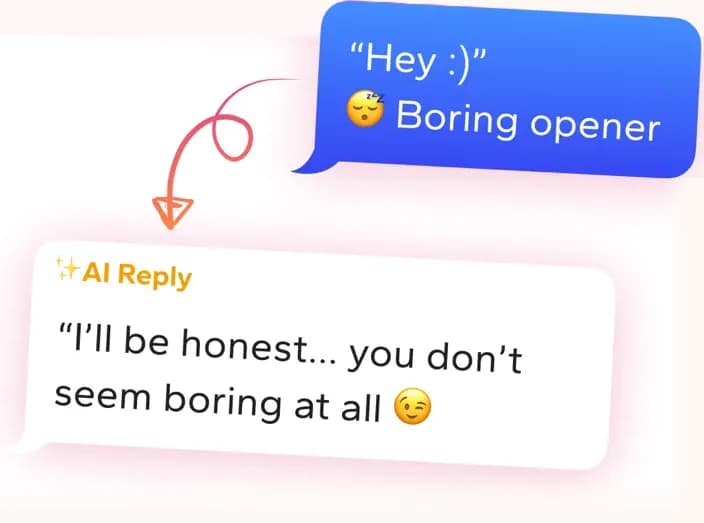
Get replies that sound like you
Screenshot the conversation in WingAI. It reads the vibe and gives you natural replies for this exact situation.
Try for freeTinder AI Screenshot the photos and get an opener for that match.
She is telling you about her capacity, not her whole life
A line like 'stressful month' on Tinder is usually a short disclosure about how much bandwidth she has right now. It answers the question you might be quietly asking, which is why she's slow or why the conversation is thin. It is rarely an invitation to dig into the cause. Read the length and tone of the message. If she wrote one flat sentence and didn't ask anything back, she's signalling that she can keep chatting but not much more. If she wrote a longer message with specifics, she may be more open to talking it through.
Also look at what she did just before the disclosure. If she was flirty and fast a moment ago, the stress line may be a way of slowing down without ending things. If she was already short, it may be a polite exit that she is letting you take or leave. Either way the signal is about pace. She wants the conversation to stay light, or she wants a little room, and you should match that rather than try to decode a deeper message she didn't send.
Acknowledge it and then let her steer
The reply has to do three things without much effort. It has to show you heard the stress, it has to make the slow replies feel okay, and it has to hand the conversation back to her. Acknowledging the stress can be a single short phrase. Saying it's fine that she's been slow shows that you aren't keeping score, which matters more than any particular wording. Then give her an easy way to continue, either a light question tied to something she already mentioned, or simply leaving the door open without pushing.
The move to avoid is making the acknowledgement into a bigger event than it is. If you spend three sentences on how sorry you are, she has to reassure you, and now she's doing the emotional labour in a conversation that barely started. Keep the response small and let her decide whether the stress is a topic or just background.
Let the pace drop without disappearing
After a stressful-month message, the most useful thing you can do is adjust your own speed without vanishing. If she's been replying in hours, don't start replying in minutes just to show you're keen. Match the rhythm she's set for now. A slightly slower pace reads as respect for what she said. A sudden disappearance reads as a reaction to it, and she may feel she has to apologise for something you did.
Keep the thread alive with light contact over the next few days if the match is still active. That means one short message that doesn't require a reply, or a reaction to something she shared earlier. Hold off on pushing a date, because a stressed person often can't commit to plans and asking too early puts her in the position of saying no. Revisit plans once she is back to replying with some energy, usually when her messages get longer again.
Why these replies fail
“Oh no, what happened? Do you want to talk about it? I'm a really good listener.”
It asks for the story in the first reply and frames you as the person who should hear her problems before she's decided to share them.
“Sorry to hear that. I've been stressed too, honestly it's been crazy. Work has been killing me and I haven't slept properly in weeks.”
It turns her disclosure into a contest of who's busier and pulls the focus onto you.
“No worries at all, take all the time you need. I'll just wait here for you whenever you're free, no pressure.”
It sounds clingy and puts a weight on her to keep reassuring you, which is the opposite of the low-pressure room she was asking for.
Common mistakes
- Asking for the full story in the same message you acknowledge the stress
- Making your reply about how you handle stress or how you'd never be this busy
- Going silent for days and then coming back as if nothing happened
- Offering advice she didn't ask for on her job, her boss, or her sleep
- Mirroring her stress with a heavy confession of your own too early
Questions people ask
- Should I ask her what's making her stressed?
- Not in the first reply. A question about the cause asks her to share something personal before the conversation has built that trust. Let her bring it up if she wants to. If she mentions the stress again later in a way that invites more, you can ask one open question then, but keep it light and easy to answer in a sentence.
- How long should I wait before texting again?
- Roughly match her pace rather than setting a fixed number of hours. If she's replying within a day, a similar gap is fine. If she's been slow, don't rush back with a follow-up within an hour. One short message after a day or so is usually enough to keep the thread warm without adding pressure.
- What if she doesn't reply after she says she's stressed?
- Give it a few days before any follow-up, and then keep it to one low-effort message that doesn't ask for a response. If there's still nothing after that, stop. A stressed person may simply not have the energy to chat, and a second or third nudge tends to make the silence harder to come back from.
- Is it a bad sign if she brings up stress on the first few messages?
- Not necessarily. Some people mention it early because they want to explain slow replies upfront, and it can be a sign of honesty. What matters more is how she behaves afterward. If she keeps the conversation going at a reasonable pace once the stress is out in the open, it's usually fine. If the replies stay thin for a long stretch, it's worth easing off and seeing whether plans become possible later.
What people say after using WingAI
“I'm busy and half the profiles give you almost nothing to work with. WingAI gets me a solid first line fast without me staring at the screen for ten minutes.”
Ralph
“I was skeptical at first. Then I tried it on a dry chat and the replies actually sounded like me, not a chatbot.”
Mazoonx
“I overthink every text. Having three options and picking the one that sounds like me cut that spiral short.”
Sam R.
Get replies that sound like you
Screenshot the conversation in WingAI. It reads the vibe and gives you natural replies for this exact situation.
Try for free