How to Reply on Hinge When She Prefers Video Calls to Texting
She'd rather video call than text on Hinge? Here's how to read it, reply well, and move to a call without sounding pushy or losing her.
When someone says they prefer video calls over texting, they are usually telling you two things at once. They want to talk to you in a way that feels more real than a text thread, and they are probably tired of endless back and forth that goes nowhere. It is a positive signal, not a rejection. It is also a request you have to answer, because if you ignore it or keep texting as if she never said it, she will read that as you not being interested in the thing she just asked for.
A good reply does three things. It takes the preference seriously, it tells her you are on board with moving to a call, and it gives her an easy way to say yes. You do not need to be clever about it. You need to be clear, a little warm, and specific enough that she does not have to guess what you want to do next.
The mistake most people make is treating the preference as a conversation topic instead of a plan. They reply with a joke about hating texting, or ask her why she prefers calls, and then the thread keeps going without a call ever getting booked. Her message was an invitation. Respond to the invitation.
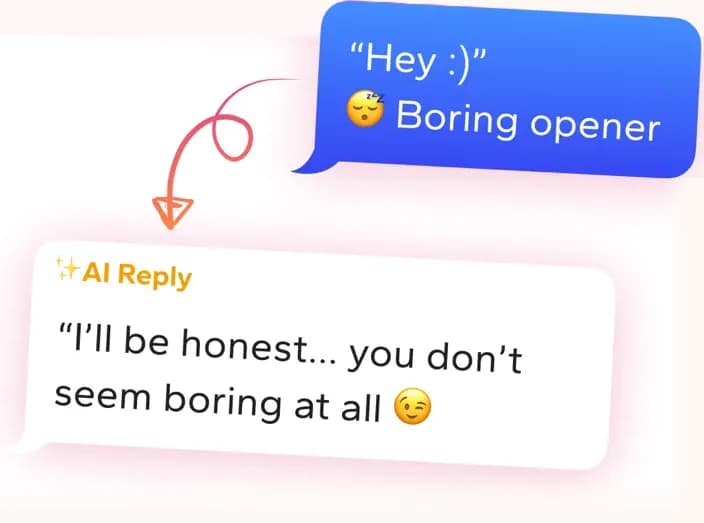
Get replies that sound like you
Screenshot the conversation in WingAI. It reads the vibe and gives you natural replies for this exact situation.
Try for freeHinge AI Screenshot the prompts and get a comment written for that profile.
Read the preference as a signal of how she wants to be treated
When she says she would rather video call than text, the surface meaning is about format. The deeper meaning is usually about pace and effort. People who say this tend to have had long text threads that fizzled, or they find texting slow and hard to read for tone. She is telling you she would like the conversation to have some weight and momentum, and she would like you to show up in a way that feels real.
That means the preference is also a test of your initiative. If you match her energy by moving things toward a call, you show that you want the same thing she does. If you keep the thread in text and hope it turns into a call eventually, she will likely assume the interest is mostly on the chat side. Read her message as a request for a specific kind of interaction, and let that shape what you do next.
The reply has to put a call on the table
A good reply has to accept the preference, name the next step, and make the step easy to say yes to. Acceptance can be a short line that shows you heard her. The next step is the call itself, but framed as something you both want rather than a demand. Making it easy means offering a window, not a blank slate. Something like a specific evening or a couple of options gives her a quick way to answer.
You also need to keep the reply short. A long message about how much you agree with her, followed by a question, makes the call feel like homework. Two or three sentences is usually enough. The reply should read as relaxed, as if you are already picturing the conversation happening.
Once she agrees, lock the time and then stop texting
Once she says yes, the job is to convert the agreement into a real time. Pick a day and a time window and confirm the platform, whether that is FaceTime, Zoom, or a normal phone video call. Ambiguity at this stage is where calls die. If she suggests a time, accept it or counter with one exact alternative. Do not reply with a vague it could be any day this week.
After the time is set, keep the thread short. Send a single confirmation the day before or the morning of, and then let the call be the conversation. Lingering in text after the call is booked makes it feel like you are not sure you want to actually talk.
Why these replies fail
“Ha, I hate texting too. Why do you prefer calls though? Is it because texting is too slow for you?”
It turns her preference into a question she has to explain, and it keeps the conversation in text instead of moving it toward a call.
“Yeah for sure, we should definitely talk at some point. I'm pretty busy this week but let me know what works for you!”
It agrees in principle without putting a time on the table, so the call has no real path to happening and she has to do all the planning.
“Video calls are fine but I'm honestly terrible on the phone, I get so awkward. Haha. Maybe we can just keep chatting here for now?”
It signals reluctance and asks her to drop her own preference, which reads as you not wanting the call she just asked for.
Common mistakes
- Asking her why she prefers calls, which turns a simple preference into an interview.
- Ignoring the preference and sending another long text as if she had not said it.
- Proposing a call so vaguely that she has to do the work of picking a time.
- Pushing for a call in the first message before there is any reason for her to trust you.
- Making a joke about being bad on the phone, which signals you are not sure you want to talk.
Questions people ask
- Should I just ask for a call right away?
- Not in a cold first message, but once she has told you she prefers calls, asking for one is a natural next step. Do it in the same reply where you acknowledge her preference, with a light suggestion and a loose window. This shows you heard her without making it feel like a demand or a test.
- What if she never answers after I suggest a call?
- Wait a day or two, then send one short follow-up that is easy to answer, such as a specific time or a yes or no question. If that also gets no reply, let it go. Silence after a call request is a clear answer, and sending more messages will not change it.
- Is it weird to suggest a call if we have only matched and talked a little?
- No, it is not weird, because she brought up calls first. The only risk is moving too fast on the timing. If the conversation has only had a few exchanges, suggest a call within the next few days rather than the same hour, so it feels like a normal next step rather than a rush.
- What if she says she prefers calls but seems hesitant about meeting?
- A preference for calls is not the same as wanting to meet, so keep the call focused on getting to know each other. Do not add pressure about meeting in person. Let the call be the step, and if it goes well, the in-person conversation will come up naturally afterward.
What people say after using WingAI
“I overthink every text. Having three options and picking the one that sounds like me cut that spiral short.”
Sam R.
“I was skeptical at first. Then I tried it on a dry chat and the replies actually sounded like me, not a chatbot.”
Mazoonx
“She went cold mid-week and I had no idea what to say. The reply I sent felt natural and she picked the chat back up.”
Marcus T.
Get replies that sound like you
Screenshot the conversation in WingAI. It reads the vibe and gives you natural replies for this exact situation.
Try for free