How to reply when she prefers spontaneous plans over set dates on Hinge
She says she likes spontaneous plans over set dates. Here's how to reply on Hinge so you get a real plan without sounding flaky or pushy.
When someone says they prefer spontaneous plans over set dates, they are usually telling you two things at once. The first is a preference about structure: they don't want a formal dinner with a fixed time and a reservation, they want something that feels more like running into each other. The second is a quiet test: they want to see whether you can hold a plan loosely without disappearing or getting stiff about it. Most people who say this are not saying they don't want to meet. They want the meeting to feel low pressure.
The problem is that "spontaneous" can become a way to avoid ever committing to anything. If you agree with the framing and then send "let's just see how we feel," nothing happens. A good reply accepts the preference and still moves toward a real, specific window of time. You are not asking her to give up spontaneity. You are making spontaneity possible by picking a rough area and a rough evening and letting the details stay open.
What matters is that she walks away knowing you heard her, you have an actual idea in mind, and the next step is easy to say yes to.
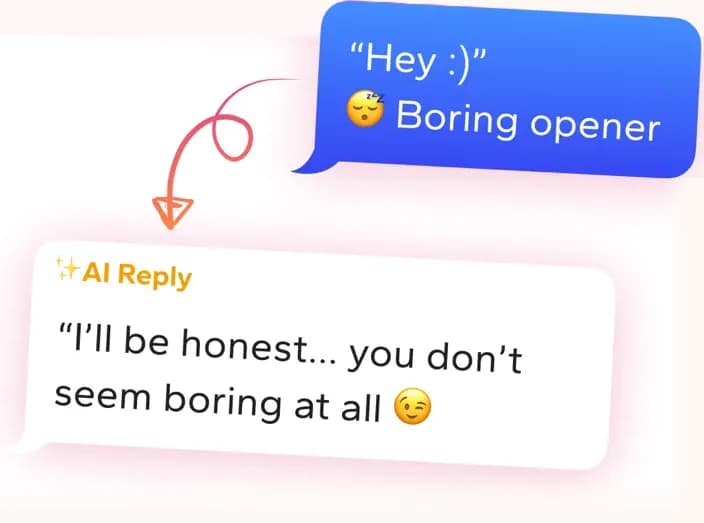
Get replies that sound like you
Screenshot the conversation in WingAI. It reads the vibe and gives you natural replies for this exact situation.
Try for freeHinge AI Screenshot the prompts and get a comment written for that profile.
Read the preference as low pressure, not a no
When she says she likes spontaneous plans, the most useful thing to figure out is what she is rejecting. In most cases it is the formality: the reservation, the fixed start time, the sense that the evening is a job interview. It is rarely the meeting itself. Look at how she phrases it. If she says "I'd rather see what happens" she is open to seeing you, just not in a planned way. If she is vague about whether she wants to meet at all, the preference may be her polite way of stalling, and that changes how quickly you should push.
Also check the rest of the thread. If she has been asking you questions, sharing details about her week, and replying within a few hours, she is interested and the preference is about structure. If replies have been getting shorter and she has been leaving you with open-ended statements, the spontaneity line may be the softest possible way of saying slow down. Read the overall shape before deciding how much structure to offer.
Offer a rough shape, not a plan
A reply that works here names an area, a loose time window, and an easy way out if plans change. You might suggest a neighborhood you both could reach, a general evening, and a low-stakes activity like a walk, a drink, or getting food from somewhere casual. The point is that she can say yes without having to design anything. You are doing the minimum planning so that the spontaneous part has room to happen.
Keep it to one or two concrete options at most. Too many choices feels like a menu and brings back the planning she wanted to avoid. Let her respond to what you offer, and be ready to adjust if she wants something different. The reply should make it easy for her to say "yeah that works" or "what about this instead," and both answers move things forward.
The week of silence matters more than the text
After you send the reply, the most common way this goes wrong is the silence that follows. If she doesn't respond right away, that does not automatically mean she has lost interest. People who prefer spontaneity often reply on their own schedule and may not treat a message as urgent. Give it a day, and if you have a natural follow-up, like something you were going to mention anyway, send that in a way that doesn't reopen the planning question.
If a few days pass with no reply to the plan and no change in her tone when she does message, let it go for now. Do not send a second version of the same suggestion. Wait for her to bring it up again, or, if the thread has gone quiet for a week or more, send one short note that keeps the door open and doesn't ask for anything. If she still doesn't engage after that, stop. Continuing to chase a preference she has clearly declined to act on turns a low-pressure situation into an uncomfortable one.
Why these replies fail
“Totally get it! Let's just see how we feel when the time comes.”
It agrees with her preference but offers no area, no time, and no next step, so nothing can actually happen.
“Cool, how about dinner at that Italian place on Fifth this Thursday at 7:30? I'll book us a table.”
It ignores her stated preference and turns the plan into a formal reservation she already said she didn't want.
“I love spontaneity too, honestly it's one of my favorite things about dating. I think the best nights are the ones you don't plan at all. What kind of stuff do you like to do when you're just out?”
It spends the whole reply on your own feelings and then hands her a broad question that puts all the planning back on her.
Common mistakes
- Agreeing with the framing and then offering nothing concrete, which leaves her to do all the planning
- Proposing a formal dinner anyway, which signals you didn't read the message
- Saying "let's just see how we feel" as the whole reply, which reads as a polite way of dropping the thread
- Asking her to pick a time and place from scratch, which is exactly the kind of planning she said she wanted to avoid
- Overcorrecting into a long paragraph explaining why you love spontaneity too
Questions people ask
- Does she really want to meet, or is spontaneous just a polite way to say no?
- Usually she wants to meet, just without a formal setup. Check how engaged she has been in the chat. If she asks you questions and replies with some energy, the preference is about structure. If replies have been thin and she keeps deflecting every concrete idea, she may be stalling, and it's fair to be more direct about what you're looking for.
- Should I still suggest a specific day if she says she prefers spontaneous plans?
- Yes, but keep it loose. A general evening or a rough window like this weekend works better than a fixed time. You are not asking her to commit to a plan, you are making it easy for something to happen. Name one area or activity and let her adjust it.
- How long should I wait before following up on a spontaneous plan idea?
- Give it a day or two before any follow-up. People who prefer spontaneity often respond on their own schedule. If there is still nothing after about a week, send one short, low-pressure message that doesn't re-propose the plan, and then wait for her to pick it up.
- What if she says she prefers spontaneous plans but then never actually makes one?
- That pattern is worth noticing. Spontaneity only works when both people are willing to show up for whatever happens. If she keeps agreeing in principle and never makes any move, it is reasonable to stop investing effort and move on, rather than trying to force a plan that she isn't acting on.
What people say after using WingAI
“Used it for a couple hours and set up a date the same night. Not even kidding.”
Nikola2214
“I'm busy and half the profiles give you almost nothing to work with. WingAI gets me a solid first line fast without me staring at the screen for ten minutes.”
Ralph
“She went cold mid-week and I had no idea what to say. The reply I sent felt natural and she picked the chat back up.”
Marcus T.
Get replies that sound like you
Screenshot the conversation in WingAI. It reads the vibe and gives you natural replies for this exact situation.
Try for free