How to respond when your partner seems irritated with you
Learn how to reply when your partner is upset. Figure out what's really happening and craft a response that defuses tension.
When your partner sends a message that signals irritation, it's easy to panic and either over-apologize or get defensive. But the irritation usually isn't random. It comes from something specific: unmet expectations, feeling unheard, being let down, or accumulating small frustrations.
Your reply has one job. Acknowledge what's actually wrong without making it worse. That means reading the irritation as data, not as a personal attack. A good response shows you understand why they're upset and that you take it seriously, not that you're scrambling to fix their mood.
Timing matters too. Replying too fast can look panicked. Too slow looks dismissive. The goal is to respond when you can think clearly, not when you're reactive.
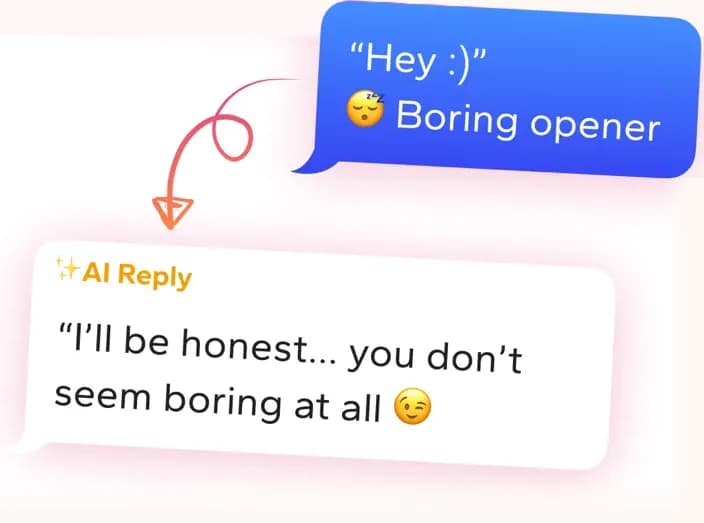
Get replies that sound like you
Screenshot the conversation in WingAI. It reads the vibe and gives you natural replies for this exact situation.
Try for freeRizz AI Screenshot the chat and get the next message for this person.
Why irritation usually points to one specific thing
Irritation isn't the same as anger. It's frustration that's been building or disappointment that's fresh. When your partner sends a short, curt, or cold message, they're signaling that something didn't land right. It could be a broken promise, feeling rushed or dismissed, or being asked the same question twice. The message itself is rarely the real problem.
Read the tone as a clue. Are they using fewer words than usual? Is the message blunt instead of warm? Did they use your full name or sign off differently? These shifts in how they write are the actual signal. The content matters less than the temperature drop.
Show you heard them before you explain your side
A reply that lands names the thing you think upset them. Not as an accusation, but as a question. This does two things at once. It proves you're paying attention and it gives them a chance to confirm or correct you. If you guess wrong, they'll tell you what's really going on.
Then hold steady. Don't pivot to your version yet. Irritation needs space to be acknowledged first, or anything you say after sounds like you're arguing. Once they feel heard, the conversation can actually move forward.
Reply within hours, not minutes or the next day
If you respond in two minutes, it looks reactive and anxious. If you wait until tomorrow, it reads as though you didn't think their irritation mattered. A few hours gives you time to calm down and think clearly, but it's still the same day.
If they don't reply after you've sent a solid response, don't send a second message right away. Give them space to sit with it. If they stay silent for more than a day or two after you've tried to address it, that's different. Then you may need to have a real conversation in person or on the phone instead.
Why these replies fail
“I don't know why you're being like this. I didn't do anything wrong.”
This defends you before acknowledging them, which makes them feel unheard and escalates the irritation.
“Haha okay, someone woke up grumpy! What's going on? :)”
Joking away their irritation or asking them to perform emotional labor by explaining themselves dismisses what they're feeling.
“I'm so sorry for everything. I'm the worst. I'll do better.”
Over-apologizing without naming what you're sorry for sounds hollow and forces them to reassure you instead of addressing the actual problem.
Common mistakes
- Defending yourself before acknowledging their frustration
- Asking them to explain why they're upset instead of sitting with it
- Using lots of emojis or jokes to lighten the mood too quickly
- Waiting too long to reply, which reads as avoidance or indifference
- Over-apologizing for everything without naming what you did
Questions people ask
- Should I ask them why they're upset or just accept the irritation?
- Name what you think the issue is based on context. If you really don't know, it's okay to ask, but frame it as 'Did I upset you by X?' not 'Why are you mad?' Asking them to explain puts more work on them when they're already frustrated.
- What if I think their irritation isn't fair or they're overreacting?
- Whether it's fair or not doesn't matter in the moment. Fairness is a later conversation. Right now, your job is to show you understand why they feel that way, even if you'd explain it differently. That's how you get to actually talk about it.
- Is it better to respond in text or call them?
- Start with text. A call can feel like you're trying to convince them out of their feelings. Text gives them space to respond when they're ready. If texts go in circles or feel cold, then suggest a call.
- How do I know if they're just tired or actually upset with me?
- Tone shifts. They use shorter replies, fewer emojis, or different sign-offs. If you're unsure, assume it's worth checking in. Asking gently never hurts. The risk of not addressing it is higher than the risk of a small clarifying text.
What people say after using WingAI
“I was skeptical at first. Then I tried it on a dry chat and the replies actually sounded like me, not a chatbot.”
Mazoonx
“I overthink every text. Having three options and picking the one that sounds like me cut that spiral short.”
Sam R.
“I'm busy and half the profiles give you almost nothing to work with. WingAI gets me a solid first line fast without me staring at the screen for ten minutes.”
Ralph
Get replies that sound like you
Screenshot the conversation in WingAI. It reads the vibe and gives you natural replies for this exact situation.
Try for free