How to Reply When She Says She's Been Burned Online
She told you she got burned by someone she met online. Here's how to read it, what a good reply needs to do, and when to follow up or let it go.
When someone says she has been burned by a guy she met online, she is usually telling you two things at once. The first is a fact about the past: she was hurt, lied to, ghosted, or treated badly. The second is a test, often unspoken, about whether you are going to be a repeat of that. Most people in this spot are not looking for you to fix what happened. They want to know whether you can hear it without flinching, turning it into a story about yourself, or rushing to prove you are different.
A good reply does three things. It takes the disclosure seriously without making it the centre of the conversation. It shows she can share hard things and you will not punish her for it. And it leaves room for her to decide how much she wants to say, rather than pulling a full account out of her. You are not trying to win her trust in one message. You are trying to make it safe to keep talking.
This is a moment where the content of your reply matters less than the pacing and the tone. A reply that is warm, short, and unhurried usually does more than a long one that tries to reassure.
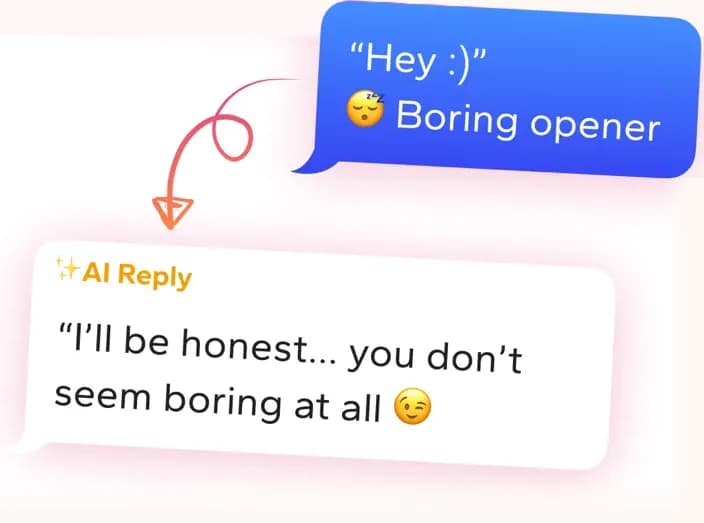
Get replies that sound like you
Screenshot the conversation in WingAI. It reads the vibe and gives you natural replies for this exact situation.
Try for freeRizz AI Screenshot the chat and get the next message for this person.
She's testing whether this is safe to talk about
A line like 'I got burned by someone on here' is rarely a throwaway. People tend to say it early when they want to set expectations and see how the other person handles something heavier than small talk. Pay attention to the specific words she uses. 'Not who he said he was' points to deception. 'Really burned' points to real emotional cost. 'Taking it slow' tells you what she wants the pace to be, and it is a request, not a rejection.
The question underneath is usually whether you will get defensive, go cold, or make her feel foolish for having been fooled. If you respond in a way that feels steady and kind, she learns something about you that matters more than anything you say about yourself. You do not need to show you understand her experience completely. You only need to show you heard it and are not going anywhere.
Acknowledge it, then let her set the depth
The reply should acknowledge the disclosure in a sentence or two, then hand the conversation back to her or back to the ordinary flow. Something that says you are sorry she went through that, and that you are happy to take things at whatever pace she wants, does the job. It should not ask what happened, guess at the details, or analyse his behaviour.
If she wants to say more, she will, and she will do it on her own schedule. If she doesn't, a light return to something real between you, like the thing you were already talking about, tells her the conversation can keep going without needing the heavy part again. Keep the energy calm. Avoid exclamation marks and anything that reads as performing enthusiasm.
The week of silence matters more than the text
Because this kind of message carries weight, the gap after it matters. Replying within a few hours is fine, but replying in the middle of the night or within two minutes can read as either anxious or as if you are trying to close the topic. Give it the same rhythm as a normal conversation, or slightly slower. Send your reply in daylight, when you are not tired or half-asleep.
If she does not respond after you have replied, give it about two to three days before anything else. If you follow up, keep it low-pressure and not about the heavy topic. Something ordinary tells her you are still around without re-opening the wound. If you get no response after one follow up, stop. Continuing to message after silence signals that you cannot read a no, and that is worse for her trust than any single clumsy line.
Why these replies fail
“Oh no, that's awful. What did he do? Were you okay? I'd never do that to anyone, just so you know.”
It asks for painful details, makes the moment about the ex, and then turns the reply into a defence of yourself.
“Wow, that sounds rough! Hope you're doing better now. Anyway, are you free this weekend? I'd love to take you out.”
It jumps to a meet-up in the same message, which tells her the disclosure was just a hurdle to clear before getting to what you actually want.
“Ugh, I've been there too. My ex cheated on me after two years and I swore off dating apps for months. Men can be the worst!”
It trades her story for yours and puts a broad generalisation about men into the exchange, which makes the conversation about grievances instead of about her.
Common mistakes
- Asking for details about what he did, which turns her pain into your curiosity
- Immediately offering reassurance that you are not like him, which sounds like you took it personally
- Matching her disclosure with a long story of your own bad experience
- Pushing for a call, a meet, or a clear answer on whether she is interested in you
- Going quiet after she shared, then coming back with a light message as if nothing happened
Questions people ask
- Should I ask her what happened with the guy she met online?
- Not in your first reply, and probably not until she brings it up again. Asking for details tends to feel like you are collecting a story rather than listening to her. If she wants to tell you, she will bring it up when she is ready. A calm acknowledgement plus an invitation to keep things at her pace is usually enough.
- How long should I wait before replying to a message like this?
- A few hours is fine, and it is better to reply during the day than in the middle of the night. Matching the normal rhythm of your conversation works well. Replying instantly can feel like you are trying to close the topic, and waiting a full day can make her wonder if she said too much.
- Is it okay to tell her I had a bad experience too?
- Briefly, only if it fits naturally, and never as a way to match her story. If you bring up your own experience, keep it to a line and return the focus to her. Turning the moment into a swap of bad dates can make her feel like her disclosure was just the start of a comparison.
- What if she goes quiet after I reply?
- Give it two to three days before you send anything. If you follow up, keep it light and about something ordinary, not the topic she shared. If there is still no reply after that single follow up, stop messaging. Silence after a vulnerable message often means she needs space, and continuing to message will cost you more trust than waiting.
What people say after using WingAI
“She went cold mid-week and I had no idea what to say. The reply I sent felt natural and she picked the chat back up.”
Marcus T.
“I overthink every text. Having three options and picking the one that sounds like me cut that spiral short.”
Sam R.
“I was skeptical at first. Then I tried it on a dry chat and the replies actually sounded like me, not a chatbot.”
Mazoonx
Get replies that sound like you
Screenshot the conversation in WingAI. It reads the vibe and gives you natural replies for this exact situation.
Try for free