How to reply when he apologizes for distant behavior
Learn how to respond when he admits he's been distant. Decide if his apology is real, and what to say to move forward or set a boundary.
When a guy apologizes for pulling back or going cold, he's usually signaling that he felt the shift too and wants to reset. But an apology without context can mean different things. He might be sorry, testing if you'll accept excuses, or just buying time before disappearing again.
Your reply has to do two things at once. Acknowledge that his behavior mattered enough to deserve an apology, and protect yourself by making clear what comes next. You're not letting him off the hook just because he said sorry. You're deciding whether this is a real correction or a pattern you should walk away from.
The best replies are short, honest, and forward-looking. They don't relitigate what happened. They set a tone that says, 'I see you, but show me, don't tell me.'
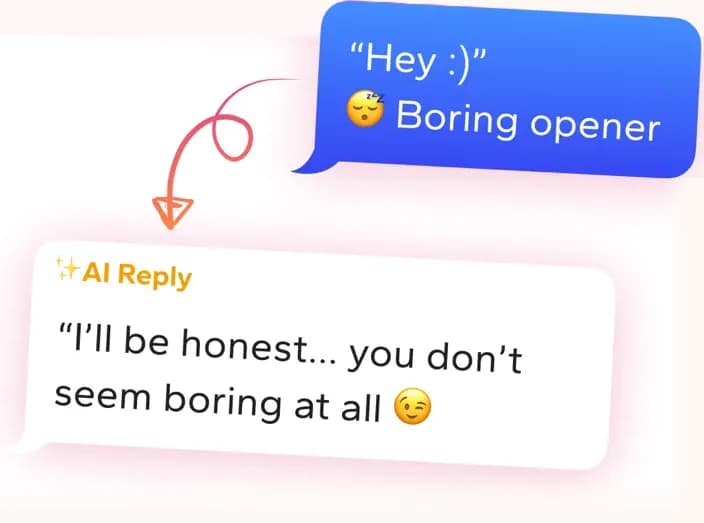
Get replies that sound like you
Screenshot the conversation in WingAI. It reads the vibe and gives you natural replies for this exact situation.
Try for freeRizz AI Screenshot the chat and get the next message for this person.
Distant behavior is a choice, not a circumstance
When someone goes quiet or pulls back, they made that choice repeatedly. It wasn't one bad day. It was days or weeks of not reaching out, taking hours to reply, or showing up differently than they did before. An apology can be real, but it has to come with acknowledgment of the pattern, not just the feeling. If his message says 'I've been distant' without any sense of what he did or why he thinks it happened, he's still being vague. That vagueness often means he hasn't actually figured out what he needs to change. A real apology names the thing.
Show acceptance, then require evidence
A good reply validates that he apologized and gives him one clean chance to prove it matters. You don't need to make him earn forgiveness word by word in texts. But you do need to signal that the next phase is about actions, not more explaining. This means your reply should be warm enough that he knows you're open to moving forward, but not so warm that he thinks one text message fixed it. Keep it brief. Save the real conversation for when you're actually interacting again and can see if he's actually different.
Wait to see if he follows up with a pattern shift
Send your reply and then step back. The real test happens over the next week. Does he text more consistently. Does he initiate plans instead of waiting for you. Does he stay present when you're together. These things matter more than whatever he said in the apology. If a week goes by and he's back to the old behavior, you have your answer. At that point, don't bring it up again. Just start treating him the way he's treating you. If he asks why you're distant, you can say something direct like 'You apologized, but nothing changed.' Then decide if you want to stay.
Why these replies fail
“It's totally fine, don't worry about it. I know you're busy. Let's just move forward and not dwell on it.”
This lets him off too easily and suggests distant behavior is excusable, which trains him to do it again.
“Okay, but I need you to understand how much that hurt me and how alone I felt when you were pulling away. Here's everything I was going through...”
It dumps emotional labor back on him to comfort and reassure you, which often makes him retreat more.
“Cool. Well, I've been distant too, so I guess we're even now.”
It flips the dynamic into a game where you're both keeping score instead of actually fixing anything.
Common mistakes
- Accepting the apology and immediately moving past it without naming what distant behavior actually did to you
- Asking 'why' or opening an investigation into his reasons instead of focusing on what happens next
- Sending a long text explaining your hurt in detail, which puts emotional labor on him to fix it
- Going cold yourself to 'show him how it feels,' turning it into a tit-for-tat game
- Saying 'it's okay' when it wasn't okay, which trains him that silence gets forgiven easily
Questions people ask
- Should I ask him why he was distant before I reply?
- No. Asking 'why' opens a conversation where he explains himself and you listen. Save that. Right now, acknowledge the apology and make space for action. If he volunteers a reason, listen. But don't ask him to defend his behavior.
- What if he says he was stressed or dealing with something?
- That's context, not an excuse. Anyone dealing with stress can send a text saying 'I need space' or 'I'm in my head right now.' Your reply should acknowledge the apology without getting drawn into debating whether his stress justifies ghosting you.
- How long should I wait to see if he's actually changed?
- One week of solid, consistent contact is a good baseline. If he reverts by week two, you have enough data. Don't wait a month hoping he'll get it together. The pattern will show itself fast.
- Should my reply be short or can I write more?
- Keep it short. One or two sentences that say you accept the apology and you're open to moving forward. Anything longer risks sounding like you're also apologizing or explaining yourself, which isn't your job here.
What people say after using WingAI
“I overthink every text. Having three options and picking the one that sounds like me cut that spiral short.”
Sam R.
“She went cold mid-week and I had no idea what to say. The reply I sent felt natural and she picked the chat back up.”
Marcus T.
“I was skeptical at first. Then I tried it on a dry chat and the replies actually sounded like me, not a chatbot.”
Mazoonx
Get replies that sound like you
Screenshot the conversation in WingAI. It reads the vibe and gives you natural replies for this exact situation.
Try for free