How to Reply on Bumble When She Says She's Been Catching Up on Sleep
She says she's been catching up on sleep this week. Learn how to read it and reply on Bumble so the conversation keeps going without pressure.
When someone says they've been catching up on sleep, they're usually telling you two things at once. The first is literal: they've been tired, maybe busy or run down, and they've been trying to recover. The second is a quiet signal that they're not at their most available right now. It doesn't mean she's lost interest. It means her energy is going to rest, and a conversation that asks her to perform, flirt hard, or plan something elaborate will feel like one more thing to do.
A good reply does three things at once. It acknowledges what she said without making it a big deal, it shows you're easy to talk to in a low-energy state, and it leaves her a simple way to continue or stop without having to explain herself. Most people overcomplicate this. They either ask a string of questions about her sleep, which turns it into an interview, or they skip past it entirely and pivot to something unrelated, which can read as not listening.
The goal isn't to win the conversation back. It's to keep the thread warm while she recovers, so when she's rested she picks it up without feeling like she owes you a response.
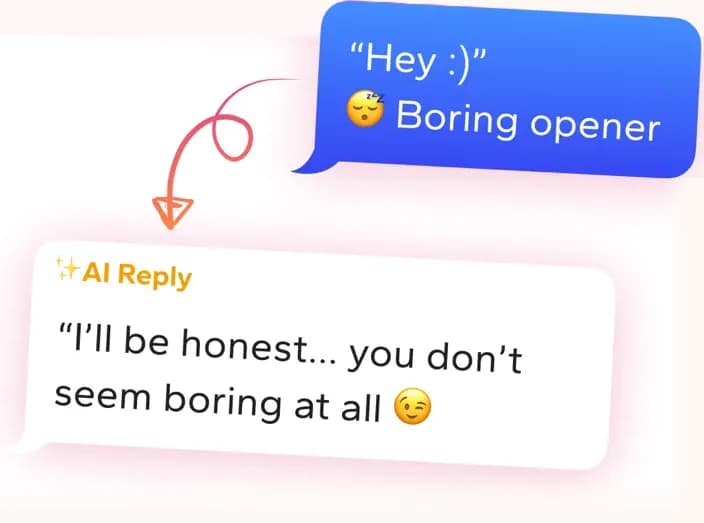
Get replies that sound like you
Screenshot the conversation in WingAI. It reads the vibe and gives you natural replies for this exact situation.
Try for freeBumble AI She already sent the first message. Screenshot it and get the reply.
The week of quiet matters more than the text
Before you think about wording, look at how the conversation has been going. If she was replying quickly and asking you things before this, the sleep comment is most likely just a real-life constraint. If the replies were already slow, short, or one-sided, then the sleep line is partly a polite explanation for lower interest and you should adjust your expectations accordingly.
The content of what she says is less useful than the pattern around it. A person who is tired tends to write shorter messages, use fewer questions, and wrap things up sooner. A person who is pulling back often does the same, but also stops initiating. Watch whether she still says something about her own day or only answers yours. That tells you more than the sleep detail does.
Answer before you get curious
Your reply needs to receive what she told you before anything else happens. A short acknowledgement that she's been tired, in plain words and without dwelling on it, does that job. It shows you read the message and that you're not taking the slow pace personally.
Then keep your curiosity small. One light question at most, and it should be easy to answer in a single word or a sentence from someone who's half asleep. Questions about her plans for the weekend work better than questions about how she's feeling, because they point forward and give her something to say yes or no to. Avoid asking her to explain the sleep, the job, or what went wrong. She's trying to recover, not give you a report on it.
Reply in daylight, not at 2am
Timing is part of the signal. If she mentioned sleep, sending a long message late at night can read as you being awake and wanting something, which is the opposite of the calm she's looking for. Reply during her normal waking hours, roughly the same time of day her messages usually arrive, so you're not drawing attention to the gap.
If she doesn't reply to your first message, wait at least a day before any follow-up, and make the follow-up even lighter than the first. One short message is enough. If that goes unanswered too, let the thread rest for several days before trying again, and only then with something low-stakes. If three messages in a row get no response, stop, because continuing will feel like pressure to her no matter how friendly it is.
Why these replies fail
“Oh no, I hope you're feeling better! Are you getting enough rest? What's been going on at work that was so brutal?”
Three questions in one message turns her tiredness into a conversation she now has to manage.
“Sleep is so underrated lol. Anyway, what are you doing this weekend? We should definitely go out for drinks.”
It skips past what she said and jumps straight to a plan, which asks her for energy she's just told you she doesn't have.
“Hey, just checking in, haven't heard from you in a bit. Hope everything's okay!”
Checking in on a silence she has already explained makes her feel watched and pressured to justify the gap.
Common mistakes
- Treating the sleep comment as a complaint and apologising for something you didn't do
- Asking three or four follow-up questions about her week, which turns a light moment into an interview
- Ignoring the sleep detail and jumping to a plan or a flirty line as if she hadn't said anything
- Following up two or three times in a row to check she's still interested
- Writing a long message to make up for the silence, which makes replying feel heavier for her
Questions people ask
- Does 'catching up on sleep' mean she's losing interest on Bumble?
- Not necessarily. It usually means she's tired and has less energy for messaging. Look at the wider pattern first. If she still asks you things and replies with some detail, it's most likely just a busy week. If the replies were already thin and she has stopped starting conversations, the sleep line may partly be a polite way of pulling back. Either way, a calm and easy reply is the right move.
- Should I ask if she's feeling better?
- You can, but keep it light and only if it fits the tone of the chat. A quick acknowledgement that she's been tired covers it. Asking how she's feeling repeatedly or in detail makes it feel like a check-in on her health, which is more than the moment calls for. One brief line and then move on to something easy.
- How long should I wait before messaging again?
- Wait at least a day after her last message before you reply, since she's the one who's tired and there's no hurry. If she doesn't reply to you, give it several days before a light follow-up. If there's still no response after that, leave it. A sustained silence after she has already explained herself is a clear signal to stop.
- What if she says she's been sleeping a lot because she's stressed?
- Treat it the same way, but be a little more careful about what you bring up. Avoid asking what's stressing her out or offering advice she didn't request. A supportive but brief line that doesn't pry works better. Keep your next message simple and low-pressure, and let her decide how much she wants to share as the conversation continues.
What people say after using WingAI
“She went cold mid-week and I had no idea what to say. The reply I sent felt natural and she picked the chat back up.”
Marcus T.
“I overthink every text. Having three options and picking the one that sounds like me cut that spiral short.”
Sam R.
“I was skeptical at first. Then I tried it on a dry chat and the replies actually sounded like me, not a chatbot.”
Mazoonx
Get replies that sound like you
Screenshot the conversation in WingAI. It reads the vibe and gives you natural replies for this exact situation.
Try for free