How to bring up that she seems disengaged in person
Address a pattern of her seeming uninterested when you're together. Know what signals matter, when to speak up, and how to do it without sounding needy.
You've noticed she pulls back or checks out when you're actually hanging out. She's on her phone, gives short answers, doesn't make eye contact, or just seems like she'd rather be elsewhere. This is different from slow texting or cancelled plans. This is about her energy shifting the moment you're face to face.
Bringing this up is risky but sometimes necessary. If the pattern is real and consistent, ignoring it just wastes time for both of you. A good approach names what you've noticed without accusation, gives her room to explain what's actually going on, and doesn't trap her into defending herself.
The move here is to be direct but curious. You're asking, not attacking. You're giving her a chance to tell you if something's wrong, if she's stressed, if she's lost interest, or if you're reading it wrong. Most importantly, you're not pretending everything is fine when it clearly isn't.
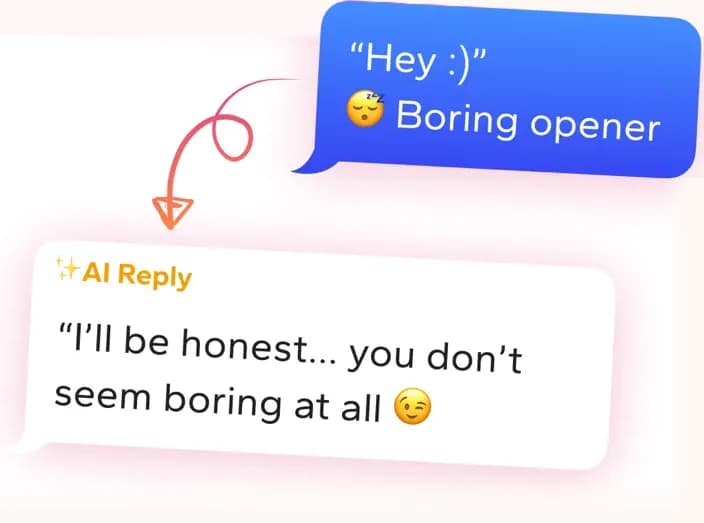
Get replies that sound like you
Screenshot the conversation in WingAI. It reads the vibe and gives you natural replies for this exact situation.
Try for freeRizz AI Screenshot the chat and get the next message for this person.
Signs of disengagement that actually matter
Not every quiet moment means she's uninterested. People zone out. They have bad days. But there's a difference between a distracted Tuesday and a consistent pattern.
What to pay attention to: She doesn't ask you questions. Her replies are one word or one sentence. She's scrolling through her phone even when you're talking. She doesn't make plans to see you again. Her body language closes off, arms crossed, facing away. She says things like 'I'm tired' or 'I have a lot going on' every time you meet. She laughs at your jokes but doesn't seem to find them funny. You feel like you're working to keep the conversation alive.
One of these things in isolation doesn't mean much. A pattern across multiple hangouts does. Pay attention to whether she's this way only around you or if she seems generally checked out with everyone.
The move is to observe, not interrogate
A good message here does two things. First, it names what you've actually seen without twisting it into proof of anything. You're describing a pattern you've noticed, not declaring what it means. Second, it asks an open question that doesn't box her in. You want to know what's really going on.
Avoid phrasing like 'You always seem bored' or 'You never seem interested in me.' Both of those force her to either argue with you or admit fault. Instead, frame it as something you've picked up on. 'I've noticed' is more powerful than 'You do.' Give her room to say she's stressed with work, dealing with something personal, not sure if there's chemistry, or even that you're reading it wrong. The point is to find out the truth, not to prove yourself right.
When to have this talk and what to do next
Don't bring this up at the end of a date or over text late at night. Do it in a moment where you're both present and it feels natural to be serious. A phone call works better than texting because tone matters here and she can't take an hour to craft a response.
After you send the message or make the call, give her time to actually respond. Don't send a follow-up for at least a day or two. If she doesn't reply or gives you a vague non-answer, that's information. It often means she's either uncomfortable being direct or she's already checked out. If she does respond and explains something real, listen without judgment and decide if it's something you can work with or if it's a sign to move on. If things don't shift after this conversation, they likely won't, and it's time to let it go.
Why these replies fail
“Hey, I've noticed you seem kind of bored when we hang out. Is it me? Are you even interested?”
This frames it as her problem and forces her to either reassure you or admit she's not interested, instead of opening a real conversation.
“You were on your phone the whole time last Friday. And the time before that you seemed annoyed. I don't think you actually like me that much.”
Listing specific incidents makes it sound like you're keeping score and builds a case against her instead of asking what's actually going on.
“So I've been feeling like you're not that into this and I wanted to see if I'm crazy or if you want to just be friends or what”
This mixes your feelings with an observation, creates an exit ramp to friendship, and doesn't actually ask her to explain her behavior.
Common mistakes
- Bringing it up over text instead of in person or on a call, which makes it easier for her to dodge or craft a careful response
- Making it sound like an accusation ('You're always on your phone') instead of an observation about a pattern you've noticed
- Asking it in a way that corners her into either lying or hurting your feelings, instead of opening a real conversation
- Waiting too long and letting resentment build, so the conversation feels heavy instead of honest
- Listing multiple examples like you've been keeping score, which sounds like you're building a case against her
Questions people ask
- What if she denies it or gets defensive?
- That's a real answer. Defensiveness often means either she's aware of it and embarrassed, or she doesn't see herself that way and feels accused. Either way, you have your answer about how this is going to go. If she can't hear feedback without getting defensive, the relationship won't work.
- Should I wait until it happens again to bring it up?
- No. Waiting gives the impression you're fine with it. Bring it up after you've noticed a clear pattern, not after one bad hangout. That way it's based on something real and not just a single off day.
- What if I'm wrong and she actually does like me?
- Then she'll tell you, and you'll feel relieved. Ask if there's something going on in her life that's making her seem distant. If she confirms she likes you, her behavior will likely change once whatever's bothering her is addressed or once she knows you've noticed.
- Is bringing this up a dealbreaker for the relationship?
- Only if she reacts poorly. A person who actually likes you will appreciate that you're being direct instead of ghosting or just slowly pulling away. She might explain herself, apologize, or tell you she's not ready. All of those are better than silent confusion.
What people say after using WingAI
“I was skeptical at first. Then I tried it on a dry chat and the replies actually sounded like me, not a chatbot.”
Mazoonx
“I overthink every text. Having three options and picking the one that sounds like me cut that spiral short.”
Sam R.
“I'm busy and half the profiles give you almost nothing to work with. WingAI gets me a solid first line fast without me staring at the screen for ten minutes.”
Ralph
Get replies that sound like you
Screenshot the conversation in WingAI. It reads the vibe and gives you natural replies for this exact situation.
Try for free