How to know if she's ghosting after making plans
Plans are set and she has gone quiet. Learn how to tell ghosting from a busy week, how long to wait, and how to send one calm message without chasing.
Silence after a confirmed plan can mean several different things, and the order of events matters more than the silence itself. Some people go quiet because work swallowed their week. Some are anxious and avoid the conversation because answering feels like a commitment. Some have lost interest and are hoping the plan dissolves without a conversation. From where you sit, these look identical for a day or two, which is why a verdict on motive is premature. What you can judge is the pattern: how she communicated before the plan, how long the gap runs, and whether anything came with it.
Your goal is narrow. You want clarity about Friday, not a confession, and you want to protect your evening and your self-respect while you get it. A tidy reply that names the situation and leaves a door open gets you both. Trying to extract an explanation, or proving she was in the wrong, gets you neither. People who feel cornered tend to retreat further, while a relaxed message is easy to answer even for someone who has been dodging.
Platform and timing change the read considerably. On Hinge, replies often arrive in bursts, and a day without a response is routine for people who check the app a couple of times a week. A reply gap of 24 hours after matching says little. A gap of two days after you both agreed on a time and a place says more, especially if she was chatting quickly before. Once you have moved to regular texting, the same gap is harder to explain away, because messages land on a screen she looks at all day.
What backfires is volume and tone. A second text, a check-in dressed up as a joke, or a message that hints at how long you have waited all hand her something to react to besides the plan. You become the person with a complaint, and she gets a ready excuse for not responding. Asking whether she is still interested puts her on the spot in a way she may find easier to ignore than answer. Showing up at the venue to see whether she appears turns a quiet situation into an awkward one.
Reading what comes back is mostly a matter of speed, specificity and effort. A reply that offers a concrete new time, or a short apology with a real reason, shows she wants the date. A vague line about being slammed with nothing attached, or a warm message that never mentions the plan, usually means interest has cooled. No reply at all, after one clear message, is an answer. Give it a day or two, then spend your energy on people who answer.
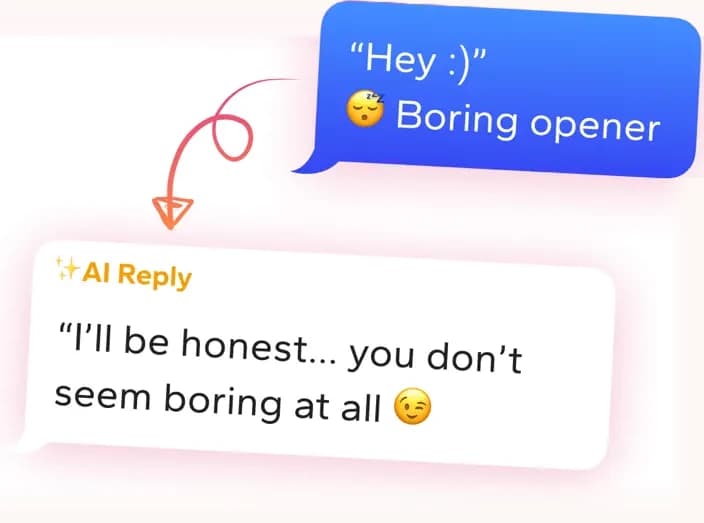
Get replies that sound like you
Screenshot the conversation in WingAI. It reads the vibe and gives you natural replies for this exact situation.
Try for freeCompare the silence to her baseline
Before you decide anything, look back at how she texted before the plan. If she usually answered within a few hours and now goes a full day, that shift carries more weight than a slow reply from someone who always took a day. Check whether she read your message, if the app shows it, and whether she posted elsewhere while quiet. None of that proves intent, but it separates a busy person from an avoidant one. Also count the gap against the date itself. Silence for six hours on a Tuesday for a Saturday plan is nothing. Silence from Thursday morning to Friday evening for a Friday date is a reasonable reason to send one clear message.
Write the message so it's easy to answer
If you decide to reach out, keep the message short enough to read in one glance and specific about the plan. Mention the day and time so she knows exactly what you mean, and say plainly that you are happy to rebook or happy to let it go. Avoid questions that demand a justification, since those make replying feel like standing trial. A person who got swamped can answer in five seconds. A person who lost interest can decline without feeling attacked. Both outcomes give you the information you wanted. Keep the tone level, with no sarcasm, no countdown of hours waited, and no emoji doing emotional work for you.
Decide your own deadline in advance
Pick the moment you stop waiting before you send anything, so the decision is not made while you stare at your phone. A reasonable window is until the planned time, plus a day after it for a late reply. If you have nothing by then, treat the plan as dropped and make other arrangements for the evening so the hours do not feel wasted. Mute the conversation if you can, because refreshing it only prolongs the sting. If she resurfaces later, you can choose how to respond based on what she says and how she says it, rather than on how long you spent hoping.
Why these replies fail
“Hey, are we still on for tonight? You've gone quiet and I'm kind of confused”
It asks her to reassure you and explain herself in the same breath, which is hard to answer when she may already be avoiding exactly that conversation.
“Wow ok. Guess I'll just sit here at the restaurant alone then”
Guilt aimed at someone who has already pulled back gives her a reason to feel justified in staying silent.
“Hinge said you were online yesterday so I know you saw my message”
Pointing out that you tracked her activity makes the exchange about surveillance and hands her the moral high ground over a plan that was already shaky.
Common mistakes
- Sending several messages in a row on the day of the plan, which turns a single quiet gap into an obvious pressure campaign.
- Treating a slow reply on Hinge as proof of ghosting, when many people check the app only every day or two.
- Going to the venue anyway to see if she shows up, which creates an awkward scene if she does and a wasted evening if she doesn't.
- Writing a long message explaining how her silence made you feel, which gives her far more to respond to than she can handle and makes a clean exit harder.
Questions people ask
- How long should I wait before assuming she's ghosting after we made plans?
- Give it a full day with no reply, or until a few hours before the plan, whichever comes first. One quiet afternoon means little. Silence stretching past the planned time with no message at all is a clear enough answer to stop waiting.
- Is a two day gap on Hinge normal?
- It can be. Many people open the app only a few times a week, so a gap of 24 to 48 hours between early messages is common. Once you have agreed on a specific date, though, a two day gap with nothing about the plan deserves a short, clear message.
- Should I text her a second time if she doesn't answer?
- No. One clear message gives her every chance to respond. A second one adds pressure without adding information, and it makes the exchange about your persistence instead of her interest. Wait through the deadline you set, then move on.
- What if she replies days later with an apology?
- Read it for substance. A specific reason and a concrete new time suggest she still wants to meet, so you can decide whether to rebook. A vague apology with no offer of a plan is polite but gives you nothing to work with, and you can answer kindly without committing.
What users say
“I was skeptical at first. Then I tried it on a dry chat and the replies actually sounded like me, not a chatbot.”
Mazoonx
“Used it for a couple hours and set up a date the same night. Not even kidding.”
Nikola2214
Get replies that sound like you
Screenshot the conversation in WingAI. It reads the vibe and gives you natural replies for this exact situation.
Try for free