Keep text conversations going with replies that invite response
Learn how to keep a conversation going by text with replies that answer what the other person said and leave an easy next step, plus how to handle slow replies.
A text conversation stalls when the next move belongs entirely to the other person. If your reply is a closed statement, a laugh, or a single word, they have to invent a topic from nothing before they can answer. Inventing is work, and a message that arrives in the middle of a workday or a commute competes with everything else on their phone. Most people will let it sit and mean to come back later. That is usually the whole story behind a chat that fades. It is rarely a verdict on you.
Your aim is to make writing back feel cheap. You want a reply that shows you took in the particular thing they said, then adds a small handle they can grab. That handle might be a related story, a half-formed opinion, a mild disagreement, or a question tied closely to their last sentence. Anchoring to a specific detail matters more than the topic in general, because a detail proves you read the message instead of skimming it. Someone who sent a long paragraph about a chaotic family dinner wants the dinner acknowledged, not a pivot to your weekend.
Timing changes how all of this lands. Text lives on its own clock. A reply that comes in forty seconds feels like a different conversation than one that comes in four hours, and neither is wrong. People answer in bursts between tasks, and a slow gap often means nothing more than a busy day. Matching their pace keeps the exchange comfortable for both sides. Sending a second message into silence adds pressure to an inbox that already has a pending item, which can make a reply feel like an obligation instead of a pleasure.
Several habits backfire reliably. Firing a fresh question after every message turns the exchange into a questionnaire, and the person starts giving shorter answers to get through it. Talking about yourself without touching what they said reads as waiting for your turn. Overexplaining a joke drains it. Splitting one thought across five tiny messages buzzes their phone repeatedly and makes the thread feel frantic. Each of these puts your needs ahead of the rhythm the two of you are building.
Reading their response tells you how to adjust. Longer messages, follow-up questions of their own, and details you did not ask for suggest they are enjoying the thread, so you can stay curious and let it run. Short, flat answers with no questions back suggest low energy or a bad moment, and the kind move is to ease off instead of pushing harder. Replies that come quickly one day and slowly the next usually track their schedule. Watch the overall pattern across several exchanges before deciding what it means.
Why a reply goes nowhere
A conversation stalls when your message gives the other person nothing to pick up. A bare yes, a laughing emoji, or a comment that closes itself off leaves them to start a new thread alone, and starting threads is the tiring part of texting. They may like you perfectly well and still let the chat drift because replying would mean doing all the creative work. Look at your last few messages and ask whether any of them contained a hook, a detail, or an opinion someone could respond to without effort. If every one was a tidy full stop, the pattern is yours to change. It is fixable without any dramatic move.
Echo a detail, then add something
Pick one concrete thing from their message, a place, a complaint, a small joke, and respond to that exact piece. Then add something of your own that connects to it: a similar experience, a competing opinion, a curious follow-up about the part that caught your attention. The connection matters. A story that has no link to what they said feels like a detour, and a question unrelated to the topic feels like a quiz. When your addition grows out of their detail, their next message almost writes itself, because they already have the context in their head and a reason to expand.
Handling long gaps between messages
Some people reply in minutes and some reply the next evening. Treat their usual speed as information about their phone habits instead of a score of your appeal. Resist the urge to stack messages while you wait, since each extra text adds pressure and makes the thread look lopsided. If a day passes with no answer, one light follow-up on a different, easy topic is reasonable. After a second unanswered message, give it space. Pulling back protects both your time and their comfort, and a person who wants to talk will usually surface again without being chased.
What not to send
“lol”
They shared a story with several details, and a bare laugh gives them nothing to respond to, so they would have to restart the whole topic themselves.
“Haha nice. Anyway, what's your favorite movie?”
It brushes past what they just told you and drops an unrelated question, which makes the thread feel like a survey instead of a conversation.
“That reminds me of the time I traveled across three countries in a month and it was the best experience of my life.”
It takes their small everyday story and swallows it with a bigger one of yours, so they feel talked over and have no way to follow up.
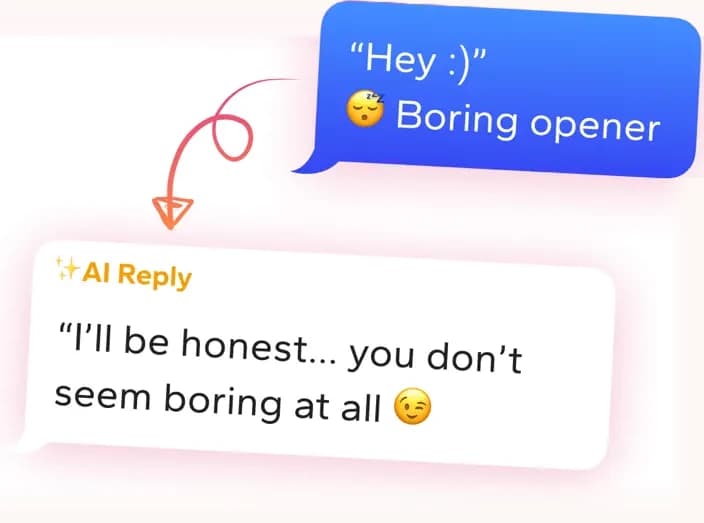
Get replies that sound like you
Screenshot the conversation in WingAI. It reads the vibe and gives you natural replies for this exact situation.
Try for freeFrequently asked
- Should I end every text with a question?
- No. Constant questions make a chat feel like an interview. Mix them with reactions, opinions, and short stories related to what they said. A statement that gives them something to agree with, dispute, or add to invites a reply just as well, and it keeps the exchange sounding like two people talking.
- What do I do if they reply hours or days later?
- Reply at a comfortable pace of your own and avoid mirroring their delays too strictly. Many people simply check messages in batches. Answer when you can, keep your message easy to respond to, and avoid sending several texts in a row while you wait. Their usual speed tells you about their habits.
- Is a longer text better for keeping things going?
- Length matters less than whether the message gives them something to respond to. A short reply with a clear hook works well, and a long one that closes every door does not. Write as much as the topic deserves, and keep it in one message instead of several fragments.
- How many times should I follow up if there's no reply?
- One follow-up after a day or more is plenty. If that also goes unanswered, stop and let them come back on their own schedule. Sending more adds pressure and rarely changes the outcome. Their silence may reflect a busy stretch, but it deserves to be respected either way.
Real user feedback
“I overthink every text. Having three options and picking the one that sounds like me cut that spiral short.”
Sam R.
“I always freeze on the first sentence. This gets me past that blank box so I actually hit send.”
joejoe4567
“She went cold mid-week and I had no idea what to say. The reply I sent felt natural and she picked the chat back up.”
Marcus T.
Mistakes to avoid
- Replying to the topic in general instead of a specific detail, so the message reads as skimmed and gives the other person nothing concrete to build on.
- Sending a quick burst of follow-up texts while waiting for an answer, which stacks pending messages in their inbox and makes replying feel like a chore.
- Treating every pause as a problem to fix, when slow replies often reflect a busy schedule and need patience instead of another message.
Get replies that sound like you
Screenshot the conversation in WingAI. It reads the vibe and gives you natural replies for this exact situation.
Try for free