How to disagree without getting ghosted
Disagreement doesn't end dating. Learn how to push back on someone's opinion and keep them engaged instead of disappearing.
Disagreement is a normal part of getting to know someone. Most people don't ghost over a difference of opinion. They ghost when disagreement feels like criticism, rejection, or a threat to how they see themselves.
When you push back on what someone said or did, they're reading it as a judgment of them personally, not just their idea. Your job is to separate the two. Make it clear you're interested in the actual disagreement, not rejecting them.
Good replies here do two things. They state your real position without softening it into nothing. They also signal that you still see them as worth talking to. That combination keeps them from disappearing.
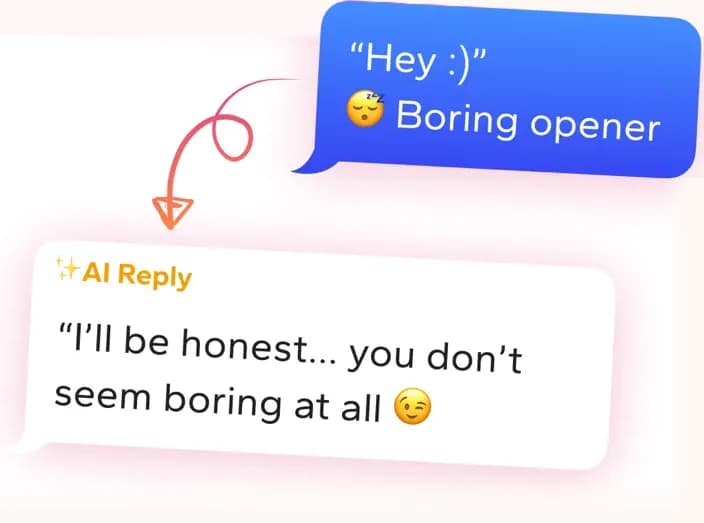
Get replies that sound like you
Screenshot the conversation in WingAI. It reads the vibe and gives you natural replies for this exact situation.
Try for freeRizz AI Screenshot the chat and get the next message for this person.
What their disagreement setup actually signals
When someone shares a strong take or a past experience that shapes their current stance, they're testing whether you'll challenge them or just nod along. They're already a little defensive because they've probably heard pushback before.
If they picked something to disagree on, they usually care about it. That's actually good. It means they're invested enough to have an opinion. The risk isn't that they hold the opinion. The risk is that they'll think you're rejecting them for holding it.
The two moves that keep them from leaving
First move: disagree clearly. Don't water it down. If you actually think long distance can work, say that. People respect a direct take more than wishy-washy hedging that sounds like pity. They'd rather hear you push back hard than hear you pretend to agree.
Second move: add one thing that shows you're still curious about them, not just shutting them down. This can be a real question about their experience, an acknowledgment of why that belief makes sense for them, or just moving forward with interest in the actual conversation.
Waiting for a response after you disagree
Send your reply and then actually wait. Don't follow up the same day or send a softer version of the same message. If they need time to think about what you said, give them that.
If it's been three to four days with no response after a normal back-and-forth conversation, they're probably done. One more message might land as chasing. Let it be. But if the conversation was already sparse or slow, a few days means nothing. Match the rhythm that was already there.
Why these replies fail
“I totally agree that long distance is hard, but I think if you find the right person it could actually work out. It just takes effort and communication.”
This sounds like you're trying to convince them they're wrong instead of just stating your actual view. It reads as either patronizing or conflict-seeking.
“Yeah that makes sense. I guess I never really thought about it that way.”
Fake agreement is worse than honest disagreement because it signals you're not really present in the conversation, just appeasing them.
“I'm sorry, I didn't mean to come off harsh. Of course long distance is tough for most people.”
Apologizing for having a different opinion makes you look uncertain about your own stance and turns a simple disagreement into drama that needs fixing.
Common mistakes
- Over-explaining your disagreement like you're defending yourself in court
- Adding fake agreement ('you're right, but...') to soften the blow
- Turning it into a fight about who's right instead of just stating where you stand
- Going silent after you disagree because you're worried you messed up
- Disagreeing but then immediately backing down when they react badly
Questions people ask
- Is it safe to disagree with someone I just started talking to?
- Yes. If a small disagreement makes them ghost, they weren't looking for a real conversation anyway. Someone worth dating can handle you having a different take. The risk of staying silent is worse because it sets you up for pretending to agree forever.
- What if I disagree but I'm worried they'll think I'm mean?
- State your disagreement as your perspective, not a fact about the world. Say 'I think' or 'in my experience' instead of 'you're wrong' or 'that never happens.' That's the whole difference between disagreement and attack.
- Should I soften my disagreement with humor?
- Only if humor is already part of how you two talk. If you suddenly get funny right after you disagree, it reads like you're backpedaling. Use humor to lighten the mood if you're naturally funny, not to apologize for your opinion.
- How do I know if they ghosted because of the disagreement or just lost interest?
- You don't always. But if the conversation was flowing and you disagreed, and then they vanished, the disagreement was at least part of it. That doesn't mean you did wrong. It means they couldn't handle it.
What people say after using WingAI
“Used it for a couple hours and set up a date the same night. Not even kidding.”
Nikola2214
“She went cold mid-week and I had no idea what to say. The reply I sent felt natural and she picked the chat back up.”
Marcus T.
“I overthink every text. Having three options and picking the one that sounds like me cut that spiral short.”
Sam R.
Get replies that sound like you
Screenshot the conversation in WingAI. It reads the vibe and gives you natural replies for this exact situation.
Try for free