How to be supportive over text with a guy
Learn how to show support when a guy is stressed, busy, or going through something. Reply tactics that actually work.
When a guy texts you about something hard, stressful, or disappointing, your first instinct is usually to fix it or pump him up with enthusiasm. That usually backfires. Guys often read cheerleading as you dismissing what they're actually feeling.
Being supportive over text means you acknowledge what's real for him, show you get why it matters, and make space for him without trying to fix it or make it about you. It's a small shift that changes how he reads your replies.
Good supportive replies do two things. First, they prove you listened to the actual problem, not just the mood. Second, they sit with him instead of pulling away or pivoting to something lighter. This builds trust faster than most people realize.
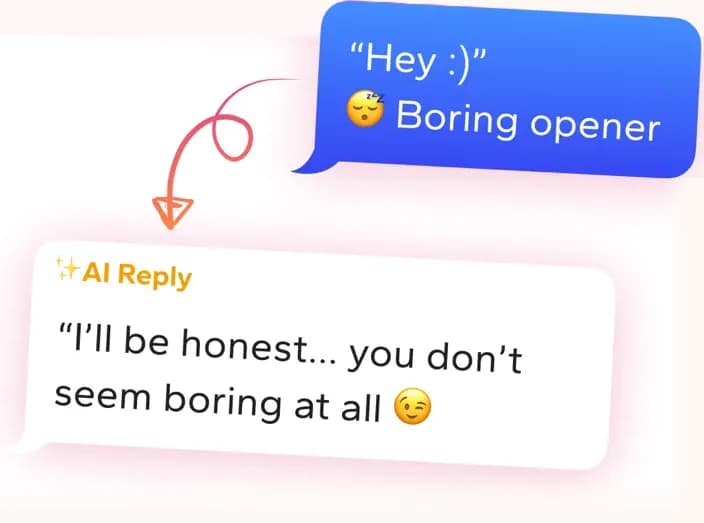
Get replies that sound like you
Screenshot the conversation in WingAI. It reads the vibe and gives you natural replies for this exact situation.
Try for freeWhen he vents, the frustration is the point
Guys often text about something hard because they need to get it out, not because they want your problem-solving plan. The mistake is treating his message like a problem to be fixed instead of a feeling to be met.
Read his message twice. What's the actual emotion underneath. Frustration, disappointment, feeling unheard, being left out. He'll usually tell you directly or you'll sense it in the tone. When he says he's frustrated, he is. He's not asking you to convince him it's fine. He's asking you to notice that it's not fine for him right now.
Name what he said before you add anything
A supportive reply starts by showing you actually heard him. This means reflecting back the core of what he told you, in your own words. Not parroting it. Just proving you got the real thing, not the surface.
Then you can add a line that shows you see why it sucks. Something that sits in his court, not yours. This takes maybe two sentences. The goal is to make him feel less alone with it, not to rescue him from it.
Wait for him to steer the next move
After you've replied supportively, stop. Do not follow up with five more messages, do not ask 'what will you do next', do not pivot to planning. He'll tell you what he needs if he needs something from you.
If he doesn't reply right away, that's normal. He might be sitting with it or distracted by the actual problem. Give it at least a day before you check in again. If he goes quiet for three days and you've only sent one solid supportive reply, it's fine to send one light follow-up. After that, let him come back to you. Pushing harder reads as pressure, not support.
Why these replies fail
“Aw no! But honestly it's not that bad, sometimes these delays happen for a reason. You'll crush it whenever it starts”
You erased his frustration and redirected to optimism before he was ready. This makes him feel unseen.
“That sucks. One time my boss did the same thing to me and I was so upset. I ended up moving teams”
You acknowledged him for a second, then pivoted to your own story. Now it's about you, not him.
“Damn. What are you going to do about it? Have you talked to your manager yet?”
Questions feel like pressure when someone is just venting, especially back to back. He'll ask for advice if he wants it.
Common mistakes
- Jumping straight to 'it'll be fine' or 'at least X' when he needs acknowledgment first
- Making it about your feelings or your experience instead of staying focused on what he said
- Going silent because you're not sure what to say, which reads as indifference
- Asking a bunch of follow-up questions when he just needed you to hear him
- Switching to a joke or meme to lighten the mood before he's ready
Questions people ask
- How do I support him without being annoying or overbearing?
- Keep it short. One or two sentences that acknowledge what he said and show you get why it matters. Then wait for him to respond. Overbearing usually looks like sending multiple messages, asking lots of questions, or checking in constantly. Simple usually works better.
- What if I don't know what to say? Should I just send a reaction emoji?
- A reaction emoji alone can feel cold when he's shared something real. But sending a thumbs up with 'that's rough, sorry' takes 10 seconds and is way better. If you truly don't know what to say, 'that sounds really frustrating' works. You don't need perfect words.
- Is it okay to ask him questions about what happened?
- One question is fine if it shows you're trying to understand. Multiple questions in one reply can feel like an interrogation. If you're curious, send your supportive reply first, let him respond, and ask in your next message if it feels natural.
- How long should I wait before I message him again if he doesn't reply?
- At least 24 hours. If he's dealing with something stressful, he might need space or be focused on it. A second message after 24 hours should be light, not another check-in about the problem. Something like 'let me know if you want to talk about it' and then back off.
What people say after using WingAI
“I was skeptical at first. Then I tried it on a dry chat and the replies actually sounded like me, not a chatbot.”
Mazoonx
“She went cold mid-week and I had no idea what to say. The reply I sent felt natural and she picked the chat back up.”
Marcus T.
“I overthink every text. Having three options and picking the one that sounds like me cut that spiral short.”
Sam R.
Get replies that sound like you
Screenshot the conversation in WingAI. It reads the vibe and gives you natural replies for this exact situation.
Try for free