How to be supportive over text with a girl
Get a reply you can send tonight, without overthinking it.
Learn to show up for her struggles via text without being dismissive, fake, or turning it into your problem to fix.
When she tells you about something hard, she's testing whether you're someone she can lean on. A lot of guys either disappear, make jokes too fast, or immediately jump into fix-it mode. None of that works.
Being supportive over text means you acknowledge what she's dealing with, you stay steady instead of matching her panic, and you give her room to feel whatever she's feeling. It's not about being her therapist or pretending you have all the answers.
Good support makes her feel less alone in that moment and signals that you're the kind of person who shows up when things aren't easy. It changes how she sees you.
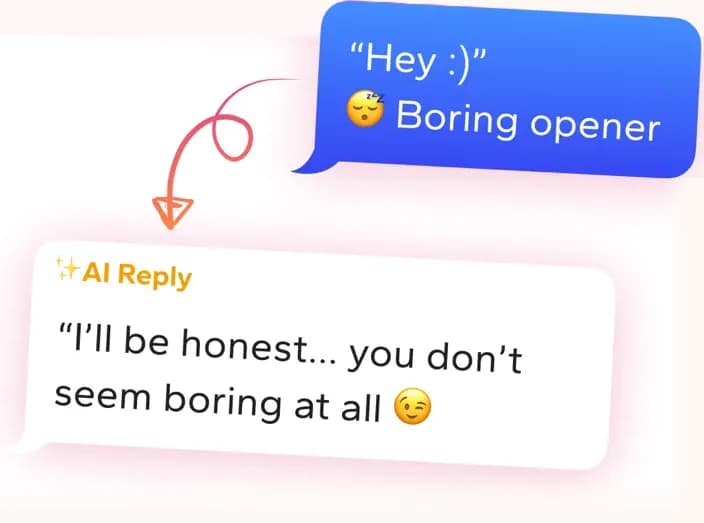
Your reply for this exact chat, tonight, in your own words
Take the 2-minute quiz. WingAI learns how you text and writes replies that sound like you, not like AI.
“I was skeptical at first. Then I tried it on a dry chat and the replies actually sounded like me, not a chatbot.”
First week free. Cancel anytime.
When she shares something heavy, read the actual ask
She's not always asking you to fix it. Most of the time she's telling you because she needs to say it out loud to someone who won't judge her or minimize it. Pay attention to what she's actually asking for. If she says 'I don't know what to do,' she might want ideas. If she says 'It's just been a lot,' she probably just wants you to know she's struggling.
The subtext is almost always 'Do you still care about me even though things are hard right now?' Answer that question first.
Show you heard her without rushing the fix
A good reply does two things at once. First, it proves you actually read what she said by naming a specific part of it back to her. Not a generic 'sorry you're dealing with that,' but something that shows you understood the weight of it.
Second, it stays calm and steady. Don't match her stress energy. You be the person who isn't panicking, which makes her feel safer. Then, only if she's actually asking for help, you offer something real. Advice matters less than the fact that you showed up.
Wait a real response time, don't ghost if you can't fix it
Send your reply within a few hours if you can. Instant responses to heavy stuff sometimes feel performative. But a gap longer than a day reads as avoidance, especially if she's vulnerable.
If she doesn't reply after you showed up for her, give her space. She might need to sit with the conversation. If she brings it up again days later and you never followed up, you've signaled that you only cared in the moment. Check in once after a few days if something serious happened. After that, let her lead whether she wants to keep talking about it.
Why these replies fail
“That sounds rough lol. Have you tried just telling him how you feel? Or maybe look for a new job”
The 'lol' trivializes what she said, and jumping straight to solutions before acknowledging the feeling makes her feel rushed and unheard.
“Oh I totally get it, my boss was like that too. I just ignored him and it worked out fine”
This flips the focus to you and implies her situation isn't that bad, which dismisses why she brought it up.
“Sorry that's happening. Let me know if there's anything I can do”
It's so generic and vague that it reads more like obligation than actual care, and she has to do the work of asking you for help.
Common mistakes
- Immediately offering solutions before she's even finished venting, making it seem like you just want to move on
- Cracking a joke right away to lighten the mood, which reads as dismissing what she actually said
- Going silent because you don't know what to say, forcing her to comfort you instead
- Turning it into your own story about how you dealt with a boss too, stealing the focus
- Asking a bunch of questions like you're interviewing her instead of sitting with what she shared
Questions people ask
- How do I stay supportive if I don't actually have advice?
- Name what you see. 'That sounds exhausting' or 'No wonder you're frustrated, that's unfair.' Validation isn't advice. It just says you get why this matters. If she's asking for help and you really don't have thoughts, say that directly. Being honest is better than pretending.
- What if she tells me something heavy and I don't know how to respond?
- Silence is better than a bad response. Wait a real minute before texting. It's okay to say 'That's heavy, I'm not sure what to say but I'm here.' That's truer than forcing words. Then actually be there by not disappearing.
- Should I ask her follow-up questions about what she told me?
- Depends on the moment. A couple of thoughtful questions show you care. Too many questions turn it into an interrogation and exhaust her. If she's venting, one follow-up is enough. Let her decide if she wants to keep going.
- How often should I check in after she's told me about something hard?
- Once is good. Reaching out again a few days later shows you didn't forget about it. More than that feels like you're making it about you needing to be the helper. She'll tell you if she needs more support.
It doesn't sound like a bot
“I overthink every text. Having three options and picking the one that sounds like me cut that spiral short.”
Sam R.
“She went cold mid-week and I had no idea what to say. The reply I sent felt natural and she picked the chat back up.”
Marcus T.
“I always freeze on the first sentence. This gets me past that blank box so I actually hit send.”
joejoe4567
Your reply for this exact chat, tonight, in your own words
Take the 2-minute quiz. WingAI learns how you text and writes replies that sound like you, not like AI.
Try for freeFirst week free. Cancel anytime.