How to be supportive over text when she's going through something
Send replies that actually help when she's stressed, sad, or dealing with hard things. Show up without making it about you.
When someone texts you about a bad day, a family problem, work stress, or something that's weighing on them, the instinct is often to fix it, minimize it, or turn it into a chance to impress her. None of that works.
A supportive text does two things at once. It proves you actually heard what she said, not just that she said something sad. And it holds space for her to feel what she feels without needing to comfort you back or perform gratitude.
This is different from being a cheerleader or problem-solver. You're not here to pump her up or tell her what to do. You're here to acknowledge what's real and make it clear you're on her side. That's it. It's quieter than you think it should be, and that's why it works.
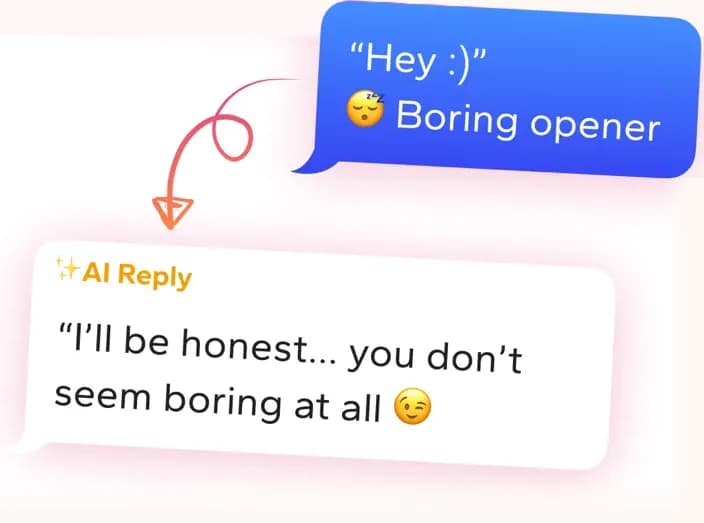
Get replies that sound like you
Screenshot the conversation in WingAI. It reads the vibe and gives you natural replies for this exact situation.
Try for freeRizz AI Screenshot the chat and get the next message for this person.
The difference between venting and asking for advice
When someone tells you something bad happened, they're not always asking you to solve it. Most of the time they're asking you to acknowledge that it sucked and that their frustration makes sense. The trap is assuming that being supportive means offering a solution.
Read the tone of her message. Is she ending with a question? Does she sound stuck and looking for a way forward, or is she processing anger and hurt? If she's not asking what to do, don't tell her. If she is, help. The difference matters. Jumping to advice when she just needs to be heard reads as dismissive, like her feelings aren't the real problem, the situation is, and you can just fix it.
Acknowledge first, then show you're there
A supportive reply has two moves. First, it reflects back what you heard so she knows you actually took it in. Not parroting every detail, just naming the real thing. 'That's completely unfair' or 'three emails and he still went for you' or 'no wonder you're furious.' This takes five seconds and it changes everything.
Second, it signals presence. 'I'm here' works. So does asking her what she needs right now, or offering something low-key ('want to vent more or do you need a break from it'). The goal is to show you're not going anywhere just because the conversation got heavy. You're still here, still on her side, still listening.
When to check in again and when to let it sit
Send your supportive reply when you can actually be present. Don't send it while you're distracted or in a rush. She'll feel it.
If she keeps texting about it, match her energy. Keep showing up. If she goes quiet after you reply, don't spiral into a second message. You said what you came to say. Let her process. If she goes dark for days, a light check-in after a few hours is fine ('hey, thinking about you'), but then give her space. Some things take time to sit with. If she never brings it up again, don't force it back into the conversation. That's her signal that she's moved on.
Why these replies fail
“That's rough. But honestly your boss probably was just stressed too. Maybe he'll feel bad about it later.”
Minimizing her legitimate anger by excusing his behavior makes her feel like you don't actually think it was wrong.
“Oh my god same thing happened to me last month. My boss blamed me for a report I specifically told him about. It was insane.”
Turning her problem into your story is a subtle way of centering yourself when she needs you focused on her.
“You should probably email him tonight with a summary of those three emails so there's a paper trail. Also maybe loop in HR just in case. You need to protect yourself here.”
Launching into action steps when she hasn't asked for them reads as you not trusting her to handle her own situation.
“Don't let it get you down! You know your worth and that's what matters.”
Cheerleading platitudes feel dismissive of actual anger and make her feel like she should move past it faster than she needs to.
Common mistakes
- Jumping straight to 'here's what you should do about it' instead of letting her vent first
- Making it about how you would feel or what you would do, not about her experience
- Softening her complaint with 'well maybe he didn't mean it that way' or other minimizing
- Turning the conversation inward ('ugh my boss does this too') without circling back to her
- Over-texting with multiple messages when one solid one lands harder
Questions people ask
- How long should a supportive text be?
- One or two sentences if it's just acknowledgment and presence. Three to four if you're also asking what she needs. Longer than that and it starts to feel like you're performing support instead of actually giving it. Let her do the talking if she wants to.
- What if I don't know what to say?
- Keep it simple. 'That sucks and I'm sorry you're dealing with it' works. 'I'm here if you want to talk about it' works. Honesty is fine too: 'I don't know what to say but I'm on your side.' She doesn't need you to have the perfect words. She needs to know you showed up.
- Should I try to make her laugh or change the mood?
- Not right away. If she sends something serious, she's in serious mode. Honor that. If a few messages in she starts making jokes about it, then you can match that tone. But don't force lightness on someone who's processing something hard. That feels like you want her to feel better faster so you're more comfortable.
- What if she vents to me a lot? How do I support her without it getting draining?
- You can be present and have a boundary. 'I'm here for this' and also being honest when you need a break is fine. But watch for when you're starting to avoid her messages or get resentful. That's a sign you need to be real with her about what you can hold right now, not ghost or shut down.
What people say after using WingAI
“I overthink every text. Having three options and picking the one that sounds like me cut that spiral short.”
Sam R.
“I was skeptical at first. Then I tried it on a dry chat and the replies actually sounded like me, not a chatbot.”
Mazoonx
“She went cold mid-week and I had no idea what to say. The reply I sent felt natural and she picked the chat back up.”
Marcus T.
Get replies that sound like you
Screenshot the conversation in WingAI. It reads the vibe and gives you natural replies for this exact situation.
Try for free