How to be supportive over text later in the day
Send evening texts that show you care without being heavy. Match her energy, ask specific questions, and know when to let her rest.
Late-day texting happens when she's worn out. Her guard is lower, her mood might be fragile, and she's often looking to decompress rather than entertain. A supportive text at 8pm or 10pm lands differently than a morning one. It signals you're thinking of her when the day is hardest, but only if you read what she actually needs right now.
Good replies here do two things at once. They acknowledge what she's going through without making her explain it or feel obligated to cheer up for you. And they give her an easy way to keep talking, or permission to stop. The difference between supportive and needy is whether you're adding comfort or adding a task to her evening.
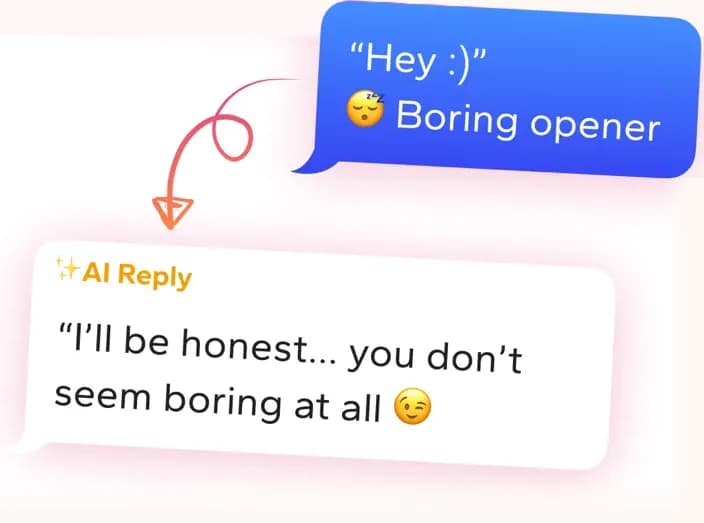
Get replies that sound like you
Screenshot the conversation in WingAI. It reads the vibe and gives you natural replies for this exact situation.
Try for freeRizz AI Screenshot the chat and get the next message for this person.
What late-day frustration really means
When someone texts late in the day about something hard, they are not asking for debate or advice. They are usually tired, their emotional reserves are lower, and they need to know you get why today was rough. The specificity of what she shared matters. If she says 'brutal day' with no detail, she might be too burnt out to talk about it. If she gives you the play-by-play like the example above, she is processing it and needs a witness, not a problem-solver. Read which one you're getting. The late-day timing itself is her signal. She held onto this until the day was done. She thought of you when winding down.
Validate first, then create breathing room
Your reply needs to do two separate moves. First, show that you heard what made today hard and that it was reasonable for her to feel frustrated about it. Be specific. Reference what she told you so she knows you actually read it and are not just being generic. Second, make it clear she does not have to keep this conversation going if she does not have energy. A short, direct reply works best here. If she wants to vent more, she will. If she wants to switch topics or go to bed, that is fine too. The goal is to be the person who gets it, not the person who demands more from her.
Wait until morning if there is no second message
After your supportive reply, if she does not text back within an hour or two, she has probably gotten what she needed and is heading to sleep. Do not follow up that same night. Sending a second message will feel like you need reassurance or want her to keep engaging. She already got your support. Let her rest. Pick it back up the next day with something light and separate from the bad day, or ask her how she is feeling after sleeping on it. If she stays engaged and keeps texting, that is your signal to stay present for the conversation. Pay attention to her response time and message length. Shorter replies mean she is fading. Longer ones mean she wants to keep processing.
Why these replies fail
“That's so unfair. He sounds like a nightmare to work for. You should totally stand up to him next time.”
Offering unsolicited advice when she just landed a punch from her boss makes her feel like she should have handled it better instead of heard.
“Aw that sucks :( Want me to come over? We can watch something and forget about it.”
Jumping to a solution when she has not asked for one, and creating a new task for her to respond to when she is already depleted.
“At least the day is over now! Tomorrow will be better.”
Dismissing her frustration with positivity signals you just want her to move on instead of acknowledging that today was actually hard.
Common mistakes
- Jumping straight to solutions or silver linings instead of sitting with what she said
- Sending a long message when she probably just wants a quick, warm reply
- Asking follow-up questions that require energy when she's depleted
- Being overly cheerful or trying to flip her mood instead of matching her tiredness
- Going silent because you don't know what to say, which reads as indifference
Questions people ask
- How long should my supportive text be?
- Keep it short. Two to four sentences max. A long block of text feels like work to read when she is tired. Brevity actually shows you respect her energy level. She does not need a pep talk, she needs to feel understood in thirty seconds.
- What if she does not reply to my supportive message?
- That is normal and not rejection. She probably got what she needed from your reply and went to sleep. Do not double-text the same night. Send something casual and separate in the morning, or ask how she is doing after rest. Silence after a late-night conversation is usually just exhaustion.
- Should I ask her if she wants to talk about it more?
- Only if she left room for it. If she shared a lot of detail, yes, you can offer an ear. If she said 'rough day' and left it at that, asking 'what happened?' makes her do labor. Read her lead. If she wants to keep talking, she will bring it up again or answer with more.
- Is it okay to text support even if we have not talked all day?
- Yes. A one-message check-in when you see she has had a bad day is actually better than not texting at all. It shows you were thinking of her, not just staying in touch for the conversation. Keep it brief and do not expect a big response.
What people say after using WingAI
“I overthink every text. Having three options and picking the one that sounds like me cut that spiral short.”
Sam R.
“I was skeptical at first. Then I tried it on a dry chat and the replies actually sounded like me, not a chatbot.”
Mazoonx
“She went cold mid-week and I had no idea what to say. The reply I sent felt natural and she picked the chat back up.”
Marcus T.
Get replies that sound like you
Screenshot the conversation in WingAI. It reads the vibe and gives you natural replies for this exact situation.
Try for free