How to be supportive over text back and forth
Get a reply you can send tonight, without overthinking it.
Show up when she's struggling without fixing, dismissing, or making it about you. Learn what supportive texting actually requires.
When someone shares that they're stressed, upset, or dealing with something hard, the instinct is to either solve it fast or cheer them up. Both miss the mark. Being supportive over text means she feels heard first, then knows you're there second.
She's usually testing whether you care enough to slow down and listen. A good reply doesn't rush to the bright side. It doesn't minimize what she said or turn it into a problem you can fix in one message. It just meets her where she is.
The texts that land are the ones that show you actually took in what she said, that you're not scared of her bad mood, and that you're not going anywhere. That's the job.
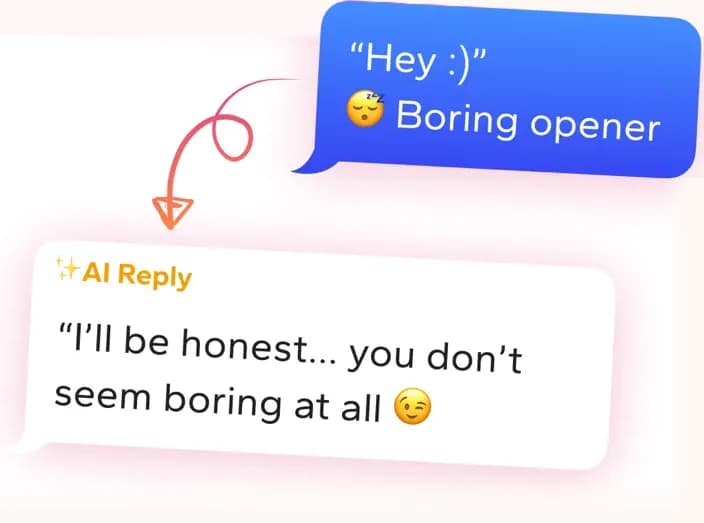
Your reply for this exact chat, tonight, in your own words
Take the 2-minute quiz. WingAI learns how you text and writes replies that sound like you, not like AI.
“I was skeptical at first. Then I tried it on a dry chat and the replies actually sounded like me, not a chatbot.”
First week free. Cancel anytime.
She's venting, not asking you to fix it
When someone texts that they hate something or feel bad about something, she's lowering the wall a little. She's trusting you with a real feeling, not a polished version of her day. That matters.
The trap is thinking she needs you to solve the problem or make her feel better right now. She doesn't. She needs to know you heard that it sucks and that you're not going to pretend it doesn't. Read her message twice. Notice what the actual hurt is. Not the job situation, but that she felt betrayed and stupid. That's what you're replying to.
Acknowledge what she said, then show you're steady
A good reply does two things. First, it shows you took in the specific thing that hurt, not a generic version of her problem. Say back what the actual wound was. Second, it signals that you're not freaked out by her bad mood and you're not going anywhere.
You don't have to be upbeat or try to reframe it. You just have to be still and present. The steadiness comes from not rushing to fix or cheer. It comes from sitting with what she said long enough that she knows you actually heard it.
Reply soon, but not defensively fast
Send it within an hour or two if you can. Not so fast that it looks like you weren't thinking, but fast enough that she knows you read it and cared. If you wait too long, it feels like you had to work up the energy to reply.
If she doesn't text back after you reply, don't send another message. You've done the job. She might need to sit with it or talk to someone else first. Follow her lead on when and what to say next. If days go by with nothing, one casual text about something else is fine. Don't apologize or check in on the hard thing again unless she brings it back up.
Why these replies fail
“That sucks! On the bright side, this probably means something better is coming your way. Everything happens for a reason!”
Toxic positivity erases what she said instead of honoring it, and makes her feel like her real feelings are wrong.
“I hate my job too honestly. I had a manager like that once and it was the worst. You're not stupid though!”
Turning it into your story makes it about you instead of about her, and generic reassurance doesn't land when the hurt is specific.
“What exactly did she say? Have you thought about going to HR? You could also look for a new job.”
Jumping to questions and solutions before she even finishes venting pushes her to defend or explain instead of just being heard.
Common mistakes
- Jumping straight to solutions or silver linings instead of acknowledging what happened first
- Making it about your own experience or problems to show you understand
- Using toxic positivity language like everything happens for a reason or she'll feel better soon
- Asking too many questions when she just needs to vent
- Waiting to reply because you want to give the perfect response
Questions people ask
- Should I ask follow-up questions or just listen?
- Mostly listen. A gentle question is fine if she seems stuck, but she came to vent, not get interrogated. If she wants to say more, she will. Your job is to make space for that, not fill it with questions.
- What if I really don't know what to say?
- That's better than forcing something wrong. A simple 'that sounds brutal' or 'that's not fair' is enough. The point isn't having the perfect words. It's showing you're not running away from the hard feeling.
- Is it okay to send a longer text when someone's upset?
- Yes, if you actually have something to say. But keep it to one paragraph max. A wall of text can feel like you're trying too hard or making it dramatic. One solid thought beats three rambling ones.
- When should I bring up the hard topic again?
- Let her bring it up next time. You've been supportive once. If you keep checking in on it, it feels heavy and like you're waiting for her to be okay. Just text normally and let her tell you if something changes.
It doesn't sound like a bot
“I overthink every text. Having three options and picking the one that sounds like me cut that spiral short.”
Sam R.
“She went cold mid-week and I had no idea what to say. The reply I sent felt natural and she picked the chat back up.”
Marcus T.
“My openers used to be boring. Now I reference something from her profile and people actually write back.”
Aiden K.
Your reply for this exact chat, tonight, in your own words
Take the 2-minute quiz. WingAI learns how you text and writes replies that sound like you, not like AI.
Try for freeFirst week free. Cancel anytime.